
The Movement
A clear signal is emerging: AI routing and live tracking are moving from nice-to-have to expectation. Today, many fleets fly blind between depots, learning about delays only after a customer calls. Right now, port & container haulage dispatch often runs on a patchwork of spreadsheets, phone calls, and driver memory. The status quo leans heavily on manual planning, which simply cannot keep pace with rising volumes.
The Background
Freight moves at its own relentless pace, and a single missed window can ripple across the whole day. Across Port & Drayage, the bar for on-time delivery and visibility keeps rising. In Port & Container Haulage, customers compare you not just to peers but to the fastest, most transparent service they have ever had. The port & container haulage market rewards fleets that can dispatch smartly and prove every delivery. Rising fuel costs and tighter customer expectations make efficient, visible operations non-negotiable.
The Hurdle
When slow invoicing dragging out the cash cycle with limited back-office staff sets in, the day tightens and the risk of a late delivery grows. It rarely starts as a crisis; slow invoicing dragging out the cash cycle with limited back-office staff builds quietly until a peak day makes it impossible to ignore. A recurring challenge for port & container haulage fleets is slow invoicing dragging out the cash cycle with limited back-office staff.
What FleetBlocks Enables
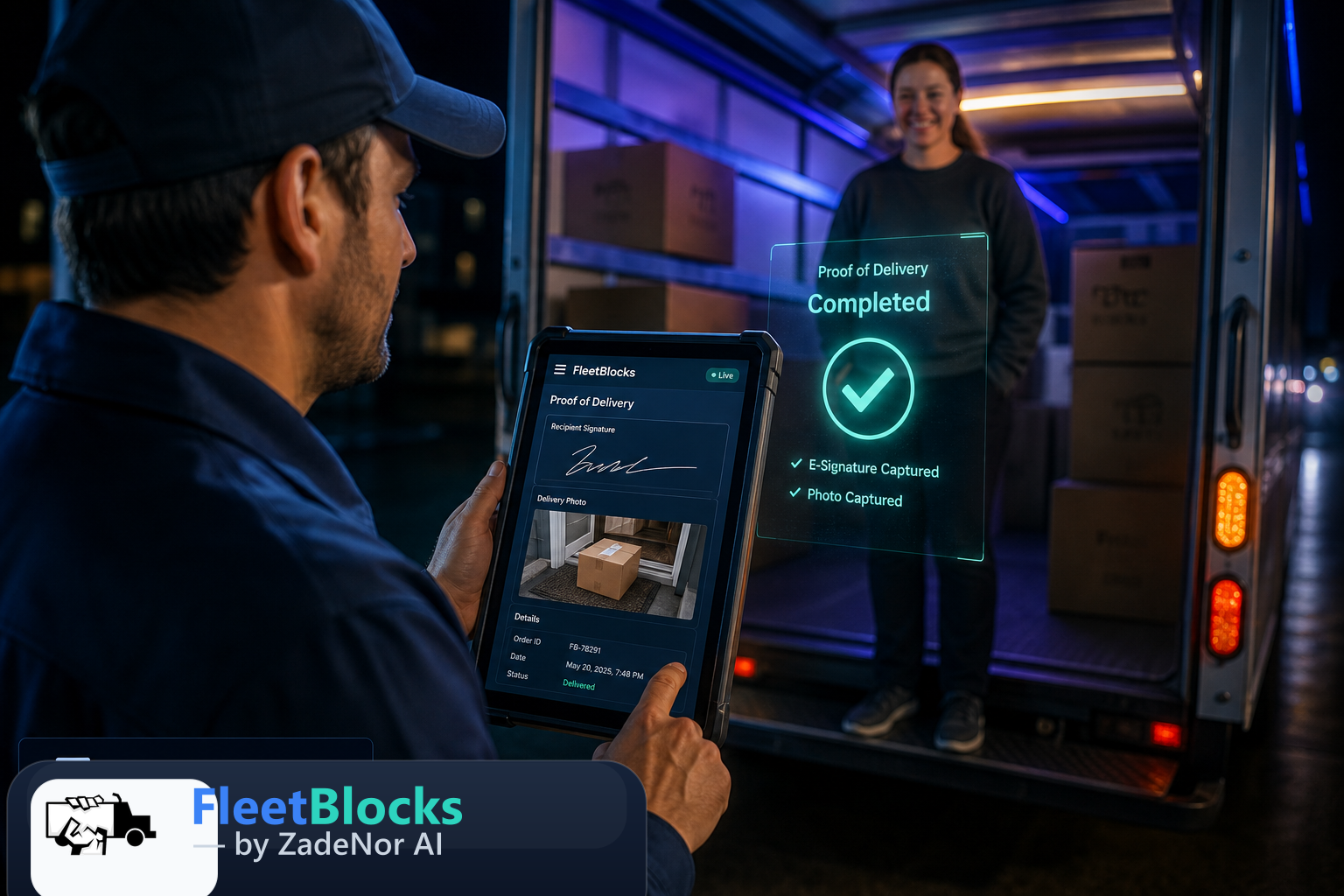
FleetBlocks tackles this with Invoicing, finance & payroll: Raise GST invoices from completed jobs, run prorated driver pay with an explainable breakdown, and email monthly payslip PDFs to drivers automatically. Since invoicing, finance & payroll sits within the Finance capability set, it fits naturally into how port & container haulage fleets already run. This is where FleetBlocks comes in — the AI-powered transport & logistics command center built by ZadeNor AI. FleetBlocks connects dispatch, routing, tracking, proof of delivery and finance, so the whole operation moves as one.
The Bottom Line
Teams using this approach see Lower back-office cost across depots and yards. For port & container haulage fleets, that means lower back-office cost the whole operation can rely on. The result is lower back-office cost, without trading away on-time performance or visibility. Operations stop being a daily scramble and start being a competitive advantage.
Take the Next Step
Run the whole operation without the spreadsheets. FleetBlocks, built by ZadeNor AI, brings dispatch, AI routing, live tracking, proof of delivery and finance into one edge-native command center. Start free.
Every hour lost to slow invoicing dragging out the cash cycle with limited back-office staff is an hour not spent moving freight or serving the customer. Teams end up firefighting instead of planning the most efficient, profitable runs. The cost of slow invoicing dragging out the cash cycle with limited back-office staff is rarely a single number — it is empty miles, late drops, and avoidable disputes. For port & container haulage fleets, that means lower back-office cost the whole operation can rely on. The numbers follow the rigour: fewer empty miles, more on-time drops, and a tidier back office.
What looks like a dispatch problem is often a cash-flow and customer-trust problem in disguise. Teams end up firefighting instead of planning the most efficient, profitable runs. For port & container haulage fleets, that means lower back-office cost the whole operation can rely on. Teams using this approach see Lower back-office cost across depots and yards.
Over time, slow invoicing dragging out the cash cycle with limited back-office staff translates into wasted fuel, missed windows, and margin no operator wants to give away. What looks like a dispatch problem is often a cash-flow and customer-trust problem in disguise. The cost of slow invoicing dragging out the cash cycle with limited back-office staff is rarely a single number — it is empty miles, late drops, and avoidable disputes. The result is lower back-office cost, without trading away on-time performance or visibility. Teams using this approach see Lower back-office cost across depots and yards.
Teams end up firefighting instead of planning the most efficient, profitable runs. Over time, slow invoicing dragging out the cash cycle with limited back-office staff translates into wasted fuel, missed windows, and margin no operator wants to give away. Every hour lost to slow invoicing dragging out the cash cycle with limited back-office staff is an hour not spent moving freight or serving the customer. For port & container haulage fleets, that means lower back-office cost the whole operation can rely on. Dispatchers get a calm, real-time command center; the business gets fuller trucks and faster cash.
Every hour lost to slow invoicing dragging out the cash cycle with limited back-office staff is an hour not spent moving freight or serving the customer. What looks like a dispatch problem is often a cash-flow and customer-trust problem in disguise. Teams using this approach see Lower back-office cost across depots and yards. The result is lower back-office cost, without trading away on-time performance or visibility. Dispatchers get a calm, real-time command center; the business gets fuller trucks and faster cash.
The cost of slow invoicing dragging out the cash cycle with limited back-office staff is rarely a single number — it is empty miles, late drops, and avoidable disputes. What looks like a dispatch problem is often a cash-flow and customer-trust problem in disguise. The result is lower back-office cost, without trading away on-time performance or visibility. For port & container haulage fleets, that means lower back-office cost the whole operation can rely on. Operations stop being a daily scramble and start being a competitive advantage.