The Decision
Most full-truckload carriers teams know the feeling: more loads than hours, and no room for a missed delivery. In Full-Truckload Carriers, the pressure is constant: move more freight, keep promises on time, and protect margin on every trip. For full-truckload carriers operations, the difference between a good day and a chaotic one often comes down to how the fleet is dispatched and tracked.
The Problem
It rarely starts as a crisis; last-minute reroutes that throw off the day builds quietly until a peak day makes it impossible to ignore. When last-minute reroutes that throw off the day sets in, the day tightens and the risk of a late delivery grows. A recurring challenge for full-truckload carriers fleets is last-minute reroutes that throw off the day.
How FleetBlocks Solves It
Because everything lives together, the team works from a single source of truth instead of scattered files and phones. Rather than another spreadsheet, FleetBlocks puts every truck, every trip and every dollar on one calm screen. FleetBlocks tackles this with AI route optimization: A tiered routing engine sequences every multi-stop run for the shortest, fastest path — accounting for traffic, vehicle capacity and hours-of-service — to trim empty miles and fuel across the whole fleet.
Why Trust It
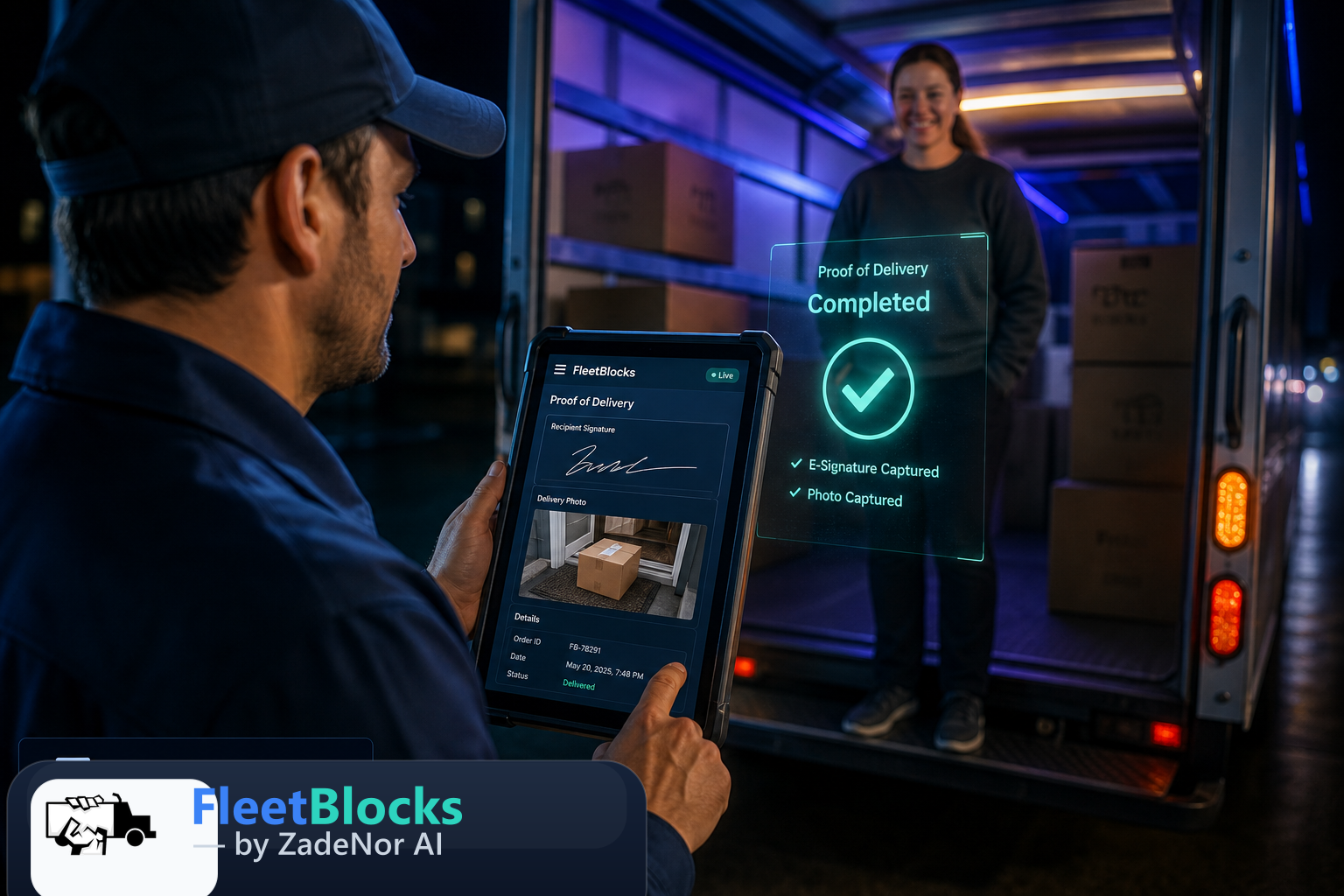
It works because the whole operation runs from one source of truth — every job, signature and dollar tracked and time-stamped. The principle is simple: plan the smartest route, track it live, prove the delivery, and get paid. This is not about replacing dispatchers and drivers; it is about giving them a calm screen that keeps every promise on time.
The Outcome
Teams using this approach see Less reliance on spreadsheets across depots and yards. The result is less reliance on spreadsheets, without trading away on-time performance or visibility. Dispatchers get a calm, real-time command center; the business gets fuller trucks and faster cash. For full-truckload carriers fleets, that means less reliance on spreadsheets the whole operation can rely on.
Make the Move
Make less reliance on spreadsheets across depots and yards the standard across your operation. Get started with FleetBlocks, the AI-powered transport command center from ZadeNor AI — start free, no card required.
For owners, the real risk is strategic: operational drag becomes a ceiling on the freight the fleet can take on. Teams end up firefighting instead of planning the most efficient, profitable runs. Every hour lost to last-minute reroutes that throw off the day is an hour not spent moving freight or serving the customer. Operations stop being a daily scramble and start being a competitive advantage. The result is less reliance on spreadsheets, without trading away on-time performance or visibility. For full-truckload carriers fleets, that means less reliance on spreadsheets the whole operation can rely on.
The cost of last-minute reroutes that throw off the day is rarely a single number — it is empty miles, late drops, and avoidable disputes. For owners, the real risk is strategic: operational drag becomes a ceiling on the freight the fleet can take on. Over time, last-minute reroutes that throw off the day translates into wasted fuel, missed windows, and margin no operator wants to give away. Dispatchers get a calm, real-time command center; the business gets fuller trucks and faster cash. The numbers follow the rigour: fewer empty miles, more on-time drops, and a tidier back office.
For owners, the real risk is strategic: operational drag becomes a ceiling on the freight the fleet can take on. The cost of last-minute reroutes that throw off the day is rarely a single number — it is empty miles, late drops, and avoidable disputes. The numbers follow the rigour: fewer empty miles, more on-time drops, and a tidier back office. Operations stop being a daily scramble and start being a competitive advantage. Teams using this approach see Less reliance on spreadsheets across depots and yards.
For owners, the real risk is strategic: operational drag becomes a ceiling on the freight the fleet can take on. Every hour lost to last-minute reroutes that throw off the day is an hour not spent moving freight or serving the customer. The result is less reliance on spreadsheets, without trading away on-time performance or visibility. The numbers follow the rigour: fewer empty miles, more on-time drops, and a tidier back office. For full-truckload carriers fleets, that means less reliance on spreadsheets the whole operation can rely on.
Every hour lost to last-minute reroutes that throw off the day is an hour not spent moving freight or serving the customer. For owners, the real risk is strategic: operational drag becomes a ceiling on the freight the fleet can take on. Dispatchers get a calm, real-time command center; the business gets fuller trucks and faster cash. Operations stop being a daily scramble and start being a competitive advantage.
Over time, last-minute reroutes that throw off the day translates into wasted fuel, missed windows, and margin no operator wants to give away. Teams end up firefighting instead of planning the most efficient, profitable runs. For full-truckload carriers fleets, that means less reliance on spreadsheets the whole operation can rely on. Operations stop being a daily scramble and start being a competitive advantage. Teams using this approach see Less reliance on spreadsheets across depots and yards.