Scania Launches 720-KM Battery Electric Truck, Hydrogen Stakeholders Double Down
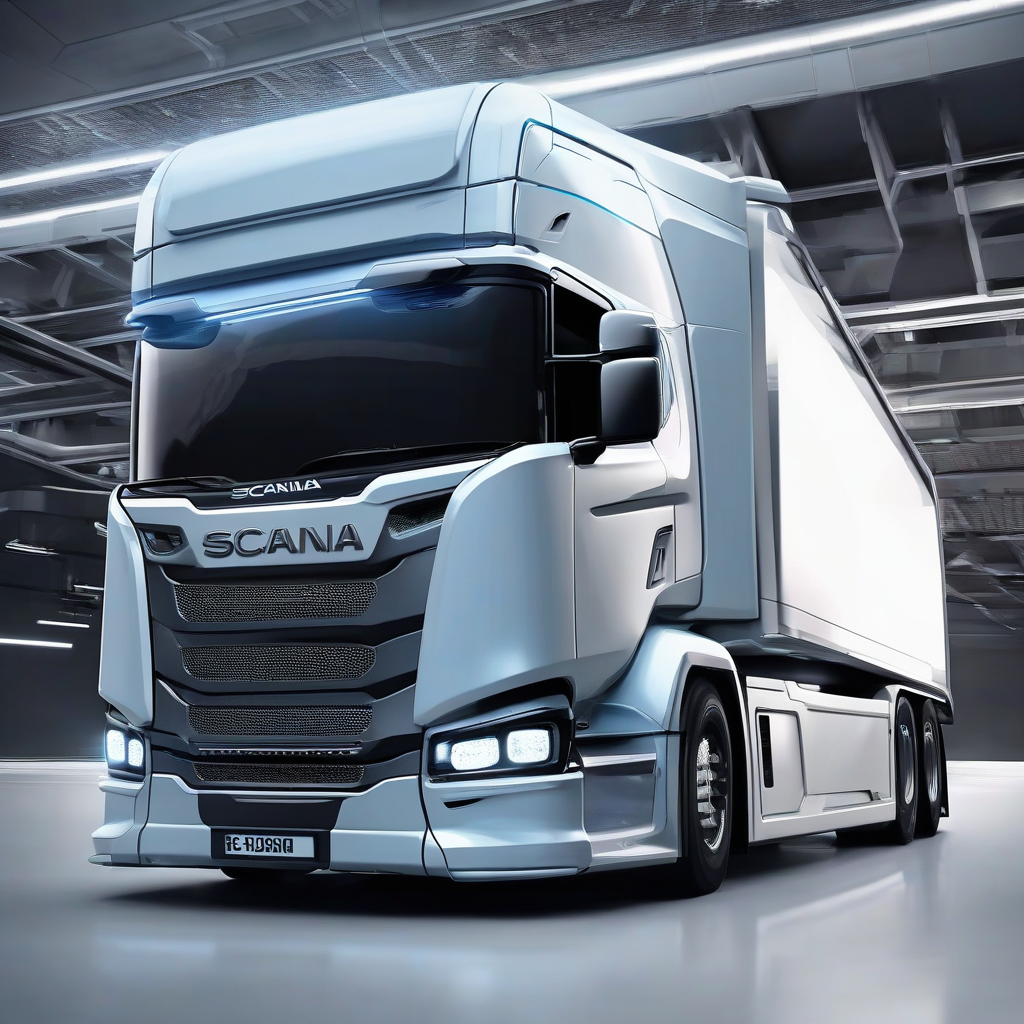
A new heavy duty, long haul electric truck from Scania sports an extended front and extra battery packs, achieving a driving range of almost 720 kilometers (about 474 miles) on a single charge (courtesy of Scania via Cision).
September 15, 20268 hours
			Tina Casey

			 0 Comments
The vehicle electrification movement has had a tough time cracking the long haul, heavy duty trucking code, but signs of a breakthrough have been piling up. It’s not just that Tesla finally launched its long-awaited Semi Class 8 truck into volume production. This week, Scania introduced a new battery electric truck with a 720-kilometer range into the European market, and a consortium including Volvo Group, Daimler Truck, Toyota Motor announced a scaling model for fuel cell electric trucks, too.
Scania Cracks The Battery-Electric Truck Code
Scania took a look at the electrification problem in the European long haul trucking field and spotted a series of bottlenecks. “For transport operators, the question is whether an electric truck can cover demanding routes, carry the required load and charge in a way that fits real transport schedules,” Scania explains.
The charging angle could really clog things up once the vehicle electrification movement gets up to speed. Typically, diesel trucks with 200-gallon tanks can refill in 10-20 minutes, depending on pump speed and how much fuel is left in the tank prior to refilling. In contrast, charging times for heavy-duty electric trucks can be measured in hours.
The charging barrier is beginning to fall with the introduction of MCS (megawatt charging system) stations. Siemens, for example, has introduced an MCS capable of bringing an electric truck from 20% to 80% in about 30 minutes.
As for the competition between cargo space and battery capacity, Scania decided to add extra battery packs behind the cab, in addition to chassis-mounted batteries. The cab also features a newly redesigned front that helps break down wind resistance and improve battery range. According to Scania, the new truck can go up to 720 kilometers (about 474 miles) on a single charge.
“In combination with Scania’s protruding IVD (Increased Vehicle Dimension) front, the battery-behind-cab layout enables a 6×2*4 European trailer combination with maximum range, even when the total vehicle length exceeds 16.5 metres,” Scania explains.
“When combined with the new front, the vehicle can reduce energy consumption by up to 3 percent, depending on specification and operation, as wind resistance accounts for a larger share of total energy use in electric trucks,” Scania elaborates.
As described by Scania, two cab-mounted MP20 battery packs add bout 356 kilowatt-hours of capacity onto the chassis-mounted batteries.
Hail Mary For Hydrogen Fuel Cell Electric Trucks
Charging solutions have emerged at the station level, but a behind-the-scenes challenge remains, namely, how to get electricity from power sources over to a high speed truck charging station without running into massively expensive and time-consuming grid upgrades.
One solution consists of on-site BESS (battery energy storage systems), designed for use in locations where the existing grid is too old and creaky to handle larger loads. The batteries can recharge at their leisure when excess electricity is available on the existing grid, and make a high-speed charge available when needed.
Whether or not the BESS solution can scale up in a timely manner remains to be seen. In the meantime, some automakers are still making a pitch for hydrogen fuel cell trucks to help accelerate the electrification movement, the idea being to avoid substantial grid upgrades and relieve pressure on the battery charging station network. Hydrogen can be transported by pipeline or existing roadways, rather than relying on transmission infrastructure. The fuel also be produced on site, deploying renewable energy to “split” hydrogen gas from water.
In the latest news, a European consortium consisting of Volvo Group, Daimler Truck, Toyota Motor Corporation, Bosch, Air Liquide, TotalEnergies, TEAL Mobility, and MB Energy unveiled a hydrogen plan in Germany, aimed at accelerating fuel cell electric truck uptake while providing a model for other countries to follow, including policy steps as well as industry engagement.
Daimler Truck, for example, has already racked up almost 600,000 kilometers (about 372,822 miles) on its customer-driven fuel cell electric trucks in Europe. Beginning this year, Daimler plans to add 100 next-generation trucks into the market.
“Volvo Group is similarly advancing its hydrogen portfolio and investing significant amounts into hydrogen power solutions such as both fuel-cell and hydrogen-combustion trucks for market rollout towards 2030,” Volvo says of itself. In a press statement, Volvo further notes that Toyota is lending its expertise on the fuel cell side. Bosch is also contributing its refueling technologies, among other elements.
More Renewable Fuel For Fuel Cell Electric Trucks
The other members of the consortium are working the fueling station and fuel supply angle, aiming to introduce stations that can handle up to 100 trucks per day. “They are also leveraging synergies with the fast-growing industrial renewable hydrogen production, driven by the implementation of the European RED III directive,” Volvo adds.
In terms of saving the planet from the further catastrophic impacts of climate change, the pitch for renewable hydrogen is front and center. Currently, the global supply of hydrogen is mainly extracted from natual gas, with coal also playing a lesser role. The global renewable hydrogen market is only just beginning to crank up to speed, with much of the focus centering on water electrolysis systems powered by solar or wind energy (see more green hydrogen background here).
Costs have come down in recent years, but green hydrogen is generally more expensive than its fossil-sourced relatives. That’s where supportive public policies make a make-or-break difference. As described by Volvo, policy conditions are ripe in Germany, with three key elements at play:
— Lowering truck cost through incentives and series production.
— Reaching diesel competitive hydrogen pump price through a more competitive hydrogen supply chain and Greenhouse Gas quota mechanisms.
— Offering operating incentives like zero emission toll exemptions for fleet operators.
Further helping things along is the German company NOW (short for National Organisation for Sustainable Mobility). The government-owned firm runs a fund to support high-capacity fuel stations and heavy-duty trucks, whether battery or fuel cell. “Our goal is to advance innovative technologies such as electric mobility and charging infrastructure, hydrogen and fuel cells, and alternative fuels, thereby contributing to the achievement of Germany’s climate targets,” NOW states.
The NOW fund is currently oversubscribed, which Volvo interprets as a healthy sign of momentum in the fuel cell electric truck field.
That’s still going to be a tough row to hoe, considering the swirl of activity rising among truck makers on the battery side. In addition to Scania’s new long range truck for the European market, word is that Tesla will launch the Semi in Europe. Hold on to your hats…
Photo: A new electric truck from Scania sports an extended front and extra battery packs, achieving a driving range of almost 720 kilometers (about 474 miles) on a single charge (courtesy of Scania via Cision).
Share this story!
			Share on LinkedIn (Opens in new window)
			LinkedIn

			Share on WhatsApp (Opens in new window)
			WhatsApp

			Share on Facebook (Opens in new window)
			Facebook

			Share on Bluesky (Opens in new window)
			Bluesky

			Email a link to a friend (Opens in new window)
			Email

			Share on Reddit (Opens in new window)
			Reddit