Before
The way a heavy & project cargo operation runs its day says a lot about how confidently it can grow. Customer expectations in Heavy & Project Cargo have shifted, and the tools fleets rely on have to keep up. In Heavy & Project Cargo, the pressure is constant: move more freight, keep promises on time, and protect margin on every trip. Dispatch and tracking have quietly become the place where heavy & project cargo fleets win or lose hours — and money.
The Friction
Left unaddressed, slow invoicing dragging out the cash cycle in price-sensitive lanes compounds: trucks idle, paperwork piles up, and customers start calling. It rarely starts as a crisis; slow invoicing dragging out the cash cycle in price-sensitive lanes builds quietly until a peak day makes it impossible to ignore. The issue shows up most clearly as Slow invoicing dragging out the cash cycle in price-sensitive lanes. When slow invoicing dragging out the cash cycle in price-sensitive lanes sets in, the day tightens and the risk of a late delivery grows.
The Turning Point
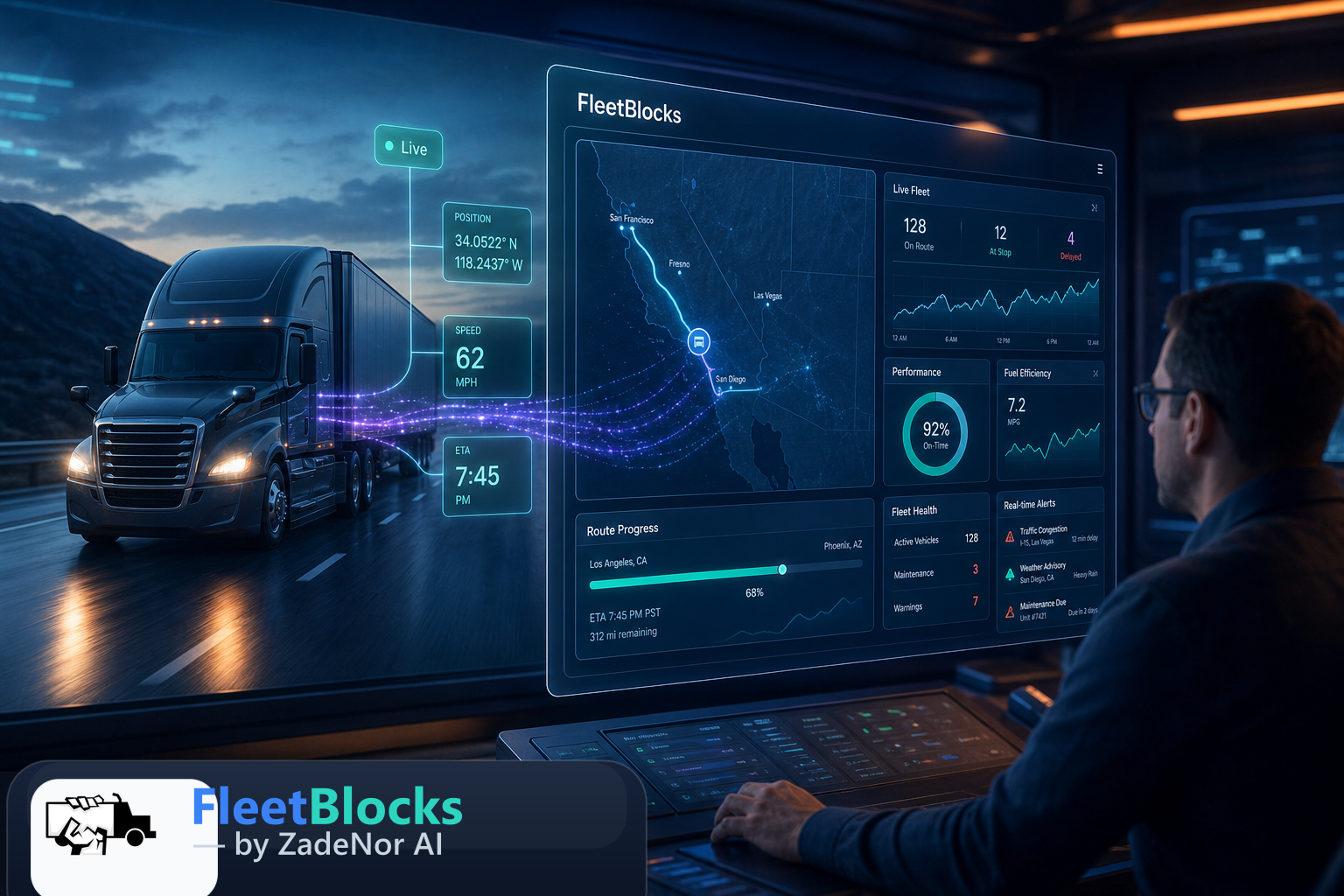
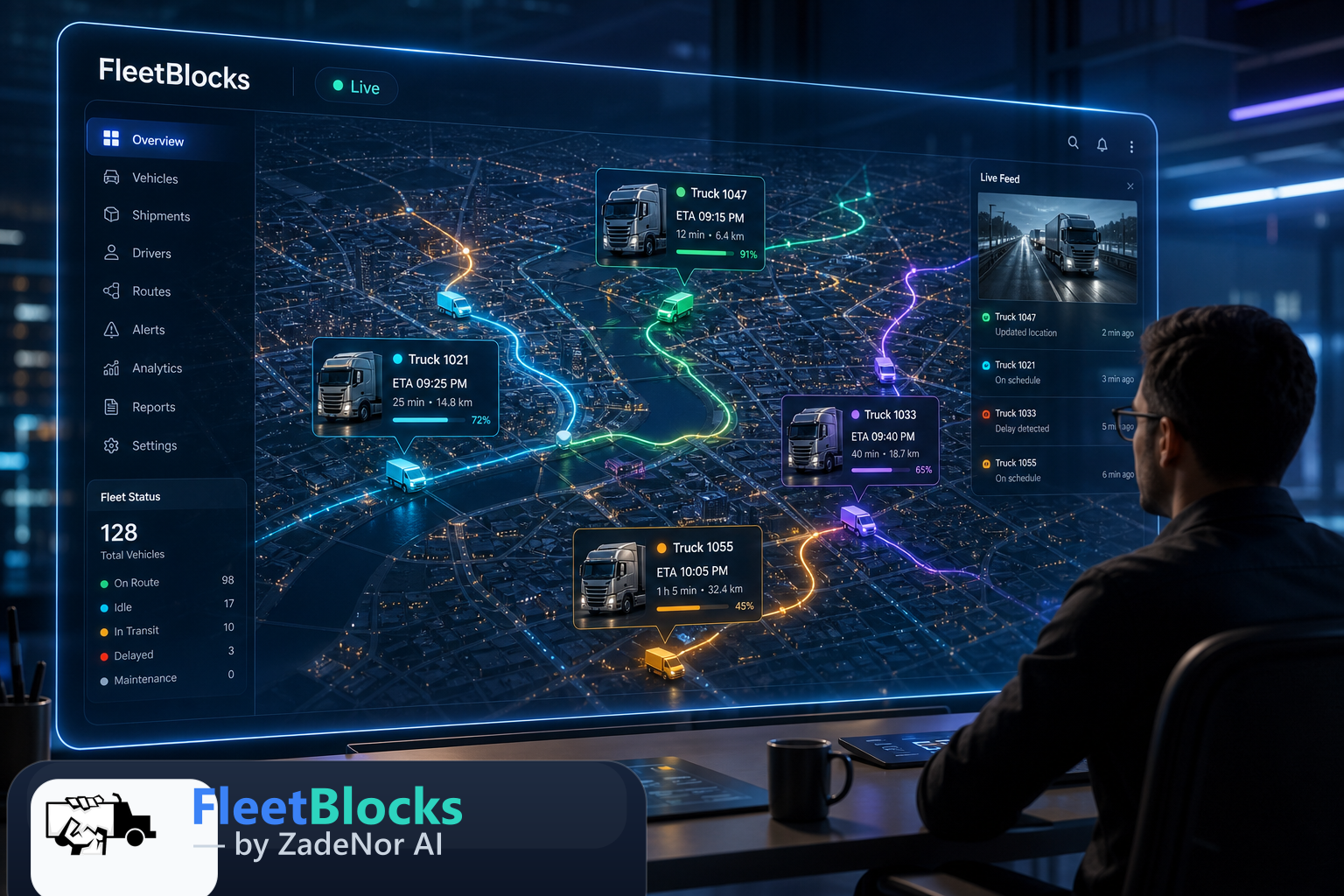
Because everything lives together, the team works from a single source of truth instead of scattered files and phones. This is where FleetBlocks comes in — the AI-powered transport & logistics command center built by ZadeNor AI. FleetBlocks connects dispatch, routing, tracking, proof of delivery and finance, so the whole operation moves as one. Rather than another spreadsheet, FleetBlocks puts every truck, every trip and every dollar on one calm screen.
The Transformation
The numbers follow the rigour: fewer empty miles, more on-time drops, and a tidier back office. The result is faster time from booking to paid while keeping promises on time, without trading away on-time performance or visibility. Operations stop being a daily scramble and start being a competitive advantage.
The Principle
The principle is simple: plan the smartest route, track it live, prove the delivery, and get paid. It works because the whole operation runs from one source of truth — every job, signature and dollar tracked and time-stamped. This is not about replacing dispatchers and drivers; it is about giving them a calm screen that keeps every promise on time.
Move Forward
Make faster time from booking to paid while keeping promises on time the standard across your operation. Get started with FleetBlocks, the AI-powered transport command center from ZadeNor AI — start free, no card required.
What looks like a dispatch problem is often a cash-flow and customer-trust problem in disguise. Teams end up firefighting instead of planning the most efficient, profitable runs. Over time, slow invoicing dragging out the cash cycle in price-sensitive lanes translates into wasted fuel, missed windows, and margin no operator wants to give away. Teams using this approach see Faster time from booking to paid while keeping promises on time. The result is faster time from booking to paid while keeping promises on time, without trading away on-time performance or visibility. The numbers follow the rigour: fewer empty miles, more on-time drops, and a tidier back office.
The cost of slow invoicing dragging out the cash cycle in price-sensitive lanes is rarely a single number — it is empty miles, late drops, and avoidable disputes. What looks like a dispatch problem is often a cash-flow and customer-trust problem in disguise. Teams end up firefighting instead of planning the most efficient, profitable runs. Operations stop being a daily scramble and start being a competitive advantage. The result is faster time from booking to paid while keeping promises on time, without trading away on-time performance or visibility. The numbers follow the rigour: fewer empty miles, more on-time drops, and a tidier back office.
What looks like a dispatch problem is often a cash-flow and customer-trust problem in disguise. For owners, the real risk is strategic: operational drag becomes a ceiling on the freight the fleet can take on. Teams using this approach see Faster time from booking to paid while keeping promises on time. Dispatchers get a calm, real-time command center; the business gets fuller trucks and faster cash. The result is faster time from booking to paid while keeping promises on time, without trading away on-time performance or visibility.
Over time, slow invoicing dragging out the cash cycle in price-sensitive lanes translates into wasted fuel, missed windows, and margin no operator wants to give away. Teams end up firefighting instead of planning the most efficient, profitable runs. The numbers follow the rigour: fewer empty miles, more on-time drops, and a tidier back office. Dispatchers get a calm, real-time command center; the business gets fuller trucks and faster cash. Operations stop being a daily scramble and start being a competitive advantage.
The cost of slow invoicing dragging out the cash cycle in price-sensitive lanes is rarely a single number — it is empty miles, late drops, and avoidable disputes. For owners, the real risk is strategic: operational drag becomes a ceiling on the freight the fleet can take on. For heavy & project cargo fleets, that means faster time from booking to paid while keeping promises on time the whole operation can rely on. Operations stop being a daily scramble and start being a competitive advantage. Teams using this approach see Faster time from booking to paid while keeping promises on time.