The Scenario
Expectations for developer velocity have shifted, and the tools people rely on have to keep up. AI coding agents are powerful, but running more than one at a time usually means chaos in a single shared working tree. The way you orchestrate parallel work says a lot about how confidently you can scale AI-assisted development. In modern development, the pressure is constant: move fast, keep the main branch green, and let AI agents help without stepping on each other. Most ai agent builders know the feeling: one agent runs, everyone else waits, and merges turn into a scramble.
The Problem
A recurring challenge for ai agent builders is no mcp server so tools can drive the orchestrator. It rarely starts as a crisis; no mcp server so tools can drive the orchestrator builds quietly until a big merge makes it impossible to ignore. Left unaddressed, no mcp server so tools can drive the orchestrator compounds: work stalls, conflicts pile up, and confidence in AI agents erodes.
How MergeHarbor Handles It
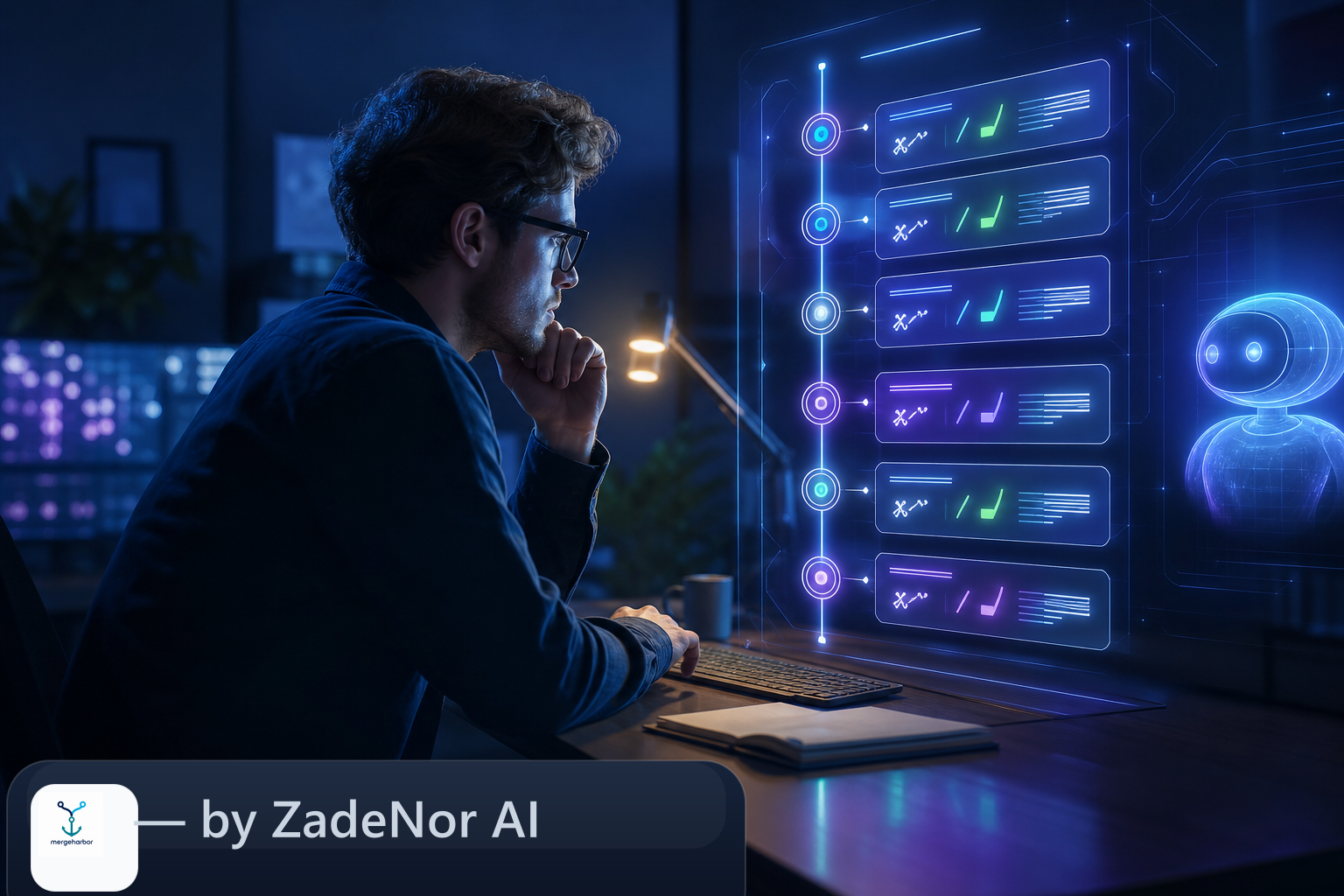
Since mCP server for any AI tool sits within the CLI & MCP capability set, it fits naturally into how ai agent builders already use git. This is where MergeHarbor comes in — the open-source AI coding agent orchestrator built by ZadeNor AI. Because every task is isolated and merged back safely, you work from a clean, coordinated flow instead of a tangled working directory. MergeHarbor tackles this with MCP server for any AI tool: A built-in MCP server lets any MCP-compatible AI tool drive MergeHarbor directly, so your agents can orchestrate themselves. MergeHarbor connects parallel orchestration, full runtime isolation, early conflict detection and safe serialized merges, so the whole workflow moves as one.
How It Works
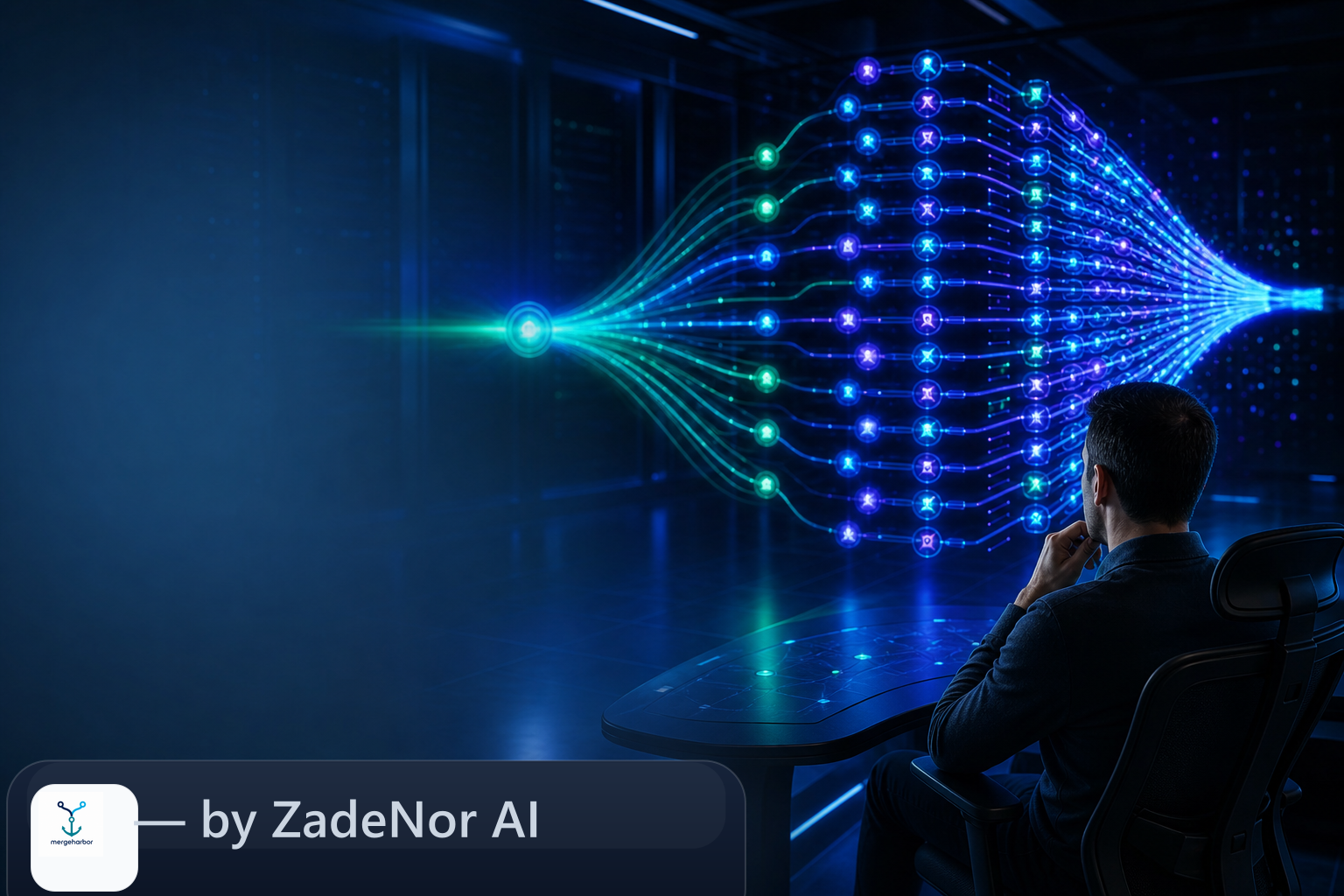
Getting started is straightforward: point MergeHarbor at your repo and it spins up an isolated git worktree per task, so agents never share a working tree. Each agent runs in full runtime isolation with its own dependencies and build state, so one task can never corrupt another. When tasks complete, a safe, serialized merge queue lands them one at a time, rechecking for conflicts so the main branch stays green.
The Outcome
Coordination stops being a daily scramble and starts being a competitive advantage. You get a calm, orchestrated flow; your throughput goes up and your merges stay clean. For ai agent builders, that means many ai agents working in parallel, safely under delivery pressure you can actually rely on.
Try It Yourself
Give your team one control plane for parallel AI coding agents. Try MergeHarbor — by ZadeNor AI — and watch orchestration, isolation and safe merging work together. Clone the open-source repo in minutes.
Over time, no mcp server so tools can drive the orchestrator translates into slower cycles, hidden regressions, and throughput no one wants to give away. The cost of no mcp server so tools can drive the orchestrator is rarely a single number — it is stalled work, late conflicts, and avoidable rework. You get a calm, orchestrated flow; your throughput goes up and your merges stay clean. Teams using this approach see Many AI agents working in parallel, safely under delivery pressure. For ai agent builders, that means many ai agents working in parallel, safely under delivery pressure you can actually rely on.
Every minute lost to no mcp server so tools can drive the orchestrator is a minute not spent on the change that actually matters. For leaders, the real risk is strategic: coordination drag becomes a ceiling on how much AI-assisted work the team can take on. The cost of no mcp server so tools can drive the orchestrator is rarely a single number — it is stalled work, late conflicts, and avoidable rework. The numbers follow the rigour: more work shipped in parallel, fewer late conflicts, and a main branch you can trust. You get a calm, orchestrated flow; your throughput goes up and your merges stay clean. For ai agent builders, that means many ai agents working in parallel, safely under delivery pressure you can actually rely on.
Every minute lost to no mcp server so tools can drive the orchestrator is a minute not spent on the change that actually matters. The cost of no mcp server so tools can drive the orchestrator is rarely a single number — it is stalled work, late conflicts, and avoidable rework. Teams end up serializing everything by hand instead of running agents in parallel with confidence. You get a calm, orchestrated flow; your throughput goes up and your merges stay clean. For ai agent builders, that means many ai agents working in parallel, safely under delivery pressure you can actually rely on.
Over time, no mcp server so tools can drive the orchestrator translates into slower cycles, hidden regressions, and throughput no one wants to give away. What looks like a tooling problem is often an isolation and merge problem in disguise. For ai agent builders, that means many ai agents working in parallel, safely under delivery pressure you can actually rely on. Coordination stops being a daily scramble and starts being a competitive advantage.