Where It Began
Markets move faster than the patchwork of tabs and apps most people watch them with. In finance, the pressure is constant: see everything, decide well, and act within your limits — at the speed of the market. Expectations in finance have shifted, and the tools people rely on have to keep up. For defi & on-chain investors, the difference between a good session and a chaotic one often comes down to how fast you can see the market and how safely you can act on it. The way you run a trading or investing day says a lot about how confidently you can grow.
The Problem
For a Manager, Compliance, acting on emotion instead of a defined plan is more than an inconvenience — it is a daily drag on edge and peace of mind. The issue shows up most clearly as Acting on emotion instead of a defined plan across research and execution. Left unaddressed, acting on emotion instead of a defined plan compounds: opportunities slip, risk creeps up, and confidence erodes. When acting on emotion instead of a defined plan sets in, the day tightens and the risk of a costly mistake grows.
How AFOS.one Helped
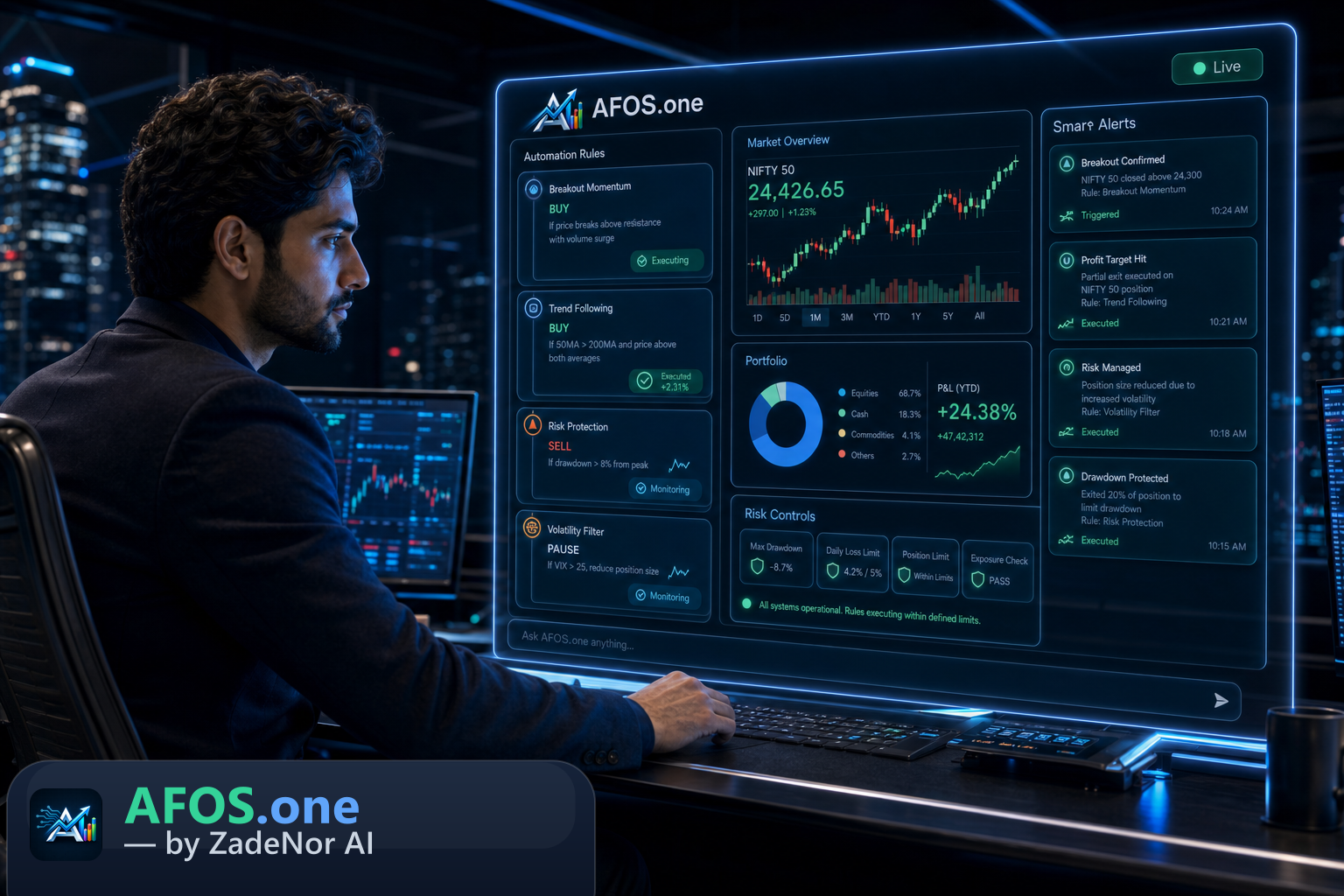
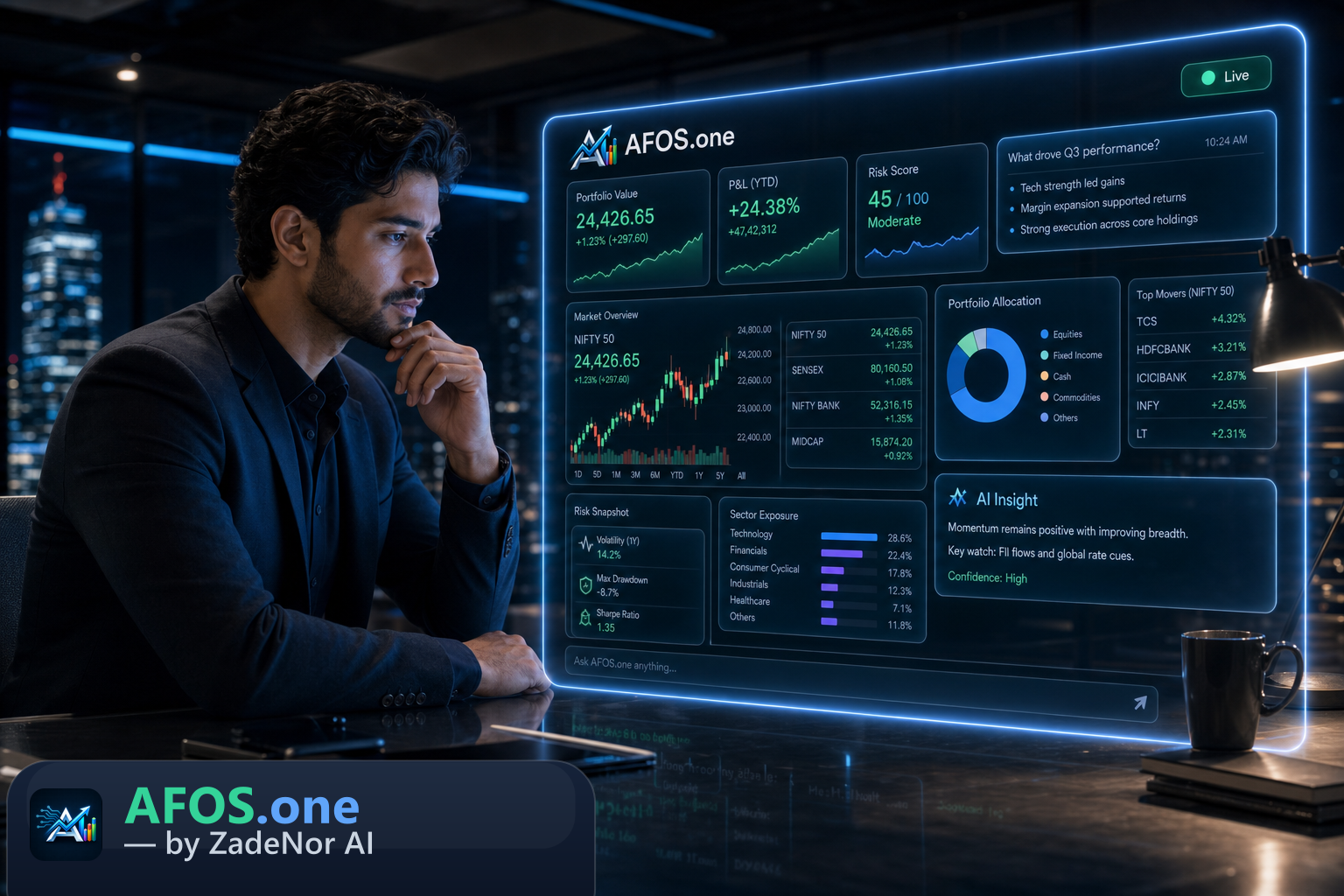
AFOS.one tackles this with No-code automation rules: Turn a strategy into automation rules — triggers, conditions and guarded actions — without writing a line of code, so setups execute consistently instead of by hand. AFOS.one connects real-time data, a grounded AI copilot, and safe agentic execution, so the whole workflow moves as one. This is where AFOS.one comes in — the agentic finance operating system built by ZadeNor AI. Rather than another tab, AFOS.one puts banking, equities, options and crypto on one real-time cockpit.
What Changed
The numbers follow the rigour: fewer missed setups, cleaner execution, and exposure you can always see. Operations stop being a daily scramble and start being a competitive advantage. The result is more edge recovered from every session, without trading away safety or visibility. For defi & on-chain investors, that means more edge recovered from every session you can actually rely on. People using this approach see More edge recovered from every session for cross-asset strategies.
The Takeaway
This is not about removing the human; it is about giving you a calm cockpit and an agent that can never step outside the rules. The pattern holds across defi & on-chain investors of every size: when data, research and execution live together behind guardrails, confidence grows. It works because the whole workflow runs from one source of truth — every position, decision and order tracked and time-stamped.
Explore AFOS.one
See it for yourself: AFOS.one by ZadeNor AI streams real-time data, grounds research with citations, and lets an AI agent act only within the limits you set. Start free today.
Over time, acting on emotion instead of a defined plan translates into worse fills, hidden exposure, and edge no one wants to give away. The cost of acting on emotion instead of a defined plan is rarely a single number — it is missed entries, sloppy exits, and avoidable risk. Operations stop being a daily scramble and start being a competitive advantage. The numbers follow the rigour: fewer missed setups, cleaner execution, and exposure you can always see.
People end up reacting instead of running a calm, defined plan. Every minute lost to acting on emotion instead of a defined plan is a minute not spent on the decision that actually matters. What looks like a tooling problem is often a risk and trust problem in disguise. Operations stop being a daily scramble and start being a competitive advantage. You get a calm, real-time command center; your decisions get faster and your risk stays inside the lines.
What looks like a tooling problem is often a risk and trust problem in disguise. Every minute lost to acting on emotion instead of a defined plan is a minute not spent on the decision that actually matters. People end up reacting instead of running a calm, defined plan. The result is more edge recovered from every session, without trading away safety or visibility. Operations stop being a daily scramble and start being a competitive advantage.
For leaders, the real risk is strategic: operational drag becomes a ceiling on what the desk can take on. The cost of acting on emotion instead of a defined plan is rarely a single number — it is missed entries, sloppy exits, and avoidable risk. Operations stop being a daily scramble and start being a competitive advantage. The numbers follow the rigour: fewer missed setups, cleaner execution, and exposure you can always see. The result is more edge recovered from every session, without trading away safety or visibility.
What looks like a tooling problem is often a risk and trust problem in disguise. People end up reacting instead of running a calm, defined plan. Operations stop being a daily scramble and start being a competitive advantage. The numbers follow the rigour: fewer missed setups, cleaner execution, and exposure you can always see.
Over time, acting on emotion instead of a defined plan translates into worse fills, hidden exposure, and edge no one wants to give away. What looks like a tooling problem is often a risk and trust problem in disguise. Operations stop being a daily scramble and start being a competitive advantage. You get a calm, real-time command center; your decisions get faster and your risk stays inside the lines. The numbers follow the rigour: fewer missed setups, cleaner execution, and exposure you can always see.