What to Know
In Luxury & Designer Fashion, the product page has to do what a fitting room once did — and flat photos rarely manage it. Most luxury & designer fashion teams know the pattern: plenty of browsing, plenty of returns, and a fuzzy picture in between. Fit and confidence have quietly become the biggest swing factors in luxury & designer fashion. Expectations in Luxury & Designer Fashion have shifted, and the tools brands use to show their pieces have to keep up.
The Issue
A recurring challenge for luxury & designer fashion is slow iteration between a design idea and a sellable sku. For a Lead, Growth, slow iteration between a design idea and a sellable sku is more than an annoyance — it is a steady drag on conversion and margin. Left unaddressed, slow iteration between a design idea and a sellable sku compounds: confidence drops, returns rise, and the catalog feels flat. It rarely starts as a crisis; slow iteration between a design idea and a sellable sku builds quietly until a returns report or a soft launch makes it impossible to ignore. The issue shows up most clearly as Slow iteration between a design idea and a sellable SKU with a limited marketing budget.
Top Questions
Will it fit our 3D assets? Yes — Mirari imports standard glTF/GLB garments and exports USDZ for Apple AR Quick Look, so it fits an interoperable pipeline.
Is Mirari photoreal? Mirari is a live, expressive on-body try-on — an AR "mirror" plus a rigged 3D avatar. A photoreal native-GPU tier is on the roadmap; the shipping experience is designed to stay $0 cloud-GPU.
What does it cost to run? Perception and rendering run on the shopper’s device, so there is no per-session cloud-GPU bill; the backend sits inside generous free tiers.
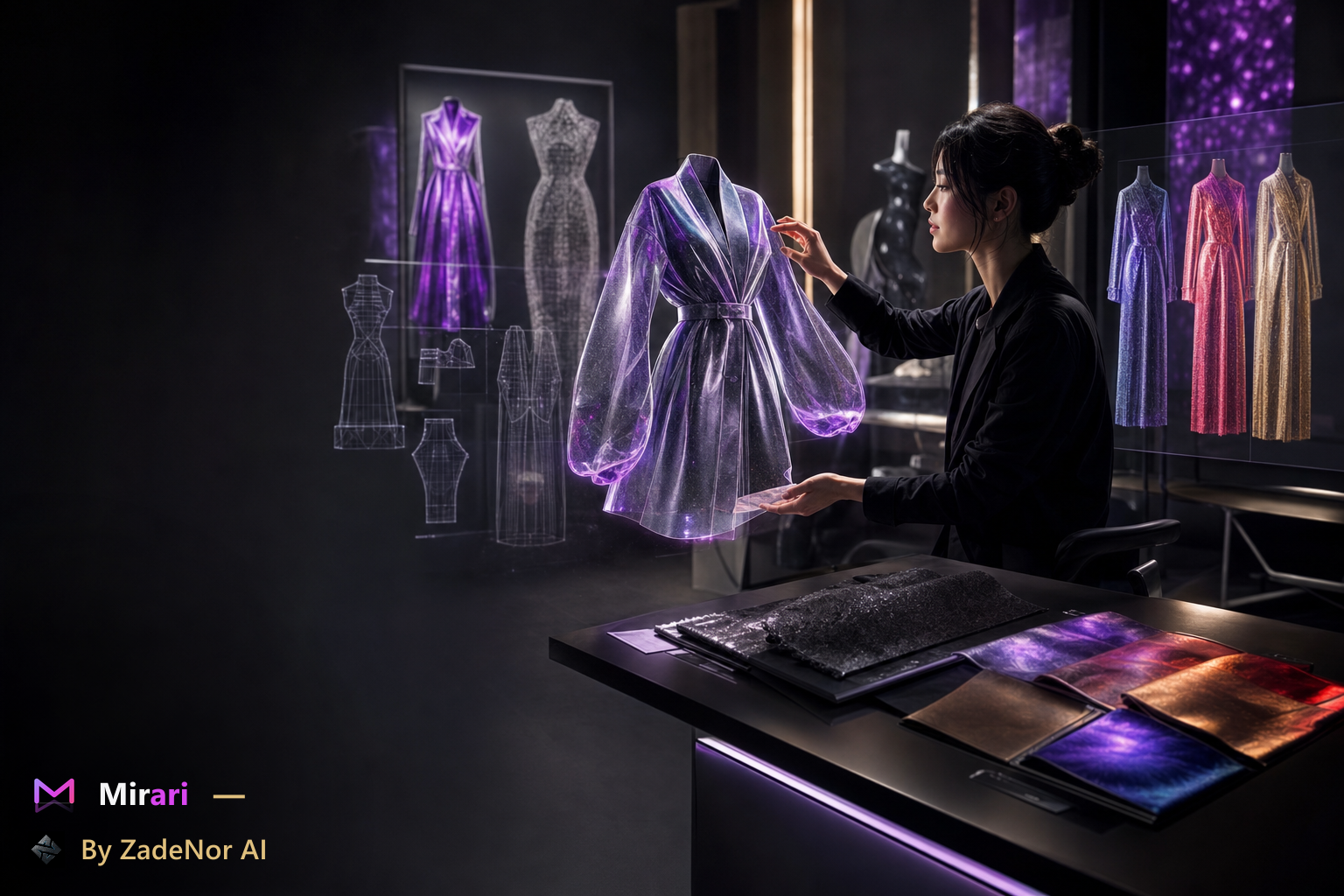
Can my team design in it too? Yes. The Design Studio recolors, re-fabrics, places prints, switches colorways and even generates garments from templates — then pushes them straight to the try-on catalog.
The Capability
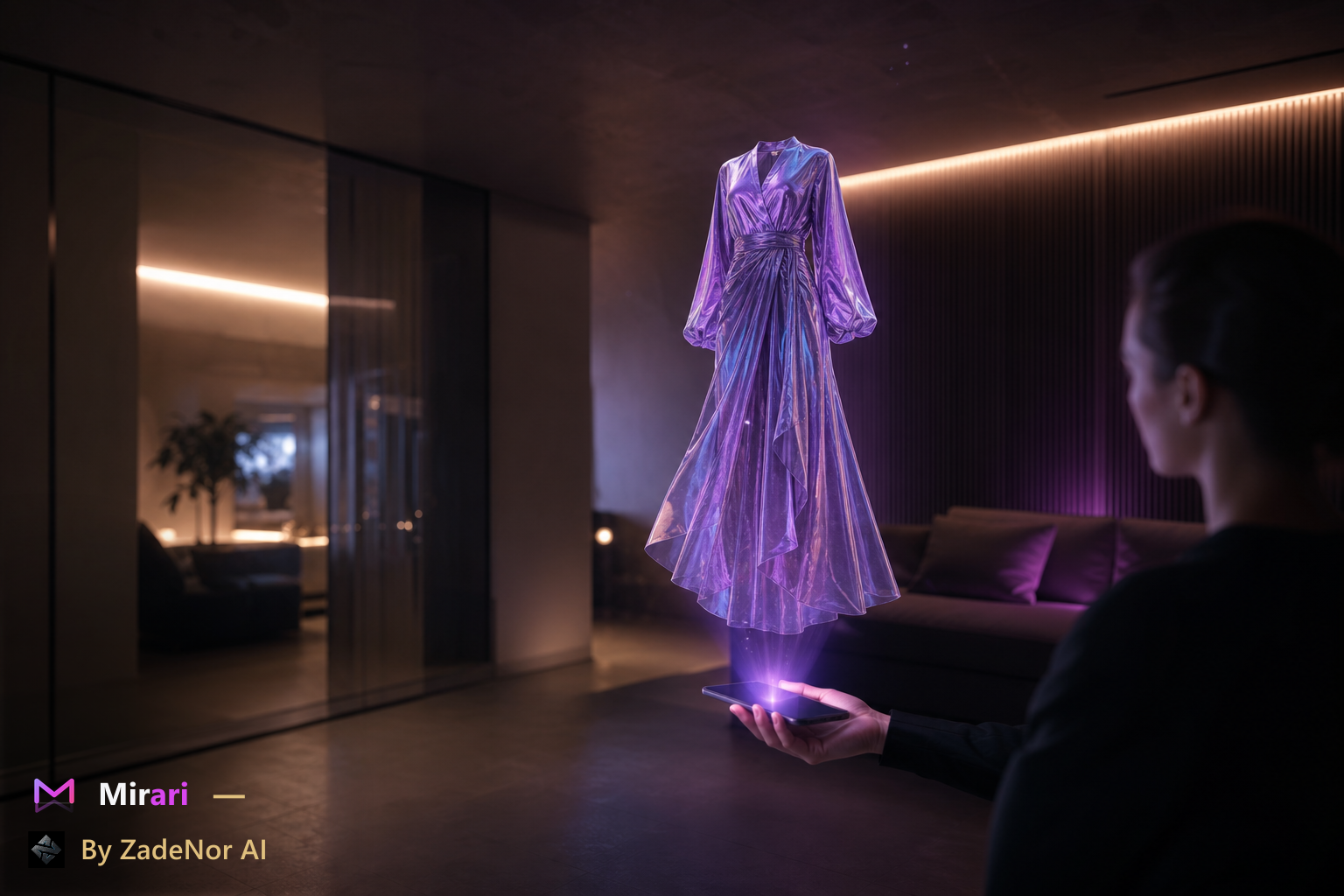
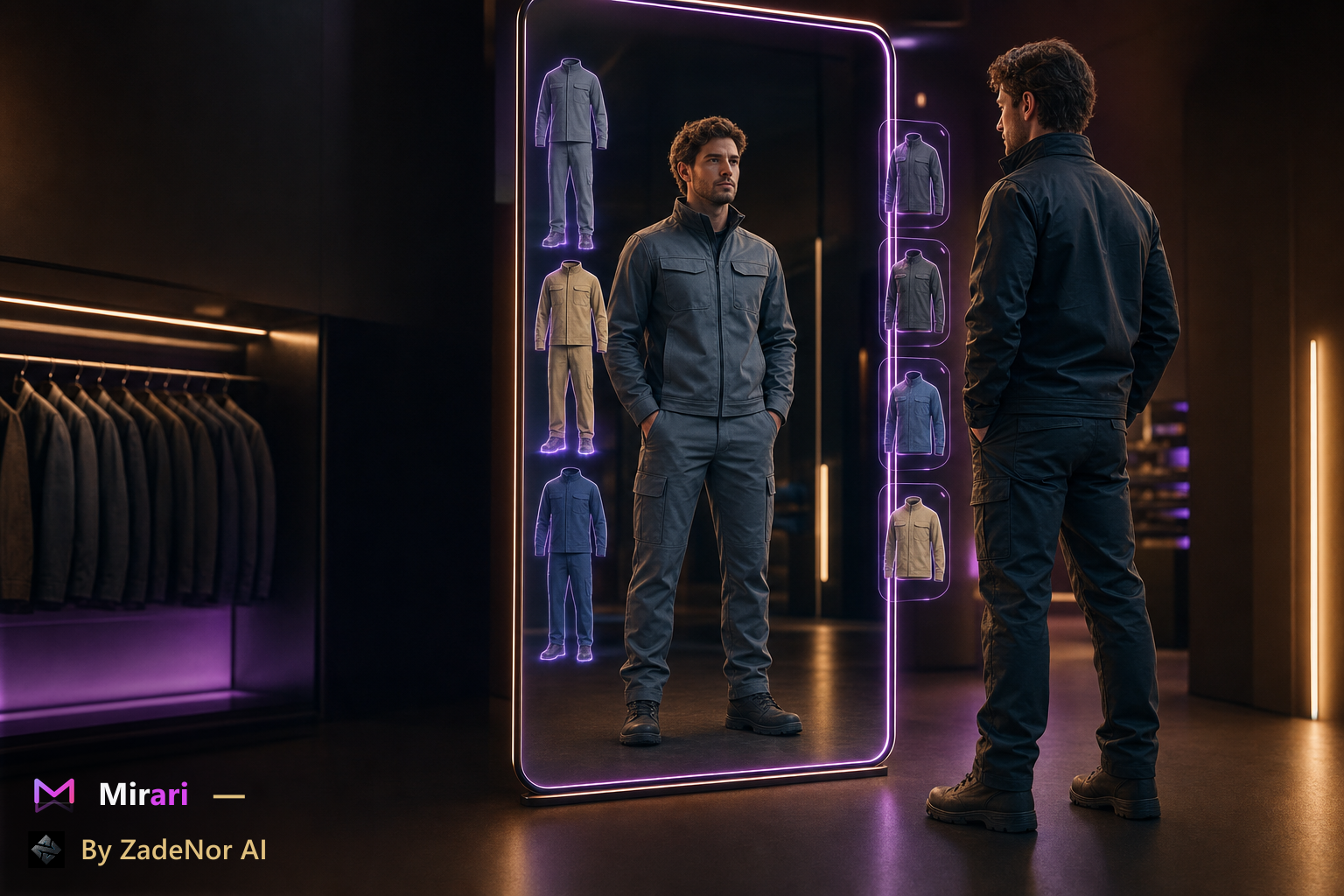
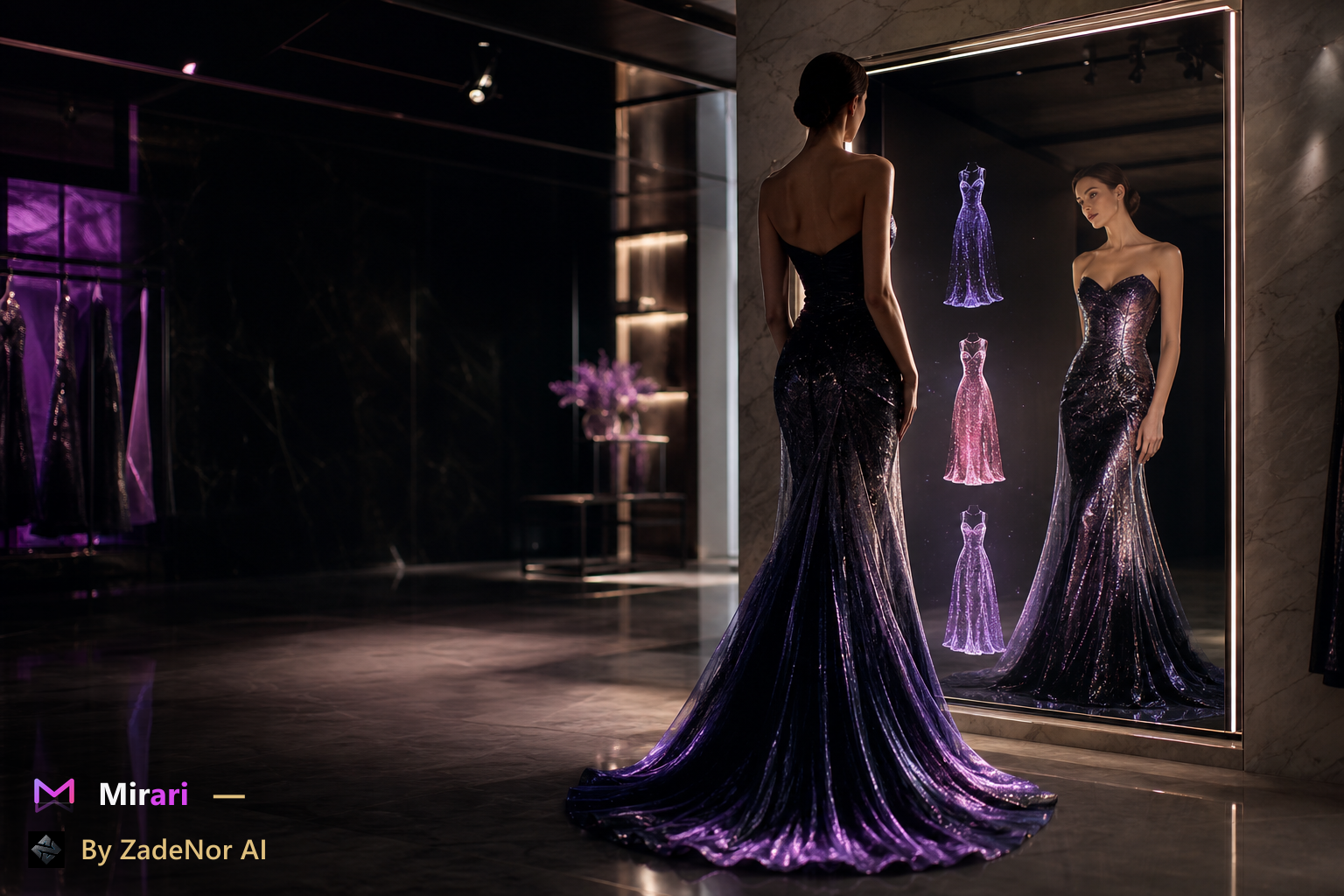
Because perception and rendering run in the browser, the experience feels instant — and it costs nothing in cloud GPU. Rather than another flat gallery, Mirari puts the garment on the shopper’s own body, live, with their real arms and hair in front of the cloth. Mirari tackles this with Parametric template-to-garment generation: Generate brand-new garments (tee, longsleeve, tank, hoodie, dress, skirt) from parametric templates into real GLBs and catalog products, ready to try on. Since parametric template-to-garment generation sits within the Design Studio part of Mirari, it fits naturally into how luxury & designer fashion teams already work.
The Win
Shoppers get a believable look at the fit; the brand gets fewer returns and more confident checkouts. The numbers follow the confidence: higher add-to-cart, fewer bracketed orders, and drops that land. For luxury & designer fashion, that means a connected design-to-storefront workflow the whole team can rely on.
Move Forward
Want a connected design-to-storefront workflow with a lean team across your Luxury & Designer Fashion catalog? Explore Mirari by ZadeNor AI and let shoppers try looks on themselves while AI helps them find the right size. No app install, no per-session GPU bill.
Teams end up reshooting and discounting instead of merchandising with confidence. Over time, slow iteration between a design idea and a sellable sku translates into bracketed orders, costly reverse logistics, and drops that never find their audience. Brands using this approach see A connected design-to-storefront workflow with a lean team. Shoppers get a believable look at the fit; the brand gets fewer returns and more confident checkouts. The result is a connected design-to-storefront workflow, without a render farm or a per-session GPU bill.
Teams end up reshooting and discounting instead of merchandising with confidence. Over time, slow iteration between a design idea and a sellable sku translates into bracketed orders, costly reverse logistics, and drops that never find their audience. The result is a connected design-to-storefront workflow, without a render farm or a per-session GPU bill. Brands using this approach see A connected design-to-storefront workflow with a lean team.
Teams end up reshooting and discounting instead of merchandising with confidence. What looks like a product-page problem is often a fit, confidence and returns problem in disguise. Over time, slow iteration between a design idea and a sellable sku translates into bracketed orders, costly reverse logistics, and drops that never find their audience. The numbers follow the confidence: higher add-to-cart, fewer bracketed orders, and drops that land. Shoppers get a believable look at the fit; the brand gets fewer returns and more confident checkouts. Try-on stops being a gimmick and starts being a default on every product page.
Teams end up reshooting and discounting instead of merchandising with confidence. Every shopper who cannot picture the fit is a basket left half-built. What looks like a product-page problem is often a fit, confidence and returns problem in disguise. Try-on stops being a gimmick and starts being a default on every product page. The numbers follow the confidence: higher add-to-cart, fewer bracketed orders, and drops that land. For luxury & designer fashion, that means a connected design-to-storefront workflow the whole team can rely on.