The Essentials
The way a kidswear & family brand lets people picture a garment on themselves says a lot about how it converts. Expectations in Kidswear & Family have shifted, and the tools brands use to show their pieces have to keep up. For kidswear & family, the moment a shopper imagines a piece on their own body is the moment a sale is won or lost. Most kidswear & family teams know the pattern: plenty of browsing, plenty of returns, and a fuzzy picture in between.
The Need
Left unaddressed, browsers who never become buyers compounds: confidence drops, returns rise, and the catalog feels flat. When browsers who never become buyers sets in, shoppers hesitate, baskets stall, and returns climb. For a Director of Marketing, browsers who never become buyers is more than an annoyance — it is a steady drag on conversion and margin. A recurring challenge for kidswear & family is browsers who never become buyers. It rarely starts as a crisis; browsers who never become buyers builds quietly until a returns report or a soft launch makes it impossible to ignore.
Q&A
Is Mirari photoreal? Mirari is a live, expressive on-body try-on — an AR "mirror" plus a rigged 3D avatar. A photoreal native-GPU tier is on the roadmap; the shipping experience is designed to stay $0 cloud-GPU.
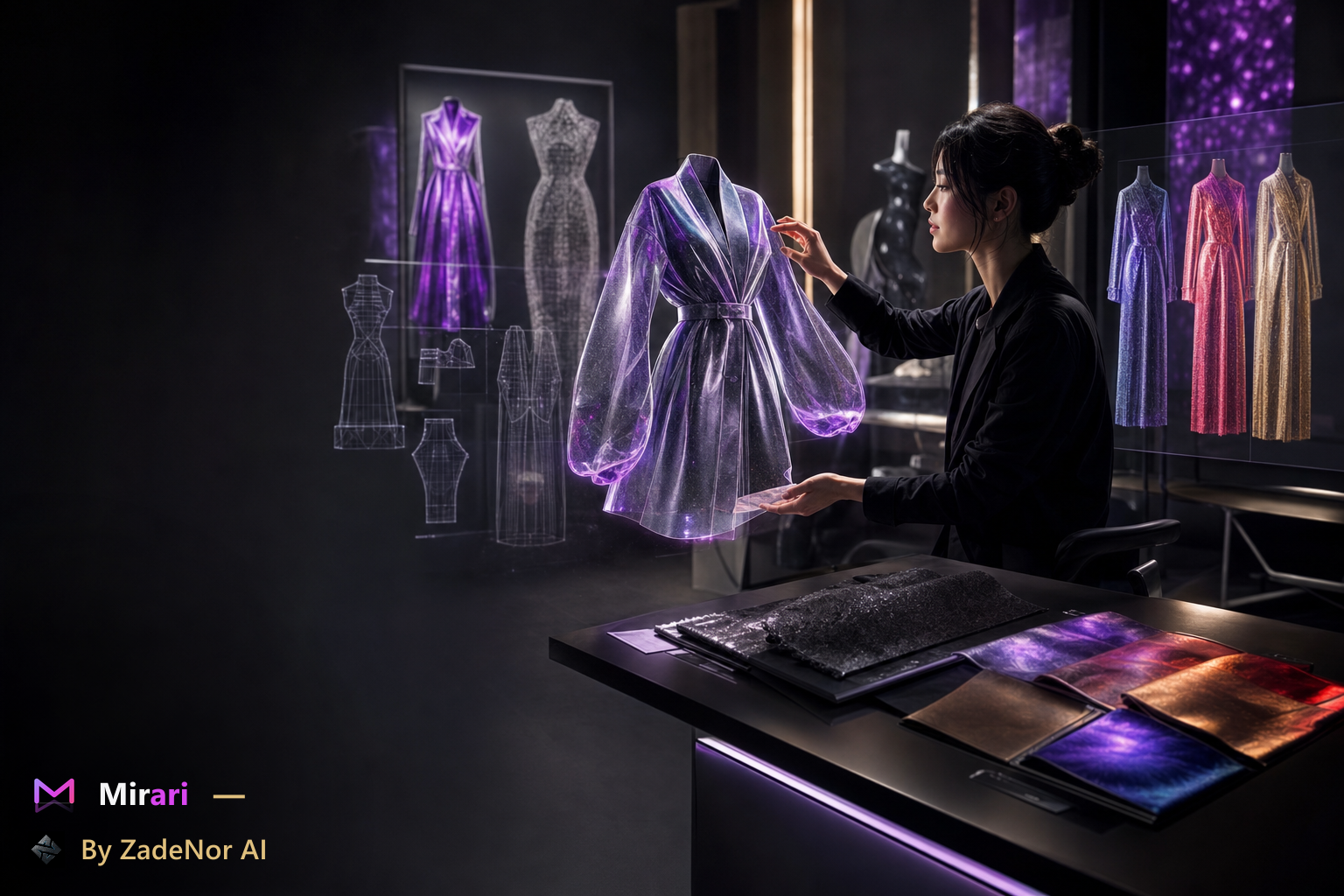
Can my team design in it too? Yes. The Design Studio recolors, re-fabrics, places prints, switches colorways and even generates garments from templates — then pushes them straight to the try-on catalog.
What does it cost to run? Perception and rendering run on the shopper’s device, so there is no per-session cloud-GPU bill; the backend sits inside generous free tiers.
Does it need an app or a powerful phone? No — Mirari runs in the browser with an adaptive quality governor that keeps it smooth from mid-range phones to flagship hardware, and it falls back gracefully without a camera.
The Fix
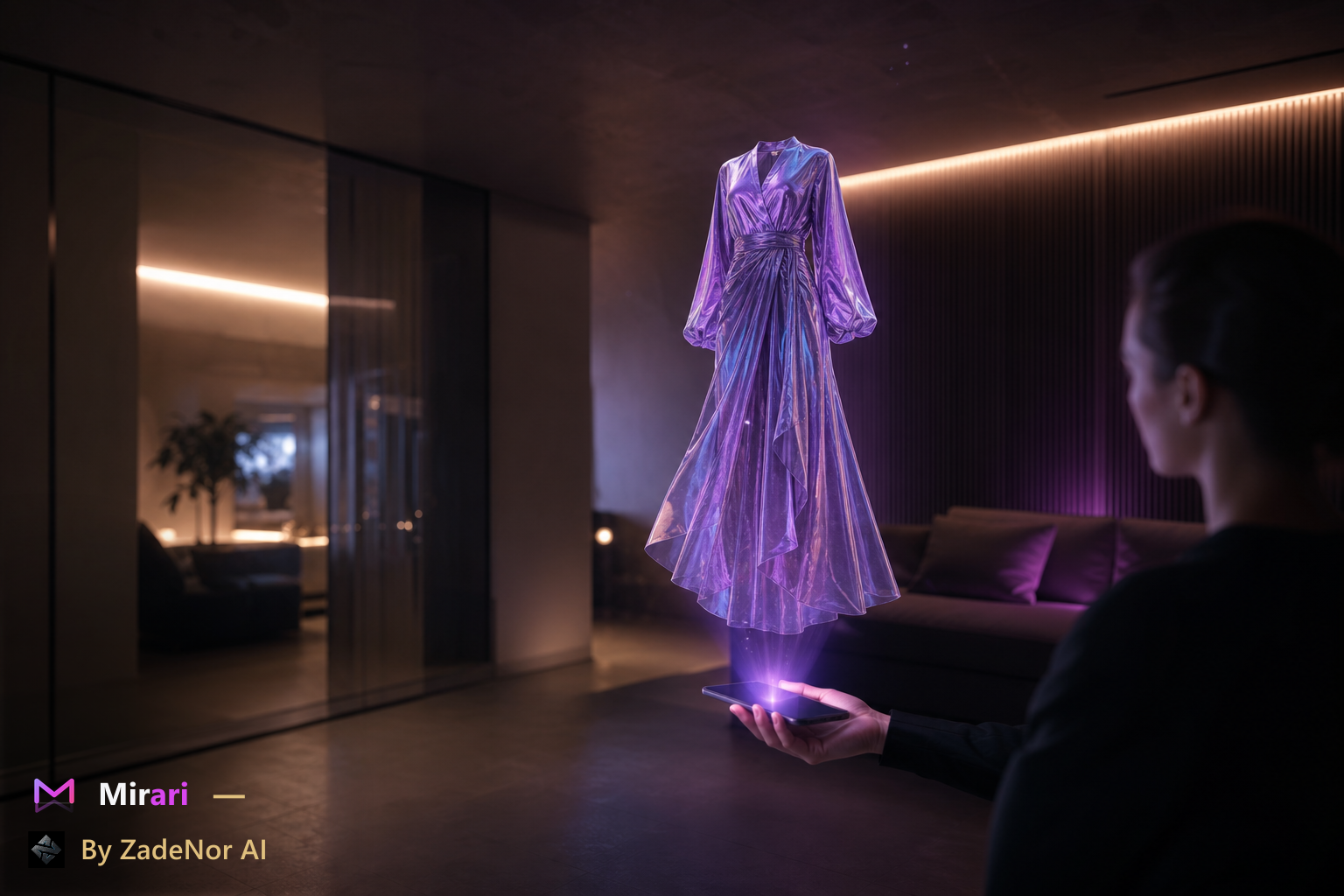
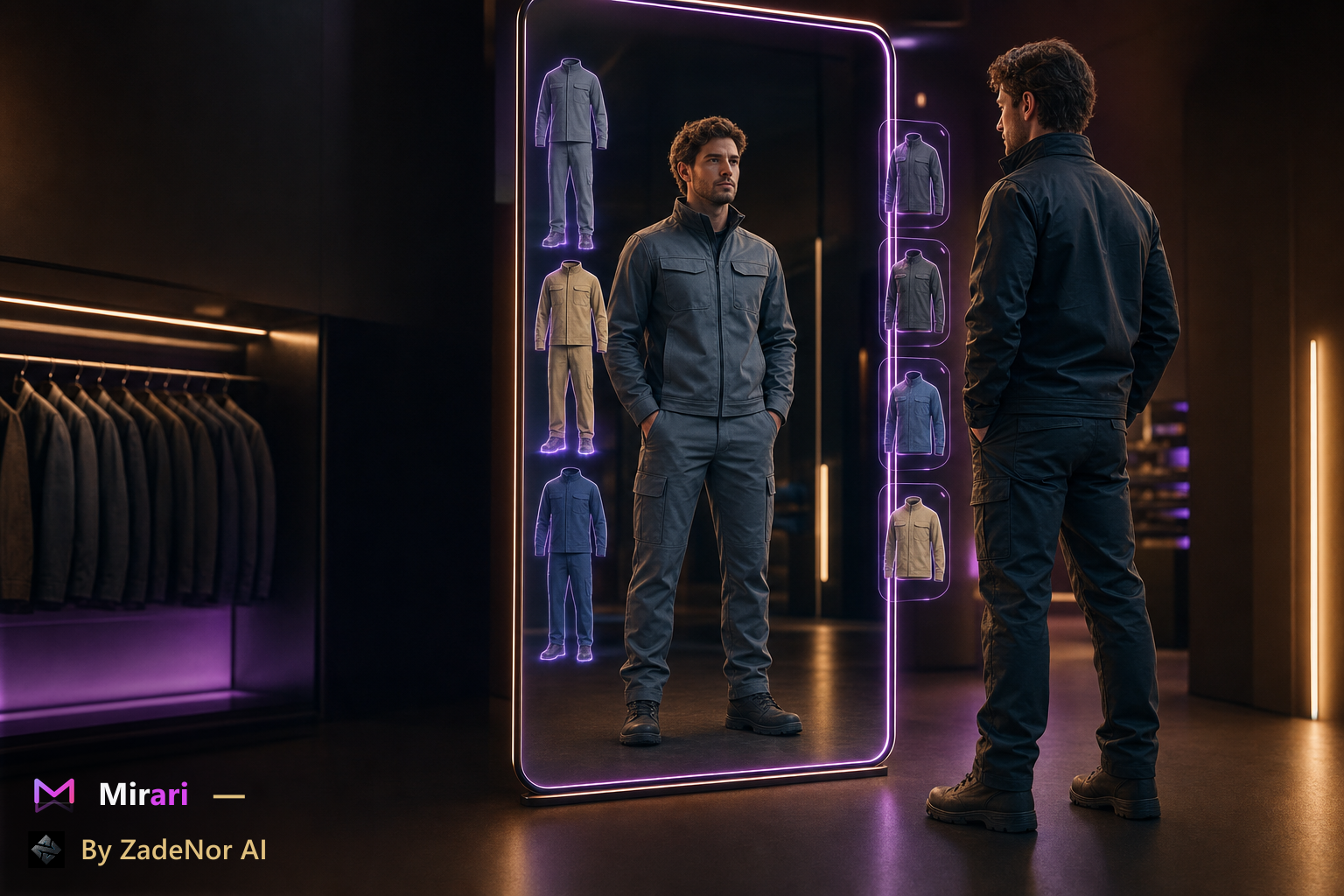
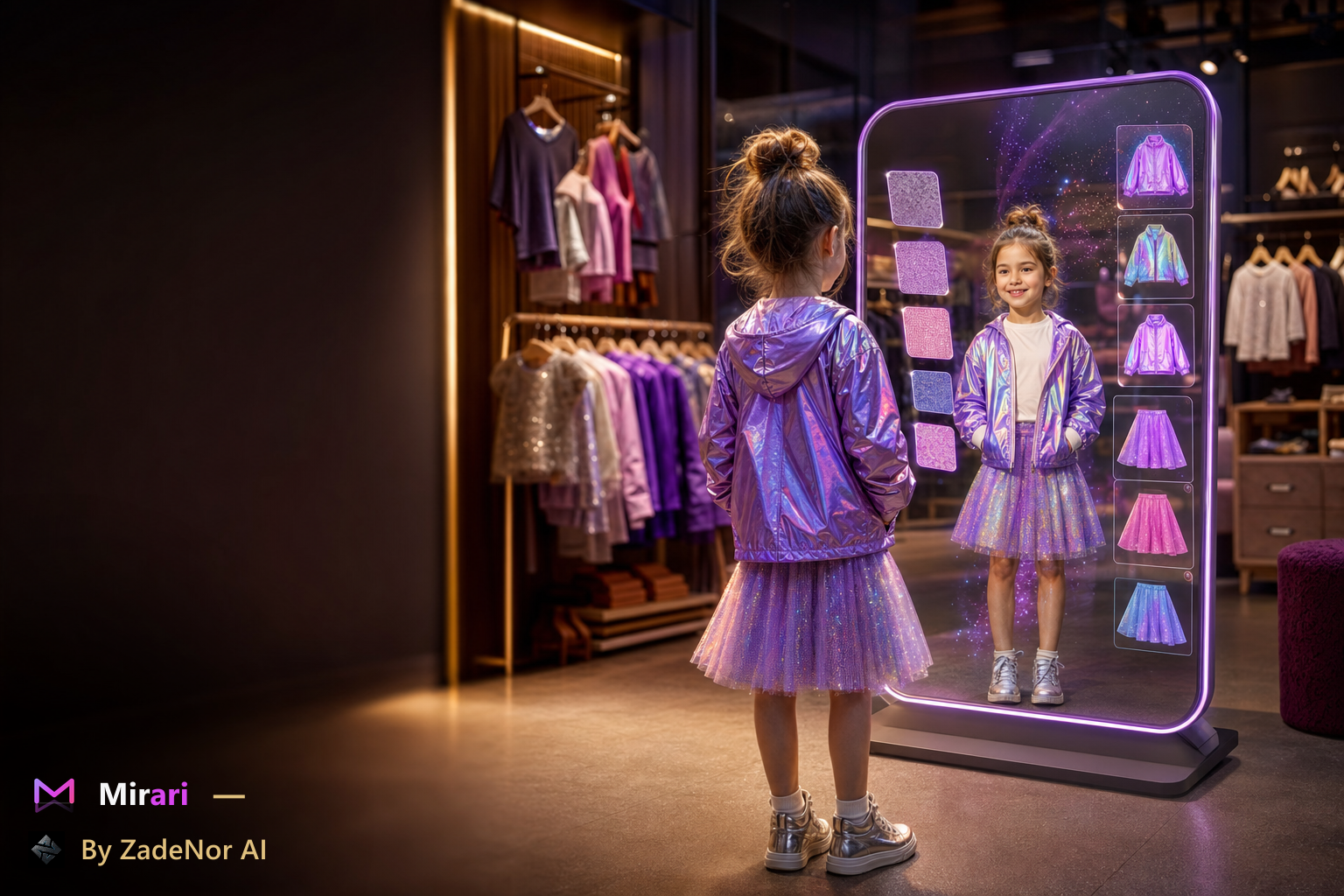
This is where Mirari comes in — the AI-powered virtual try-on and garment-design app built by ZadeNor AI. Mirari pairs a believable try-on with a design studio, so the same tool that shoppers try on in is the one your team designs in. Rather than another flat gallery, Mirari puts the garment on the shopper’s own body, live, with their real arms and hair in front of the cloth. Mirari tackles this with Adaptive 5-tier quality governor: An FPS-aware governor scales matting, shadows, pose model and pixel ratio across five tiers so try-on stays smooth from mid-range phones to flagship hardware.
Why It Matters
For kidswear & family, that means faster colorway and print iteration the whole team can rely on. Try-on stops being a gimmick and starts being a default on every product page. Shoppers get a believable look at the fit; the brand gets fewer returns and more confident checkouts.
Where to Begin
Want faster colorway and print iteration for shoppers across your Kidswear & Family catalog? Explore Mirari by ZadeNor AI and let shoppers try looks on themselves while AI helps them find the right size. No app install, no per-session GPU bill.
Teams end up reshooting and discounting instead of merchandising with confidence. For leaders, the real risk is strategic: a try-on gap becomes a ceiling on how far the brand can scale online. Try-on stops being a gimmick and starts being a default on every product page. Brands using this approach see Faster colorway and print iteration for shoppers. The result is faster colorway and print iteration, without a render farm or a per-session GPU bill.
Teams end up reshooting and discounting instead of merchandising with confidence. For leaders, the real risk is strategic: a try-on gap becomes a ceiling on how far the brand can scale online. Every shopper who cannot picture the fit is a basket left half-built. Shoppers get a believable look at the fit; the brand gets fewer returns and more confident checkouts. The numbers follow the confidence: higher add-to-cart, fewer bracketed orders, and drops that land. For kidswear & family, that means faster colorway and print iteration the whole team can rely on.
What looks like a product-page problem is often a fit, confidence and returns problem in disguise. Every shopper who cannot picture the fit is a basket left half-built. The numbers follow the confidence: higher add-to-cart, fewer bracketed orders, and drops that land. Try-on stops being a gimmick and starts being a default on every product page.
What looks like a product-page problem is often a fit, confidence and returns problem in disguise. The cost of browsers who never become buyers is rarely a single number — it is lost conversion, return shipping, and a catalog that underperforms. Every shopper who cannot picture the fit is a basket left half-built. Try-on stops being a gimmick and starts being a default on every product page. For kidswear & family, that means faster colorway and print iteration the whole team can rely on.
The cost of browsers who never become buyers is rarely a single number — it is lost conversion, return shipping, and a catalog that underperforms. For leaders, the real risk is strategic: a try-on gap becomes a ceiling on how far the brand can scale online. Try-on stops being a gimmick and starts being a default on every product page. Brands using this approach see Faster colorway and print iteration for shoppers.