Current State
Right now, denim & casualwear product pages still lean on flat photos and a size chart. A clear signal is emerging: live, in-browser virtual try-on is moving from nice-to-have to expectation. The status quo asks shoppers to imagine the fit, which simply cannot keep pace with rising expectations. Today, many brands reserve any 3D or AR for a few hero products because the pipeline is too costly.
The Emerging Trend
Expect AI to handle perception and sizing so teams can focus on design and merchandising. In the near future, shoppers will assume they can see any garment on themselves before they buy. The direction is unmistakable: try-on is becoming live, on-body and conversational by default. Brands that adopt in-browser try-on early will set the pace others scramble to match.
The Challenge Ahead
Left unaddressed, carts abandoned over uncertainty, not price compounds: confidence drops, returns rise, and the catalog feels flat. A recurring challenge for denim & casualwear is carts abandoned over uncertainty, not price. The issue shows up most clearly as Carts abandoned over uncertainty, not price during a quiet shopping stretch.
How Mirari Prepares You
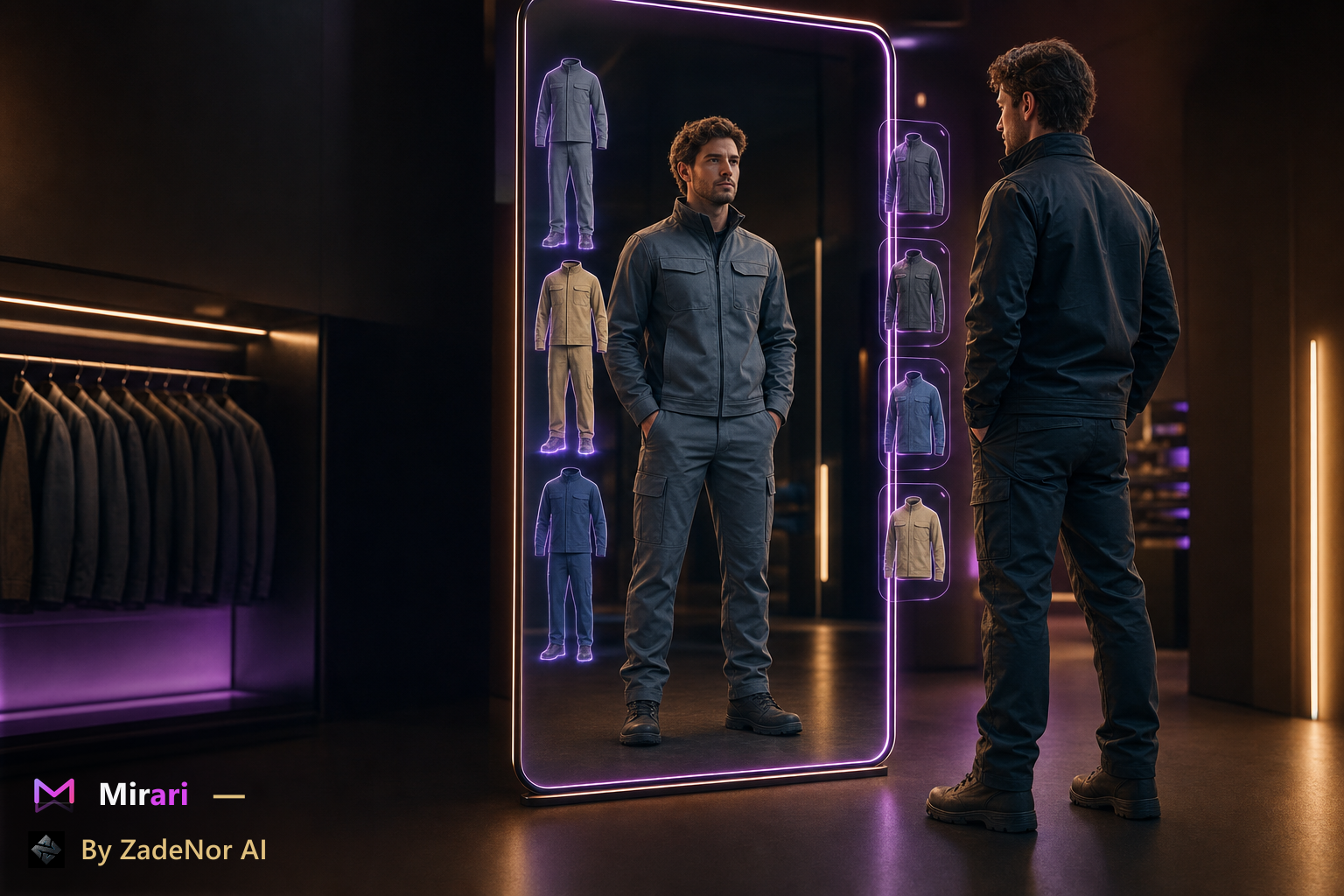
Since semantic product search sits within the AI Perception part of Mirari, it fits naturally into how denim & casualwear teams already work. Mirari tackles this with Semantic product search: Natural-language and visual intent are matched to the right garment, with a keyword fallback so search always works. This is where Mirari comes in — the AI-powered virtual try-on and garment-design app built by ZadeNor AI. Rather than another flat gallery, Mirari puts the garment on the shopper’s own body, live, with their real arms and hair in front of the cloth.
Where This Goes
In the near future, shoppers will assume they can see any garment on themselves before they buy. Brands that adopt in-browser try-on early will set the pace others scramble to match. The direction is unmistakable: try-on is becoming live, on-body and conversational by default. Expect AI to handle perception and sizing so teams can focus on design and merchandising.
Preparation Strategy
Treat try-on as a conversion lever, not a novelty, and design the catalog around it. Pilot Mirari on your next drop and measure add-to-cart and return rate before and after. Start with the hero pieces and the high-return categories — that is where try-on pays off fastest.
The Payoff
The result is sizing guidance shoppers actually trust, without a render farm or a per-session GPU bill. Brands using this approach see Sizing guidance shoppers actually trust for international shoppers. Shoppers get a believable look at the fit; the brand gets fewer returns and more confident checkouts. For denim & casualwear, that means sizing guidance shoppers actually trust the whole team can rely on. Try-on stops being a gimmick and starts being a default on every product page.
Get Started
See it for yourself: Mirari by ZadeNor AI composites garments onto real bodies, recolors in real time, generates pieces from templates and exports to AR. Start free today.
Teams end up reshooting and discounting instead of merchandising with confidence. Over time, carts abandoned over uncertainty, not price translates into bracketed orders, costly reverse logistics, and drops that never find their audience. The cost of carts abandoned over uncertainty, not price is rarely a single number — it is lost conversion, return shipping, and a catalog that underperforms. Try-on stops being a gimmick and starts being a default on every product page. The result is sizing guidance shoppers actually trust, without a render farm or a per-session GPU bill.
The cost of carts abandoned over uncertainty, not price is rarely a single number — it is lost conversion, return shipping, and a catalog that underperforms. Every shopper who cannot picture the fit is a basket left half-built. The numbers follow the confidence: higher add-to-cart, fewer bracketed orders, and drops that land. Brands using this approach see Sizing guidance shoppers actually trust for international shoppers.
For leaders, the real risk is strategic: a try-on gap becomes a ceiling on how far the brand can scale online. Every shopper who cannot picture the fit is a basket left half-built. Try-on stops being a gimmick and starts being a default on every product page. The numbers follow the confidence: higher add-to-cart, fewer bracketed orders, and drops that land. The result is sizing guidance shoppers actually trust, without a render farm or a per-session GPU bill.
Teams end up reshooting and discounting instead of merchandising with confidence. Every shopper who cannot picture the fit is a basket left half-built. Shoppers get a believable look at the fit; the brand gets fewer returns and more confident checkouts. Try-on stops being a gimmick and starts being a default on every product page.
For leaders, the real risk is strategic: a try-on gap becomes a ceiling on how far the brand can scale online. What looks like a product-page problem is often a fit, confidence and returns problem in disguise. Brands using this approach see Sizing guidance shoppers actually trust for international shoppers. The result is sizing guidance shoppers actually trust, without a render farm or a per-session GPU bill.