Visualizing Perseverance’s AI-Planned Drive on Mars
The Future of Space Exploration: Visualizing Perseverance's AI-Planned Drive on Mars
As we continue to push the boundaries of space exploration, the role of artificial intelligence (AI) is becoming increasingly crucial in navigating the vast and unforgiving terrain of Mars. The Perseverance rover, launched by NASA in 2020, has been at the forefront of this effort, using AI to plan its drives and make decisions on the Martian surface. In this article, we'll delve into the details of Perseverance's AI-planned drive on Mars, exploring the technology behind it and its implications for future space missions.
The Caspian Visualization Tool: A Key to Understanding AI-Driven Decision-Making
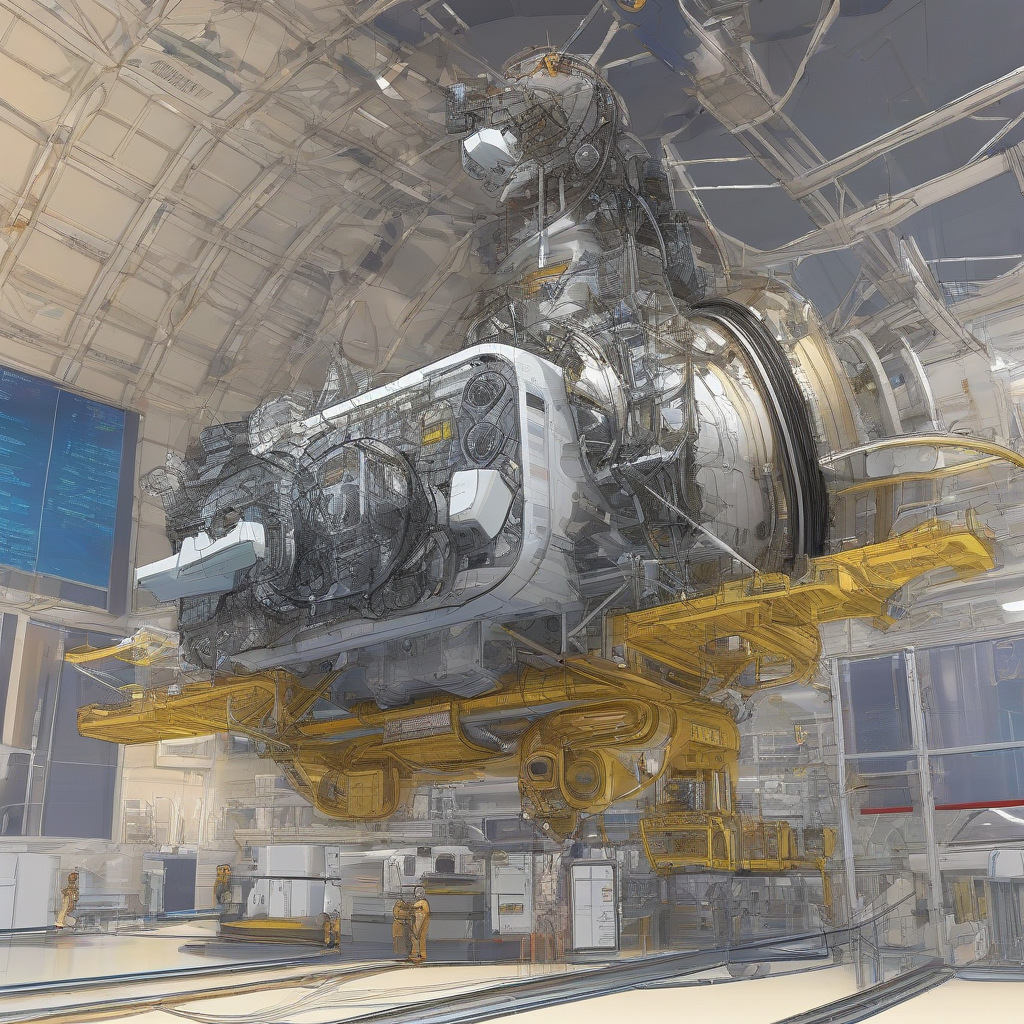
The animation of Perseverance's drive on Mars, created using the Caspian visualization tool, provides a unique insight into the rover's autonomous decision-making process. The animation shows the rover's path, marked by pale blue lines, as it navigates the Martian terrain. The black lines snaking out in front of the rover depict the different path options it is considering moment to moment. This visualization tool is essential in understanding how the AI system makes decisions and why it chooses one path over others.
AI-Driven Route Planning: A Game-Changer for Space Exploration
The AI system used by Perseverance to plan its drives is a significant departure from traditional route planning methods. Instead of relying on pre-programmed routes, the AI analyzes high-resolution orbital imagery from the HiRISE camera aboard NASA's Mars Reconnaissance Orbiter and terrain-slope data from digital elevation models to identify critical terrain features. From this analysis, it generates a continuous path complete with waypoints, fixed locations where the rover takes up a new set of instructions. This approach allows the rover to adapt to changing terrain conditions and make decisions in real-time, significantly improving its chances of success.
The Importance of Terrain Awareness
Terrain awareness is a critical aspect of AI-driven route planning. The AI system must be able to identify and avoid hazardous terrain features such as boulder fields, sand ripples, and steep slopes. By analyzing terrain-slope data and high-resolution imagery, the AI can identify these features and plan a safe and efficient route. This is particularly important on Mars, where the terrain is unforgiving and the consequences of a mistake can be severe.
Implications for Future Space Missions
The success of Perseverance's AI-planned drive on Mars has significant implications for future space missions. As we continue to explore the solar system, AI will play an increasingly important role in navigating the vast and complex terrain of other planets and moons. The technology developed for Perseverance will be used in future missions, such as the Mars 2026 Sample Return and the Europa Clipper, to enable more efficient and effective exploration.
Conclusion
The visualization of Perseverance's AI-planned drive on Mars provides a unique insight into the technology behind AI-driven decision-making in space exploration. The use of AI to plan routes and make decisions in real-time has significant implications for future space missions, enabling more efficient and effective exploration of the solar system. As we continue to push the boundaries of space exploration, the role of AI will become increasingly crucial in navigating the vast and unforgiving terrain of other planets and moons.
Forward-Looking Thoughts
The success of Perseverance's AI-planned drive on Mars is a significant step forward in the development of AI technology for space exploration. As we continue to explore the solar system, we can expect to see more advanced AI systems being used to navigate the complex terrain of other planets and moons. The implications of this technology are far-reaching, with potential applications in fields such as robotics, autonomous vehicles, and healthcare. As we look to the future, it is clear that AI will play an increasingly important role in shaping the course of human exploration and discovery.
Downloads
- PNG (326.26 KB): Visualizing Perseverance's AI-Planned Drive on Mars
- MP4 (157.38 MB): PIA26646 Animation
Keep Exploring
- Discover More Topics From Photojournal
- Search Photojournal
- Photojournal's Latest Content
- Feedback
Source: https://science.nasa.gov/photojournal/visualizing-perseverances-ai-planned-drive-on-mars/