Video Friday: Multimodal Humanoid Walks, Flies, Drives
A Glimpse into the Future: Multimodal Robotics in Action
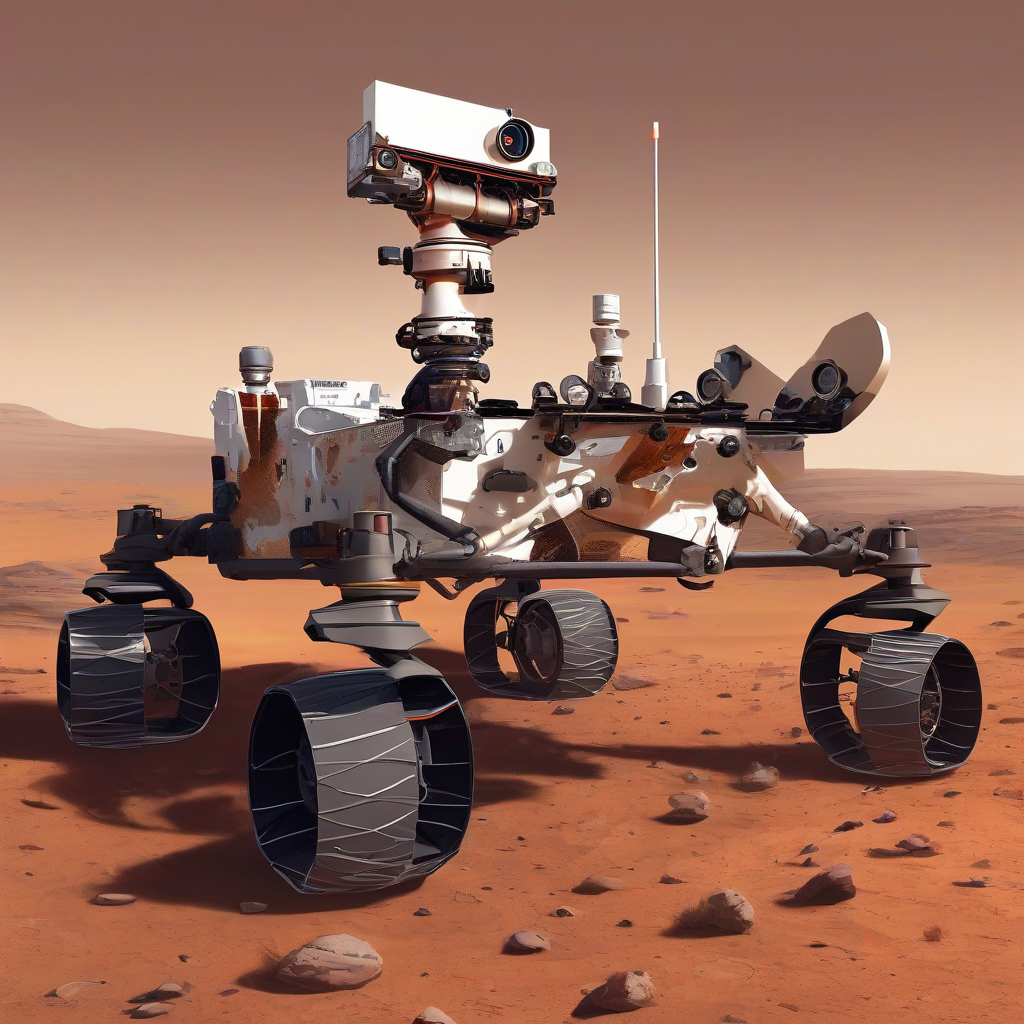
In the realm of robotics, innovation is perpetual and awe-inspiring. This week's selection of robotics videos from IEEE Spectrum showcases the cutting-edge achievements in multimodal robotics, emphasizing the integration of flying, walking, and driving capabilities. These advancements are not just technological marvels; they are harbingers of how robotics will reshape industries and redefine human interactions with machines.
The Multimodal Marvel: M4's Versatility
At the core of this week's showcase is the M4 robot, developed by Caltech’s Center for Autonomous Systems and Technologies (CAST) in collaboration with the Technology Innovation Institute in Abu Dhabi. Demonstrated as part of a three-year partnership, M4 exemplifies the potential of multimodal robotics. This robot can transition seamlessly between flying as a drone and driving on land, thanks to its innovative design.
The demonstration underscored M4's practical applications. Imagine a search-and-rescue mission where M4 can fly over debris, land, and then drive through narrow passages to deliver life-saving resources. This versatility can drastically improve response times in emergencies, potentially saving lives.
Spot’s Dynamic Manipulation: Strength in Precision
Spot, the agile robot developed by Boston Dynamics, showcased its prowess in dynamic whole-body manipulation. Utilizing reinforcement learning and sampling-based control, Spot can autonomously select contacts on its arm, legs, and body to manipulate objects like a 15-kilogram tire. This demonstration highlights Spot’s capability to handle tasks involving significant mass and inertia, which is crucial for industrial applications.
The implications for industries such as logistics and manufacturing are profound. Spot could automate tasks like loading and unloading, reducing human labor costs and enhancing safety in environments where heavy lifting is hazardous.
Figure 03: Building the Foundation for General-Purpose Robotics
Figure 03 represents a leap forward in humanoid robotics, transitioning from experimental prototypes to scalable, deployable products. By integrating advanced perception, tactile intelligence, and safety design, Figure 03 is poised to transform both domestic and commercial landscapes. This robot is designed to operate in homes and businesses, adapting and learning to perform a wide range of tasks.
The potential applications are vast. Imagine a future where Figure 03 assists with household chores, caregiving, or even complex tasks in environments like hospitals or warehouses. This adaptability positions Figure 03 as a cornerstone for the future of general-purpose robotics.
The Shape-Shifting Robots: Inspired by Marvel’s Venom
Researchers at the University of Bristol have unveiled a new class of superagile robots capable of shape-shifting, thanks to a material called electro-morphing gel (e-MG). This material allows robots to bend, stretch, and transform in unprecedented ways, reminiscent of the Marvel antihero Venom. By manipulating electric fields, these robots can navigate complex environments that were previously inaccessible.
The potential for such technology is immense, particularly in exploration and disaster recovery. These robots could traverse hazardous terrains, adapt to environmental challenges, and perform tasks that rigid robots cannot, expanding the horizons of robotic applications.
Dynamic Manipulation in Logistics: The Throw-Flip Technique
Dynamic manipulation has garnered attention for its ability to expedite logistic operations through innovative object-handling techniques. A recent method allows robots to accurately “throw-flip” objects, ensuring precise landing in a desired pose. This advancement is critical for industries reliant on speed and accuracy, such as warehouses and distribution centers.
By improving the efficiency and precision of object handling, this technique can significantly reduce the time and cost associated with logistics, providing companies a competitive edge in a fast-paced market.
The Future of Robotics: A Collaborative Vision
The videos highlighted in this week’s selection not only showcase individual achievements but also illustrate the collaborative spirit driving the robotics industry forward. Institutions like Carnegie Mellon University and Florida State University continue to contribute to the discourse through seminars and research discussions, fostering a community dedicated to pushing the boundaries of what robots can achieve.
As we look to the future, the implications of these advancements are profound. Multimodal robots like M4 and Figure 03 will redefine sectors ranging from healthcare to logistics, while agile, shape-shifting robots will venture into new frontiers of exploration and disaster response. The collaborative efforts seen in these projects underscore the importance of pooling expertise from diverse fields to create solutions that are not only innovative but also practical and scalable.
Looking Ahead: The Impact on Society and Industry
The advancements showcased this week are more than technological feats; they are catalysts for societal change. As robotics becomes more integrated into daily life, ethical considerations, such as safety, privacy, and job displacement, will come to the forefront. It is crucial for policymakers, technologists, and society at large to engage in dialogue about these implications to ensure that the robotic revolution benefits all.
In conclusion, the innovations in multimodal robotics represent a beacon of what is possible when creativity meets engineering. As these technologies mature, they will not only enhance efficiency and productivity but also open new opportunities for human-robot collaboration, ultimately improving the quality of life across the globe. The future is not just about robots performing tasks; it’s about creating harmonious ecosystems where humans and robots thrive together.
Source: https://spectrum.ieee.org/video-friday-multimodal-robot