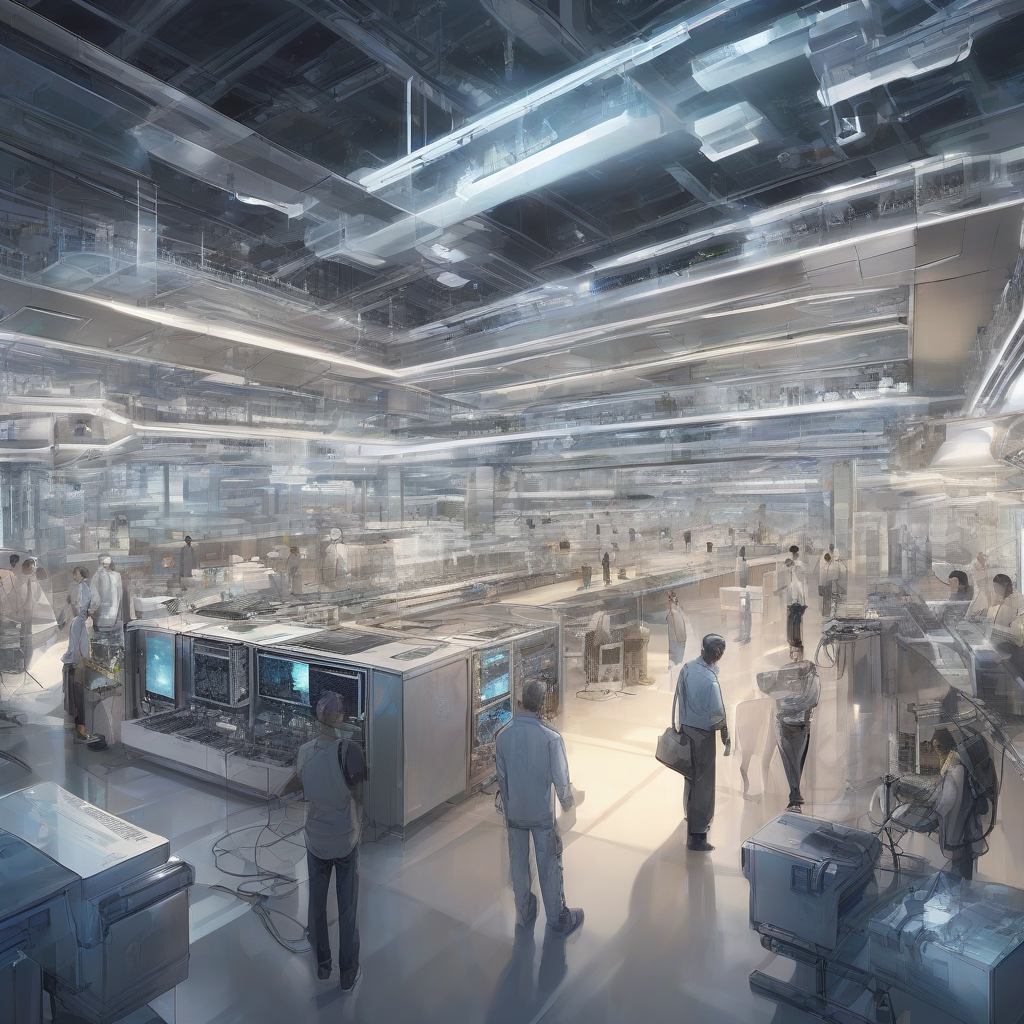
TSMC says AI demand is “endless” after record Q4 earnings
TSMC's Record Earnings Paint a Bullish Picture for AI Chip Demand
Taiwan Semiconductor Manufacturing Company (TSMC), the world's largest independent semiconductor foundry, has reported record fourth-quarter earnings, with net income reaching NT$505.7 billion (approximately $16 billion) and revenue hitting $33.7 billion. The company's strong performance has sent a clear signal that the demand for AI chips is expected to continue for years to come.
A Linchpin in the Global Electronics Supply Chain
TSMC's dominance in the semiconductor industry is unmatched, with the company producing the vast majority of the world's most advanced semiconductors. Its factories in Taiwan have become a focal point of US-China tensions over technology and trade. As a result, when TSMC reports strong demand and ramps up spending, it signals that the companies designing AI chips expect years of continued growth.
C.C. Wei's Optimism: AI Demand is "Endless"
During an earnings call, TSMC CEO C.C. Wei expressed his optimism about the future of AI chip demand. While he cannot predict the semiconductor industry's long-term trajectory, he remains bullish on AI. "All in all, I believe in my point of view, the AI is real—not only real, it's starting to grow into our daily life. And we believe that is kind of—we call it AI megatrend, we certainly would believe that," Wei said.
Wei's comments were echoed by his assertion that AI demand is "endless" and will continue for many years to come. This sentiment stands in contrast to months of speculation about whether the AI industry is in a bubble. In November, Google CEO Sundar Pichai warned of "irrationality" in the AI market and said no company would be immune if a potential bubble bursts. OpenAI's Sam Altman acknowledged in August that investors are "overexcited" and that "someone" will lose a "phenomenal amount of money."
Verifying Demand with Cloud Providers
Wei's optimism is not based on speculation alone. He has spoken directly to cloud providers to verify that demand is real before committing to the spending increase. "I want to make sure that my customers' demand are real. So I talked to those cloud service providers, all of them," Wei said. "The answer is that I'm quite satisfied with the answer. Actually, they show me the evidence that the AI really helps their business."
Implications for the Semiconductor Industry
TSMC's record earnings and commitment to increasing spending on capital expenditures have significant implications for the semiconductor industry. The company expects nearly 30 percent revenue growth in 2026 and plans to spend between $52 billion and $56 billion on capital expenditures this year, up from $40.9 billion in 2025. This investment will likely lead to increased production capacity and improved efficiency, further solidifying TSMC's position as a leader in the industry.
Trade Agreement and US-Taiwan Relations
The earnings report landed the same day the US and Taiwan finalized a trade agreement that cuts tariffs on Taiwanese goods to 15 percent, down from 20 percent. The deal commits Taiwanese companies to $250 billion in direct US investment, and TSMC is accelerating the expansion of its Arizona chip fabrication facilities to match. This agreement is a significant step forward in US-Taiwan relations and will likely have a positive impact on the semiconductor industry.
Conclusion
TSMC's record earnings and commitment to increasing spending on capital expenditures paint a bullish picture for AI chip demand. The company's dominance in the semiconductor industry and its commitment to investing in production capacity and efficiency will likely lead to increased production and improved efficiency. The trade agreement between the US and Taiwan will also have a positive impact on the industry. As the demand for AI chips continues to grow, TSMC's position as a leader in the industry will be solidified.
Forward-Looking Thoughts
As the demand for AI chips continues to grow, it is likely that the semiconductor industry will continue to evolve and adapt to meet the needs of this growing market. TSMC's commitment to investing in production capacity and efficiency will likely lead to increased production and improved efficiency. However, the industry will also face challenges, such as the potential for a bubble in the AI market and the increasing competition from other manufacturers. As the industry continues to evolve, it will be interesting to see how TSMC and other manufacturers adapt to meet the changing needs of the market.
Implications for Real-World Applications
The growth of the AI chip market will have significant implications for real-world applications. As AI becomes more prevalent in industries such as healthcare, finance, and transportation, the demand for AI chips will continue to grow. This will lead to increased investment in research and development, as well as the development of new technologies and applications. The growth of the AI chip market will also lead to increased competition among manufacturers, which will drive innovation and improve efficiency.
Final Thoughts
TSMC's record earnings and commitment to increasing spending on capital expenditures paint a bullish picture for AI chip demand. The company's dominance in the semiconductor industry and its commitment to investing in production capacity and efficiency will likely lead to increased production and improved efficiency. The trade agreement between the US and Taiwan will also have a positive impact on the industry. As the demand for AI chips continues to grow, it is likely that the semiconductor industry will continue to evolve and adapt to meet the needs of this growing market.
Source: https://arstechnica.com/ai/2026/01/tsmc-says-ai-demand-is-endless-after-record-q4-earnings/