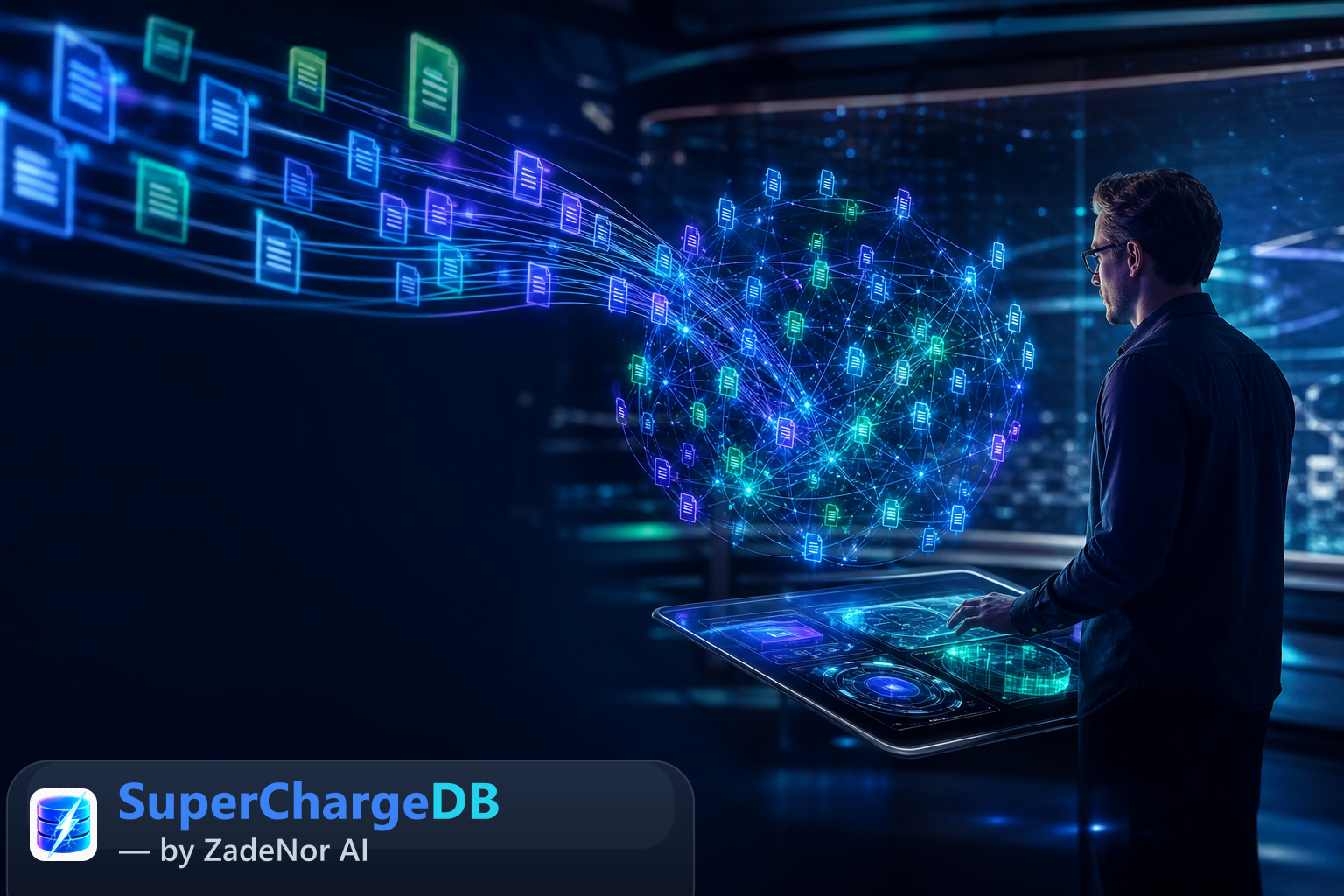
The Movement
Right now, a lot of search still runs on brittle keyword indexes, hand-built embedding scripts and self-managed clusters. A clear signal is emerging: semantic, multimodal retrieval and grounded RAG are moving from nice-to-have to expectation. The status quo leans heavily on exact-match search, which simply cannot keep pace with how people actually query. Today, many teams stitch together separate tools for text, image and document search and hope they stay in sync.
The Background
Across Developers & Builders, the bar for relevance, speed and scale keeps rising. Corpora grow relentlessly, and a search stack that cannot keep up drags on the whole product. In software, your search is compared not just to peers but to the best retrieval experience anyone has ever used. The application developers market rewards those who can retrieve the right result fast and keep costs sane.
The Hurdle
When pdfs, slides and scans no one can search sets in, users give up and the product quietly loses trust. A recurring challenge for application developers is pdfs, slides and scans no one can search. The issue shows up most clearly as PDFs, slides and scans no one can search across across a media library. Left unaddressed, pdfs, slides and scans no one can search compounds: users churn, answers degrade, and confidence in search erodes. For a Lead Growth, pdfs, slides and scans no one can search is more than an inconvenience — it is a daily drag on velocity and quality.
What SuperChargeDB Enables
SuperChargeDB tackles this with Document search & parsing: PDFs, slides, docs and scans are parsed, chunked and embedded, so their contents become fully searchable alongside everything else. Because embeddings, indexing and retrieval live together, you work from a single search layer instead of stitched-together tools. This is where SuperChargeDB comes in — the object-storage-native, multimodal vector + document search engine built by ZadeNor AI. Rather than another self-managed cluster, SuperChargeDB puts semantic, hybrid and multimodal search behind one clean API.
The Bottom Line
The result is hybrid search without the plumbing, without standing up a search team or a fragile pipeline. The numbers follow the relevance: fewer failed searches, cleaner RAG answers, and latency you can plan around. You get relevant results in milliseconds; your users find what they need and your answers stay grounded. Teams using this approach see Hybrid search without the plumbing across text and images.
Take the Next Step
Add search that understands meaning. SuperChargeDB, built by ZadeNor AI, unifies semantic, hybrid and multimodal search with automatic embeddings and instant retrieval — no cluster to babysit. Start free.
Teams end up bolting on workarounds instead of shipping the feature that matters. The cost of pdfs, slides and scans no one can search is rarely a single number — it is failed searches, abandoned sessions, and answers no one trusts. For leaders, the real risk is strategic: retrieval quality becomes a ceiling on what the product can do. The numbers follow the relevance: fewer failed searches, cleaner RAG answers, and latency you can plan around. Teams using this approach see Hybrid search without the plumbing across text and images.
Over time, pdfs, slides and scans no one can search translates into worse relevance, higher latency, and infrastructure no one wants to own. The cost of pdfs, slides and scans no one can search is rarely a single number — it is failed searches, abandoned sessions, and answers no one trusts. You get relevant results in milliseconds; your users find what they need and your answers stay grounded. Teams using this approach see Hybrid search without the plumbing across text and images.
Teams end up bolting on workarounds instead of shipping the feature that matters. The cost of pdfs, slides and scans no one can search is rarely a single number — it is failed searches, abandoned sessions, and answers no one trusts. You get relevant results in milliseconds; your users find what they need and your answers stay grounded. The result is hybrid search without the plumbing, without standing up a search team or a fragile pipeline.
Over time, pdfs, slides and scans no one can search translates into worse relevance, higher latency, and infrastructure no one wants to own. Every query lost to pdfs, slides and scans no one can search is a user not finding what they came for. The cost of pdfs, slides and scans no one can search is rarely a single number — it is failed searches, abandoned sessions, and answers no one trusts. Teams using this approach see Hybrid search without the plumbing across text and images. For application developers, that means hybrid search without the plumbing you can actually rely on. Search stops being a maintenance burden and starts being a competitive advantage.
Teams end up bolting on workarounds instead of shipping the feature that matters. Every query lost to pdfs, slides and scans no one can search is a user not finding what they came for. Search stops being a maintenance burden and starts being a competitive advantage. The result is hybrid search without the plumbing, without standing up a search team or a fragile pipeline. You get relevant results in milliseconds; your users find what they need and your answers stay grounded.