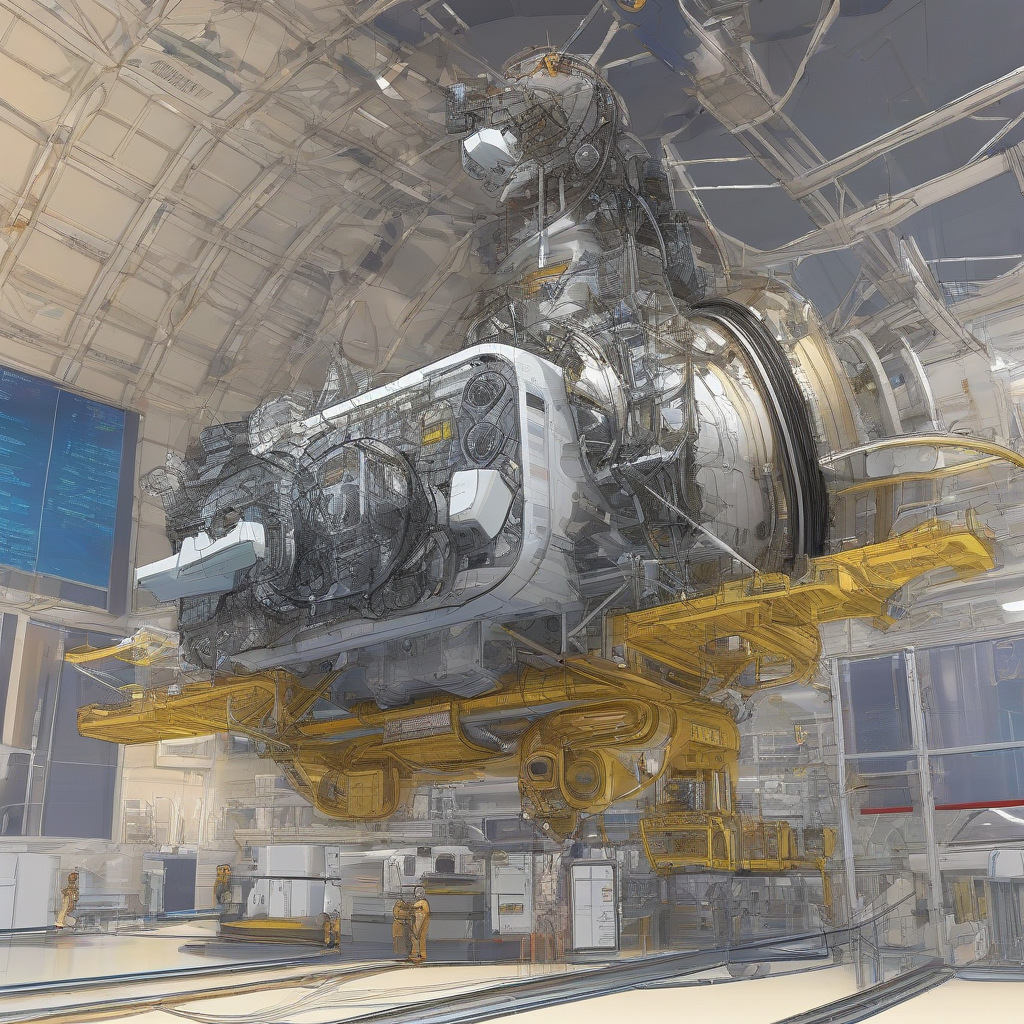
The next frontier in space is closer than you think – welcome to the world of very low Earth orbit satellites
The Next Frontier in Space: Unveiling the Potential of Very Low Earth Orbit Satellites
As the world grapples with the challenges of a rapidly growing satellite population, a new frontier in space is emerging: Very Low Earth Orbit (VLEO). With its proximity to the Earth's surface, VLEO offers a unique set of advantages over higher altitude satellites, including higher-resolution images, faster communications, and better atmospheric science. In this article, we'll delve into the world of VLEO, exploring its benefits, challenges, and the innovative technologies being developed to overcome the hurdles.
Advantages of VLEO
One of the primary advantages of VLEO is its ability to provide higher-resolution images. By being closer to the Earth's surface, VLEO satellites can capture images with greater detail and clarity, making them ideal for applications such as agriculture, climate science, disaster response, and military surveillance. This is particularly important for tasks like crop monitoring, where high-resolution images can help farmers identify areas of stress or disease, allowing for targeted interventions to improve yields.
Another significant benefit of VLEO is its potential for faster communications. With signals traveling shorter distances, latency is reduced, and conversations happen more smoothly. This is particularly important for real-time communications, such as phone and internet service, where speed and reliability are crucial.
The Holdup: Atmospheric Drag
Despite its advantages, VLEO has been largely avoided for sustained satellite operations due to one major reason: atmospheric drag. As satellites move through the Earth's atmosphere, they encounter friction, which slows them down and causes them to deorbit in weeks or even days. To counteract this, satellites must constantly propel themselves forward, using thrusters to maintain their orbit.
Innovative Thruster Technologies
To overcome the challenges of atmospheric drag, researchers are developing innovative thruster technologies. One such approach is the air-breathing microwave plasma thruster, which collects atmospheric gas using a scoop and then uses high-power microwaves to heat it, expelling the heated gas through a nozzle to propel the satellite forward. This technology has the potential to be relatively simple and efficient, making it an attractive option for VLEO applications.
Other Complications
While overcoming drag is the most significant challenge, VLEO satellites are also exposed to high levels of atomic oxygen, which can corrode most substances, including plastics. Additionally, they must withstand extremely high temperatures, above 2,732 degrees Fahrenheit (1,500 degrees Celsius), due to friction heating as they move through the atmosphere.
The Potential of VLEO Satellites
Despite these challenges, the potential of VLEO satellites is driving research and investment. Proposed missions have become reality, and companies are investing heavily in VLEO technology. Juniper research estimates that $220 billion will be invested in just the next three years, with the potential to improve internet, weather forecasts, and security.
Conclusion
The world of VLEO is rapidly evolving, with innovative technologies being developed to overcome the challenges of atmospheric drag and other complications. As the demand for higher-resolution images, faster communications, and better atmospheric science grows, VLEO satellites are poised to play a critical role in addressing these needs. With its proximity to the Earth's surface, VLEO offers a unique set of advantages that make it an attractive option for a wide range of applications. As the industry continues to invest in VLEO technology, we can expect to see significant improvements in the coming years, with far-reaching implications for our daily lives.
Forward-Looking Thoughts
As we look to the future, it's clear that VLEO satellites will play a critical role in shaping our world. With their ability to provide higher-resolution images, faster communications, and better atmospheric science, they have the potential to improve everything from agriculture to climate science to disaster response. As the industry continues to invest in VLEO technology, we can expect to see significant improvements in the coming years, with far-reaching implications for our daily lives.