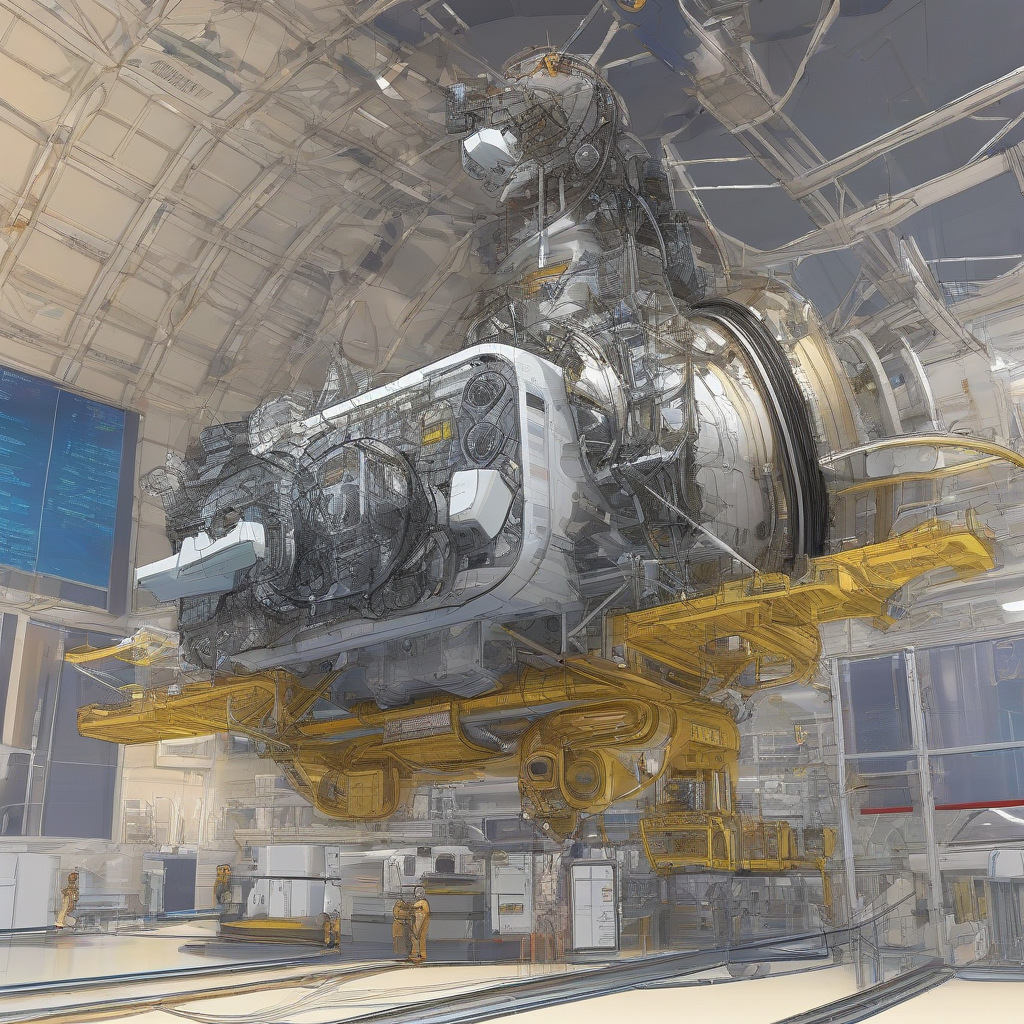
The journey of Juice – episode 2
The Journey of Juice: Episode 2 - Conquering the Sun and Preparing for Jupiter
As we continue to follow the epic eight-year journey of the European Space Agency's (ESA) Jupiter Icy Moons Explorer (Juice), we find ourselves in the midst of a pivotal year for the mission. 2025 has brought about significant milestones, including the spacecraft's closest approach to the Sun and a gravity boost from a flyby of Venus. In this second episode of 'The journey of Juice,' we delve into the technological and scientific achievements of the mission, highlighting the dedication and expertise of the team behind it.
The Sun's Intense Heat: A Challenge Overcome
One of the most critical aspects of Juice's journey is its protection from the intense heat of the Sun. As the spacecraft approaches the Sun, the heat generated by the solar radiation poses a significant threat to its delicate electronics and instruments. To mitigate this risk, the ESA's technical centre has developed a range of cutting-edge technologies designed to safeguard Juice from the Sun's radiation.
In a clean room at the ESA's technical centre, thermal engineer Romain Peyrou-Lauge explains the intricacies of the thermal protection system. "We've developed a multi-layered insulation system that provides a high level of thermal protection," he says. "This includes a combination of materials such as multi-layer insulation blankets, radiators, and heat shields. These components work together to absorb and dissipate the heat generated by the Sun, ensuring that Juice's electronics and instruments remain within a safe operating temperature."
The thermal protection system is a testament to the ingenuity and expertise of the ESA's engineers, who have successfully overcome the challenges posed by the Sun's intense heat. This achievement not only ensures the success of the Juice mission but also has broader implications for future space exploration.
Science Working Team: Collaboration and Preparation
As Juice approaches its destination, the scientific community is abuzz with excitement. The mission's scientific objectives are ambitious, and the team behind it is working tirelessly to prepare for the precious time spent collecting data at Jupiter.
In Uppsala, Sweden, scientists from the Juice project gather for a 'science working team' meeting to discuss the mission's scientific aspects. Juice Project Scientist Olivier Witasse emphasizes the importance of collaboration and preparation. "We're working closely with our international partners to ensure that we're ready for the scientific opportunities that Juice will provide," he says. "Our team is dedicated to making the most of this once-in-a-generation mission, and we're excited to see the discoveries that will emerge from it."
The science working team meeting is a testament to the collaborative spirit of the scientific community, where experts from around the world come together to share knowledge and expertise. This collaboration will be crucial in unlocking the secrets of Jupiter and its icy moons, and the discoveries that will emerge from the Juice mission will have far-reaching implications for our understanding of the solar system.
The Venus Flyby: A Gravity Boost
One of the most significant milestones of the Juice mission was the gravity boost provided by a flyby of Venus. The spacecraft's trajectory was carefully planned to take advantage of the gravitational pull of the planet, which would help to accelerate Juice on its journey to Jupiter.
At the Cebreros station in Madrid, operations engineer Marc Costa takes us on a tour of the facility, where we meet deputy station manager Jorge Fauste, Juice intern Charlotte Bergot, and Juice Mission Manager Nicolas Altobelli. "The Venus flyby was a critical component of our mission plan," says Marc Costa. "We worked closely with our colleagues at the ESA's technical centre to ensure that the flyby was executed perfectly, and the results were outstanding."
The Venus flyby was a testament to the precision and skill of the ESA's engineers, who successfully navigated the spacecraft through the complex gravitational environment of the planet. This achievement not only ensured the success of the Juice mission but also demonstrated the capabilities of the ESA's team in planning and executing complex space missions.
Conclusion
As we continue to follow the journey of Juice, we are reminded of the incredible achievements of the ESA's team and the significance of this mission. The Juice mission is a testament to human ingenuity and the power of collaboration, and the discoveries that will emerge from it will have far-reaching implications for our understanding of the solar system.
As we look to the future, we can expect even more exciting developments in space exploration, with missions like the Europa Clipper and the Enceladus Life Finder pushing the boundaries of our knowledge. The Juice mission is a shining example of what can be achieved through dedication, expertise, and collaboration, and we can't wait to see what the future holds for space exploration.
Source: https://www.esa.int/ESA_Multimedia/Videos/2025/12/The_journey_of_Juice_episode_2