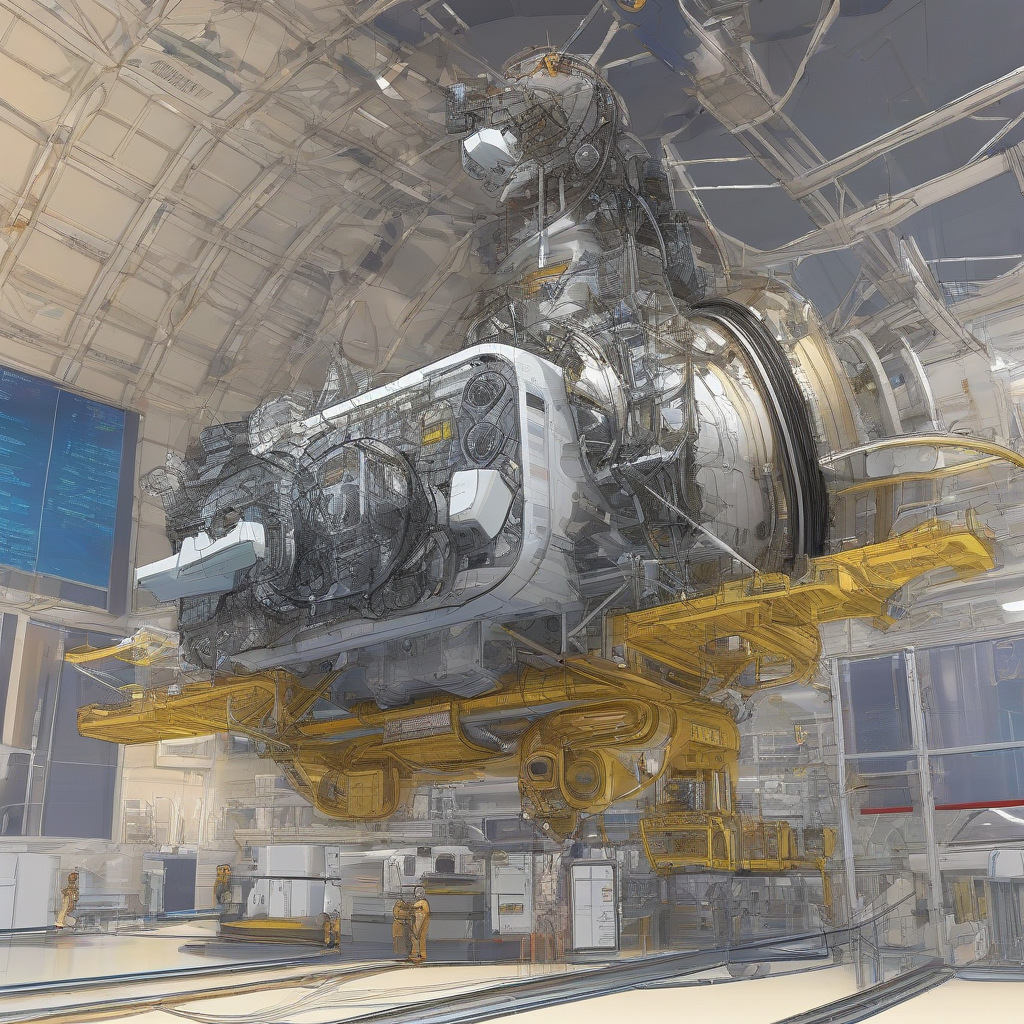
Sunlight Extracts Oxygen From Regolith Using Solar Chemistry
Unlocking the Power of Solar Chemistry: A Breakthrough in Oxygen Production for Space Exploration
As the world continues to push the boundaries of space exploration, the need for sustainable and efficient life support systems has become increasingly crucial. One of the most significant challenges facing space agencies and private companies alike is the ability to produce oxygen and other essential resources on demand, rather than relying on resupply missions from Earth. In a major breakthrough, NASA's Carbothermal Reduction Demonstration (CaRD) project has successfully tested a solar concentrator that extracts oxygen from simulated lunar regolith using solar chemistry.
The CaRD Project: A Collaboration of Innovation
The CaRD project is a shining example of the power of collaboration and innovation in the pursuit of space exploration. Led by NASA's Johnson Space Center in Houston, the project brought together a team of experts from across the agency, including the Glenn Research Center in Cleveland, the Kennedy Space Center in Florida, and Sierra Space. The team's goal was to develop a system that could produce oxygen from local resources on the lunar surface, using only sunlight and lunar regolith.
The Science Behind Solar Chemistry
At the heart of the CaRD project is the concept of solar chemistry, which harnesses the energy of the sun to drive chemical reactions. In this case, the team used a carbothermal oxygen production reactor developed by Sierra Space, which combines the concentrator, mirrors, and control software to produce carbon monoxide through a solar-driven chemical reaction. The carbon monoxide is then converted into oxygen using a downstream system that can also be adapted to convert carbon dioxide into oxygen and methane on Mars.
The Benefits of Local Resource Utilization
The CaRD project's success has significant implications for future space missions. By producing oxygen and other essential resources on demand, space agencies and private companies can reduce their reliance on resupply missions from Earth, which are expensive and logistically challenging. This approach also enables the production of propellant using only lunar materials and sunlight, significantly reducing the cost and complexity of sustaining a long-term human presence on the lunar surface.
A Step Towards a Sustainable Presence on the Moon
The CaRD project is a crucial step towards establishing a sustainable presence on the Moon. With the ability to produce oxygen and other essential resources on demand, space agencies and private companies can focus on more ambitious goals, such as establishing a permanent human settlement on the lunar surface. This would not only enable scientists to conduct longer-term research on the Moon but also provide a stepping stone for further human exploration of the solar system.
The Potential for Mars Exploration
The CaRD project's technology also has significant implications for Mars exploration. The same downstream systems used to convert carbon monoxide into oxygen can be adapted to convert carbon dioxide into oxygen and methane on Mars. This would enable future Mars missions to produce fuel and oxygen on demand, reducing their reliance on resupply missions from Earth and enabling longer-term exploration of the Martian surface.
Conclusion
The CaRD project's success is a testament to the power of innovation and collaboration in the pursuit of space exploration. By harnessing the energy of the sun to drive chemical reactions, the team has developed a system that can produce oxygen and other essential resources on demand, enabling space agencies and private companies to focus on more ambitious goals. As we continue to push the boundaries of space exploration, the CaRD project's technology will play a crucial role in establishing a sustainable presence on the Moon and beyond.
Looking to the Future
As we look to the future of space exploration, the CaRD project's technology will continue to play a crucial role in enabling sustainable and efficient life support systems. With the ability to produce oxygen and other essential resources on demand, space agencies and private companies can focus on more ambitious goals, such as establishing a permanent human settlement on the lunar surface and exploring the Martian surface. The CaRD project's success is a shining example of the power of innovation and collaboration in the pursuit of space exploration, and we can expect to see many more breakthroughs in the years to come.