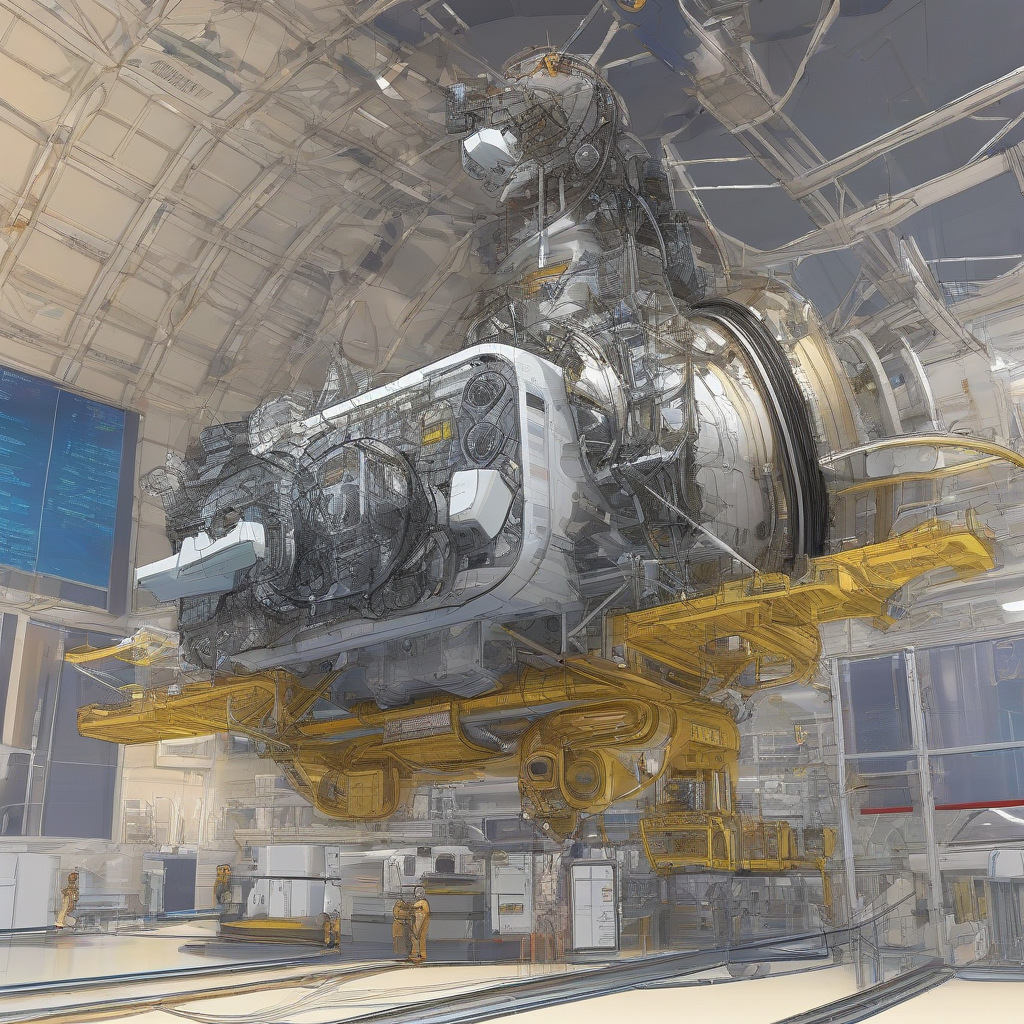
Space Station Research Contributes to Artemis II
The Space Station's Crucial Role in Preparing for Artemis II
As NASA prepares to send its first woman and the next man to the Moon on the Artemis II mission, the International Space Station (ISS) is playing a vital role in ensuring the success of this historic endeavor. Since 2000, the ISS has served as a unique laboratory in space, where astronauts and researchers have conducted groundbreaking research and tested critical technologies that will be used on future missions to the Moon, Mars, and beyond.
Laying the Foundation for Artemis II
One of the key areas where the ISS has contributed to the Artemis II mission is in the development of the Orion spacecraft's life support and safety systems. These systems, which include radiation sensing equipment, carbon dioxide removal systems, a water-based portable fire extinguisher, emergency fire masks, the toilet, a heat exchanger, and a backup emergency navigation system, have been tested and refined on the ISS.
These systems are critical to the success of the Artemis II mission, as they will be used to sustain the astronauts during their journey around the Moon. The ISS has provided a unique environment for testing these systems, allowing NASA to simulate the conditions that the astronauts will face on the mission.
Spaceflight Standard Measures: A New Era in Space Research
Another area where the ISS has contributed to the Artemis II mission is in the development of the Spaceflight Standard Measures (SSM) experiment. This experiment, which was first conducted on the ISS, tracks psychological and physiological data points to better understand how the body adapts to living and working in space.
The SSM experiment has been instrumental in developing a new understanding of the effects of space travel on the human body, and its findings will be used to inform the development of new countermeasures to mitigate these effects. This research has the potential to revolutionize our understanding of space travel and its effects on the human body.
Organ-Chip Experiments: A New Frontier in Space Research
The ISS has also played a critical role in the development of organ-chip experiments, which use small devices containing cells to model how tissues and organs respond to space stressors and therapeutic treatments. These devices and their related hardware have been used in several experiments aboard the ISS and will continue their legacy in the lunar environment to study the effects of deep space stressors on human health using cells from Artemis II astronauts.
Organ-chip research has the potential to revolutionize our understanding of space travel and its effects on the human body, and its findings will be used to develop improved prevention and personalized medical treatments for people on Earth and in space.
Crew Earth Observations: Informing Crew Lunar Observations
The ISS has also played a critical role in the development of Crew Earth Observations (CEO), which are used to study the Earth from space. These observations have been instrumental in developing a new understanding of the Earth's climate, oceans, and land surfaces.
The CEO program has also been used to inform the development of Crew Lunar Observations (CLO), which will be used on the Artemis II mission to study the Moon's geology and composition. The CLO program will use handheld imaging and other technologies to study the Moon's surface and provide critical information for future surface exploration missions.
CubeSats: A New Era in Space Technology
The ISS has also played a critical role in the development of CubeSats, which are small, cost-effective satellites that are used to test new technologies and conduct scientific research in low Earth orbit. Building on this success, NASA is partnering with international agencies to deploy CubeSats aboard Artemis II for technology demonstrations and studies in high Earth orbit.
CubeSats have the potential to revolutionize our understanding of space travel and its effects on the human body, and their findings will be used to develop improved prevention and personalized medical treatments for people on Earth and in space.
Conclusion
The ISS has played a critical role in preparing for the Artemis II mission, and its contributions partir will be instrumental in ensuring the success of this historic endeavor. From testing life support and safety systems to developing new technologies and conducting scientific research, the ISS has provided a unique environment for testing and refining critical technologies that will be used on future missions to the Moon, Mars, and beyond.
As we look to the future, it is clear that the ISS will continue to play a vital role in advancing our understanding of space travel and its effects on the human body. Its contributions will be instrumental in developing new countermeasures to mitigate the effects of space travel, and its findings will be used to develop improved prevention and personalized medical treatments for people on Earth and in space.
The ISS is a shining example of international cooperation and collaboration, and its contributions will be remembered for generations to come. As we look to the future, it is clear that the ISS will continue to be a vital part of our space exploration program, and its contributions will be instrumental in advancing our understanding of space travel and its effects on the human body.
Source: https://www.nasa.gov/missions/station/iss-research/space-station-research-contributes-to-artemis-ii/