Before You Start
In Denim & Casualwear, the product page has to do what a fitting room once did — and flat photos rarely manage it. The way a denim & casualwear brand lets people picture a garment on themselves says a lot about how it converts. Expectations in Denim & Casualwear have shifted, and the tools brands use to show their pieces have to keep up.
What You're Up Against
When low confidence at checkout sets in, shoppers hesitate, baskets stall, and returns climb. A recurring challenge for denim & casualwear is low confidence at checkout. The issue shows up most clearly as Low confidence at checkout for higher-ticket pieces as the brand scales online.
The Framework
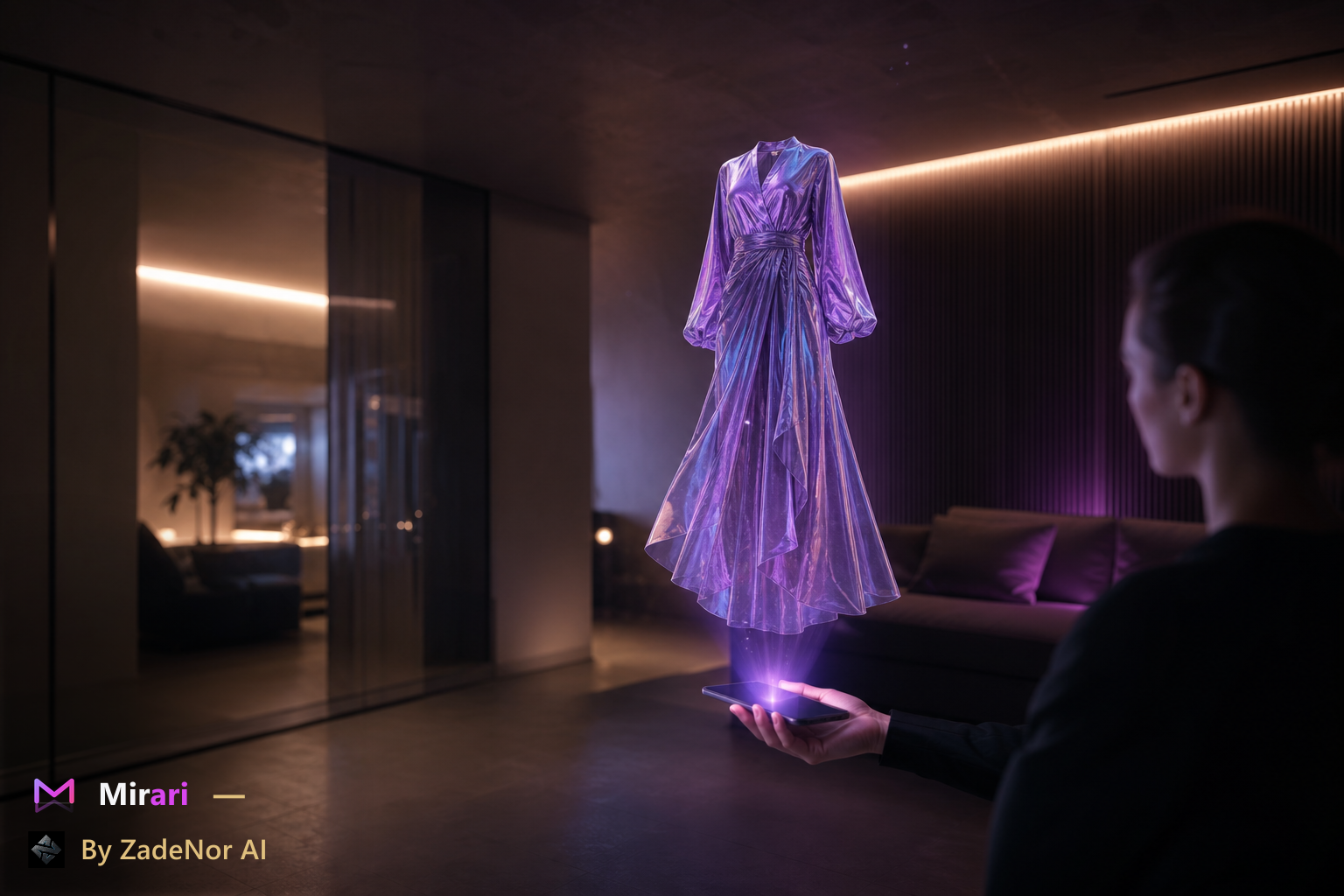
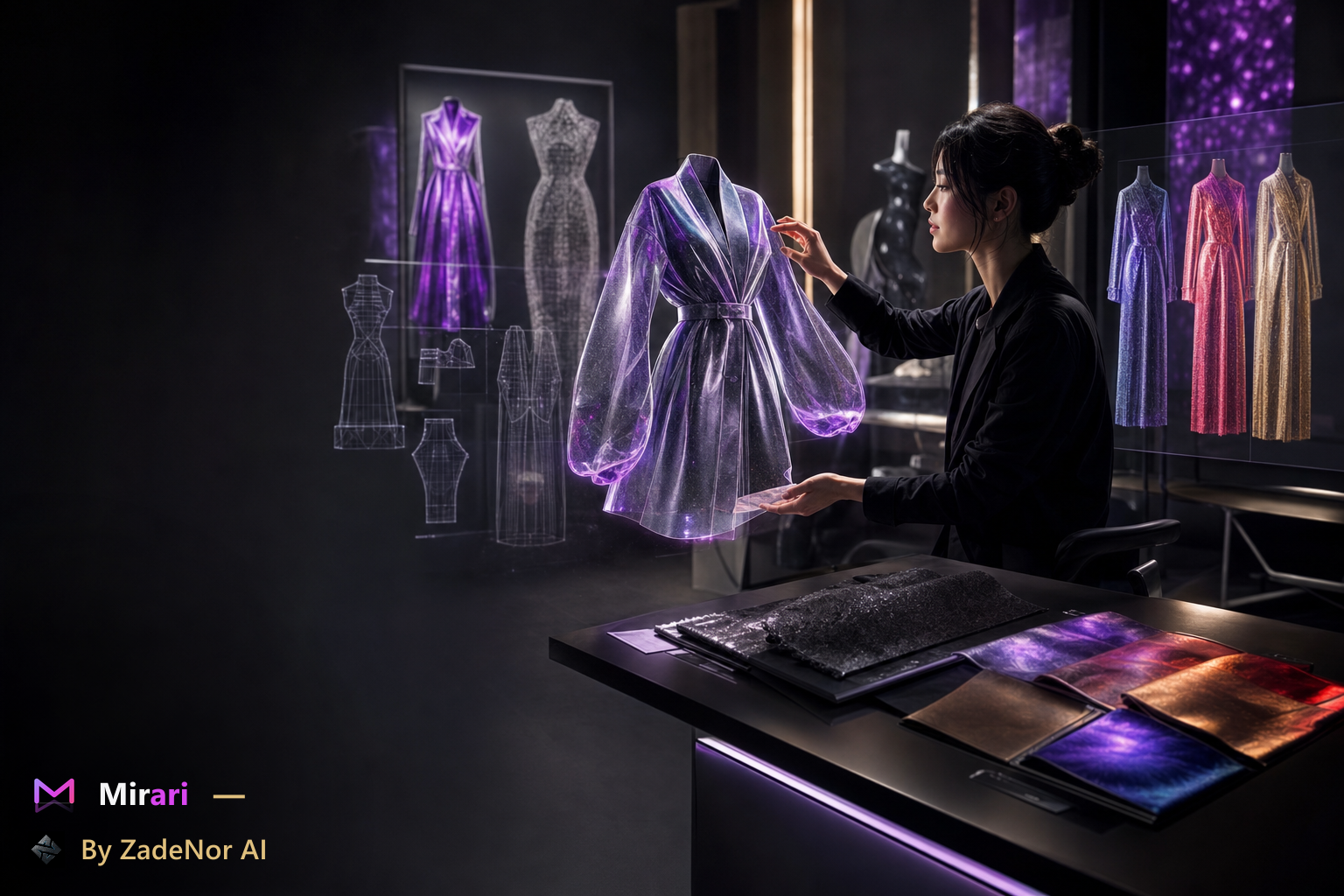
In the studio, recolor, swap fabric, place a print or switch colorways — then push the result straight to the catalog. Prefer an avatar? A rigged 3D model mirrors pose, face and hands, with flowy spring-bone cloth motion. A segmentation pass lets their real arms, hands and hair render in front of the garment, so it reads like a mirror, not a sticker. Getting started is straightforward: drop in a glTF garment or generate one from a template, and it is ready to try on.
The Tooling
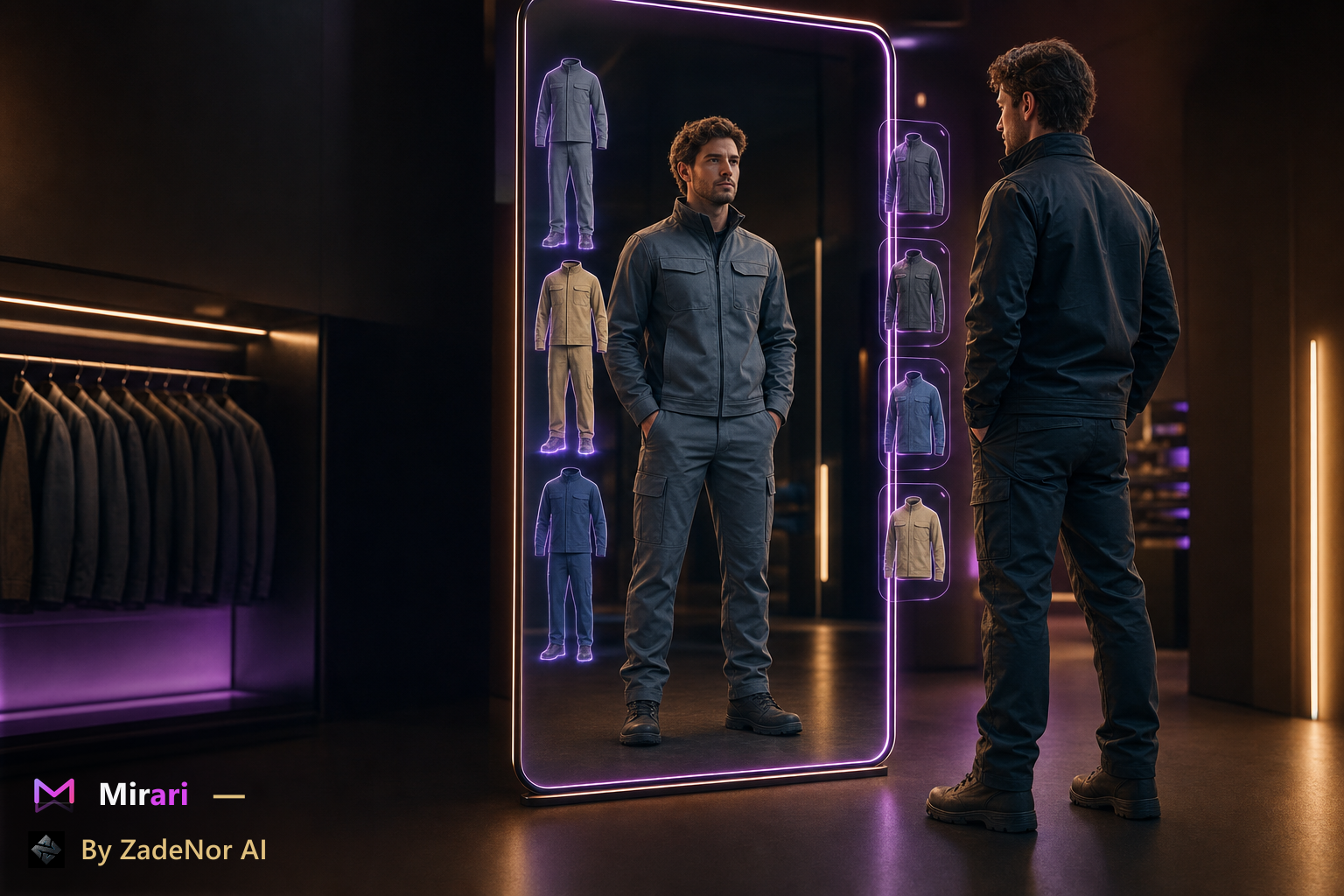
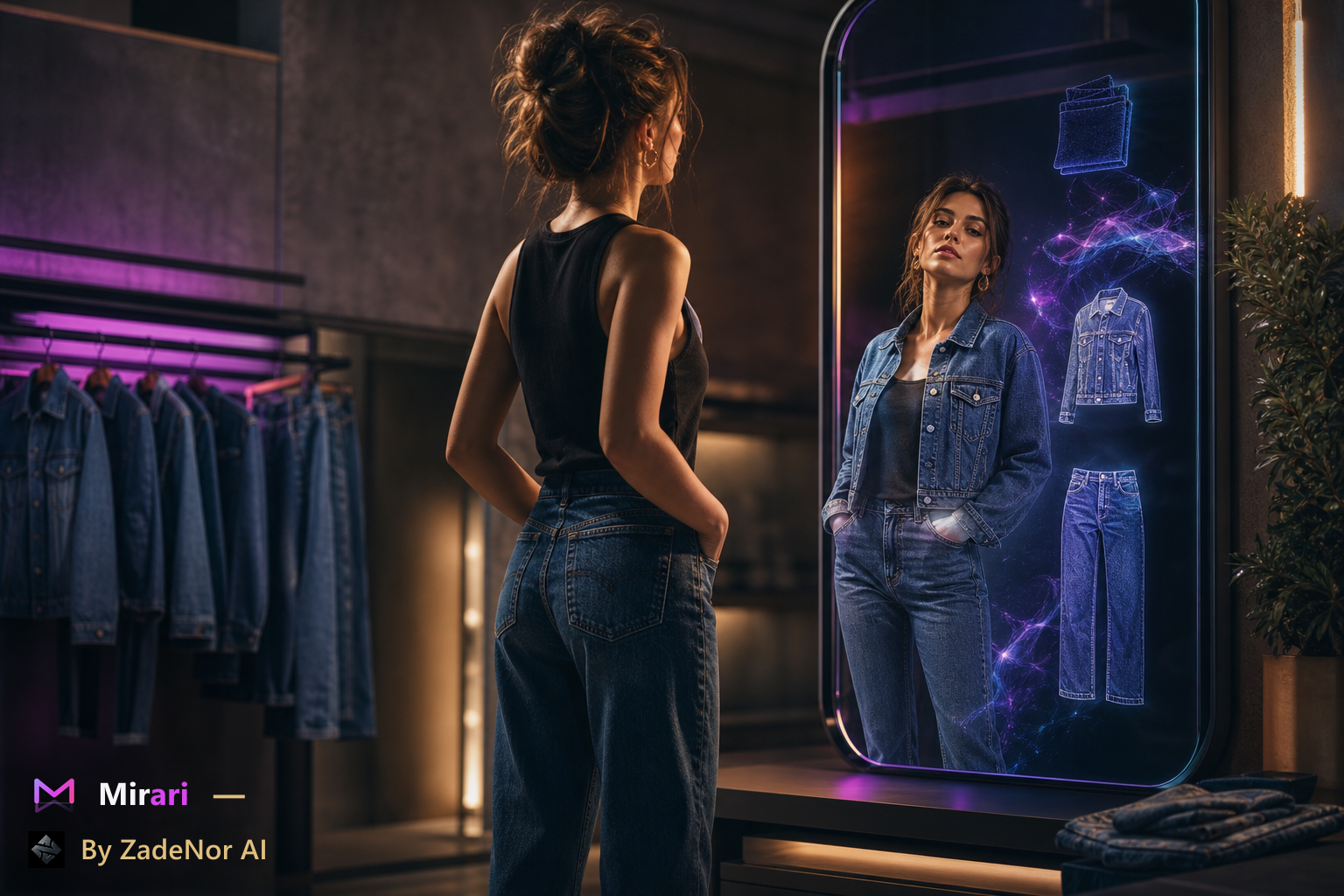
This is where Mirari comes in — the AI-powered virtual try-on and garment-design app built by ZadeNor AI. Because perception and rendering run in the browser, the experience feels instant — and it costs nothing in cloud GPU. Since on-device pose, face & hand tracking sits within the AI Perception part of Mirari, it fits naturally into how denim & casualwear teams already work. Mirari pairs a believable try-on with a design studio, so the same tool that shoppers try on in is the one your team designs in. Rather than another flat gallery, Mirari puts the garment on the shopper’s own body, live, with their real arms and hair in front of the cloth.
The Payoff
The result is zero cloud-gpu rendering cost without extra headcount, without a render farm or a per-session GPU bill. Shoppers get a believable look at the fit; the brand gets fewer returns and more confident checkouts. Brands using this approach see Zero cloud-GPU rendering cost without extra headcount. The numbers follow the confidence: higher add-to-cart, fewer bracketed orders, and drops that land.
See It in Action
Make zero cloud-gpu rendering cost without extra headcount the standard across your range. Get started with Mirari, the AI virtual try-on app from ZadeNor AI — try it free, no card required.
What looks like a product-page problem is often a fit, confidence and returns problem in disguise. Over time, low confidence at checkout translates into bracketed orders, costly reverse logistics, and drops that never find their audience. The result is zero cloud-gpu rendering cost without extra headcount, without a render farm or a per-session GPU bill. The numbers follow the confidence: higher add-to-cart, fewer bracketed orders, and drops that land. Try-on stops being a gimmick and starts being a default on every product page.
For leaders, the real risk is strategic: a try-on gap becomes a ceiling on how far the brand can scale online. Every shopper who cannot picture the fit is a basket left half-built. The cost of low confidence at checkout is rarely a single number — it is lost conversion, return shipping, and a catalog that underperforms. For denim & casualwear, that means zero cloud-gpu rendering cost without extra headcount the whole team can rely on. The numbers follow the confidence: higher add-to-cart, fewer bracketed orders, and drops that land.
For leaders, the real risk is strategic: a try-on gap becomes a ceiling on how far the brand can scale online. Teams end up reshooting and discounting instead of merchandising with confidence. The cost of low confidence at checkout is rarely a single number — it is lost conversion, return shipping, and a catalog that underperforms. For denim & casualwear, that means zero cloud-gpu rendering cost without extra headcount the whole team can rely on. Shoppers get a believable look at the fit; the brand gets fewer returns and more confident checkouts. The result is zero cloud-gpu rendering cost without extra headcount, without a render farm or a per-session GPU bill.
Teams end up reshooting and discounting instead of merchandising with confidence. The cost of low confidence at checkout is rarely a single number — it is lost conversion, return shipping, and a catalog that underperforms. Try-on stops being a gimmick and starts being a default on every product page. The result is zero cloud-gpu rendering cost without extra headcount, without a render farm or a per-session GPU bill. The numbers follow the confidence: higher add-to-cart, fewer bracketed orders, and drops that land.
Every shopper who cannot picture the fit is a basket left half-built. Teams end up reshooting and discounting instead of merchandising with confidence. Over time, low confidence at checkout translates into bracketed orders, costly reverse logistics, and drops that never find their audience. For denim & casualwear, that means zero cloud-gpu rendering cost without extra headcount the whole team can rely on. Try-on stops being a gimmick and starts being a default on every product page.