Perseverance Smashes Autonomous Driving Record on Mars
Perseverance Smashes Autonomous Driving Record on Mars
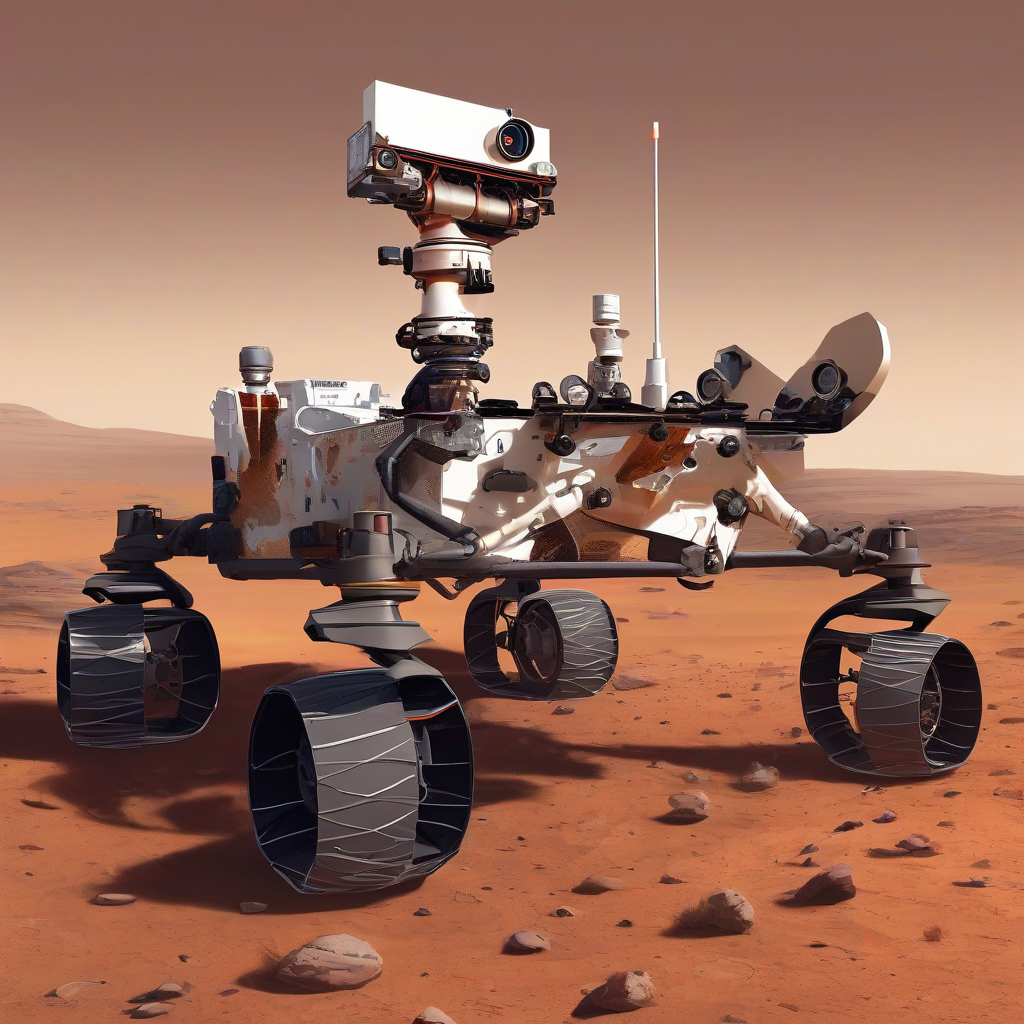
The Perseverance rover, launched by NASA on July 30, 2020, has been making headlines for its remarkable achievements on the Martian surface. One of its most impressive feats is its ability to drive autonomously, a skill that has allowed it to cover vast distances on the Red Planet. In this article, we'll delve into the details of Perseverance's autonomous driving capabilities and explore the technology behind its record-breaking performance.
The Challenge of Autonomous Navigation on Mars
Mars presents a unique set of challenges for autonomous navigation. The planet's terrain is largely uncharted, and the Martian atmosphere is too thin to provide sufficient data for navigation. Additionally, the intense radiation and harsh environment on Mars make it difficult for electronic systems to function reliably. To overcome these challenges, NASA engineers developed the Enhanced Autonomous Navigation (ENav) algorithm, which enables Perseverance to navigate the Martian terrain with remarkable accuracy.
ENav: The Key to Perseverance's Autonomous Driving
ENav is a sophisticated algorithm that combines data from various sources, including images taken by the rover's cameras, to create a 3D map of the Martian terrain. This map is then used to plan the rover's path and avoid obstacles. The algorithm is designed to work with limited computing resources, using a computer core from the 1990s that is radiation-hardened to withstand the harsh Martian environment.
How ENav Works
ENav works by analyzing images of the Martian terrain and assessing about 1,700 possible paths forward. It takes into account factors such as travel time, terrain roughness, and the presence of obstacles, and ranks the possible paths accordingly. The algorithm then runs a computationally heavy collision checking algorithm, called ACE (approximate clearance estimation), on only a handful of top-ranked potential paths.
Perseverance's Record-Breaking Performance
Perseverance has been driving autonomously on Mars since its landing on February 18, 2021. In just 24 Martian days, the rover traveled about 5 kilometers into the foothill of the delta, a distance that would have taken Curiosity, the previous record holder, about 100 days to cover. On April 3, 2023, Perseverance set a new record by driving 331.74 meters autonomously in a single Martian day, a feat that is unprecedented in the history of Mars exploration.
The Impact of ENav on Mars Exploration
The success of ENav has significant implications for future Mars exploration. As humans continue to push the boundaries of space exploration, the need for autonomous systems that can navigate and operate in challenging environments will become increasingly important. ENav has demonstrated that it is possible to develop sophisticated autonomous systems that can operate reliably and effectively in harsh environments, paving the way for future missions to Mars and beyond.
The Future of Autonomous Navigation
The development of ENav is just the beginning of a new era in autonomous navigation. As technology continues to advance, we can expect to see even more sophisticated autonomous systems that can navigate and operate in a wide range of environments. The implications of this technology are far-reaching, and will have a significant impact on the way we explore and understand the universe.
Conclusion
Perseverance's record-breaking performance on Mars is a testament to the power of autonomous navigation. The success of ENav has significant implications for future Mars exploration and has paved the way for even more sophisticated autonomous systems. As we continue to push the boundaries of space exploration, we can expect to see even more impressive achievements in the field of autonomous navigation.
Source: https://spectrum.ieee.org/perseverance-mars-rover-autonomous-driving