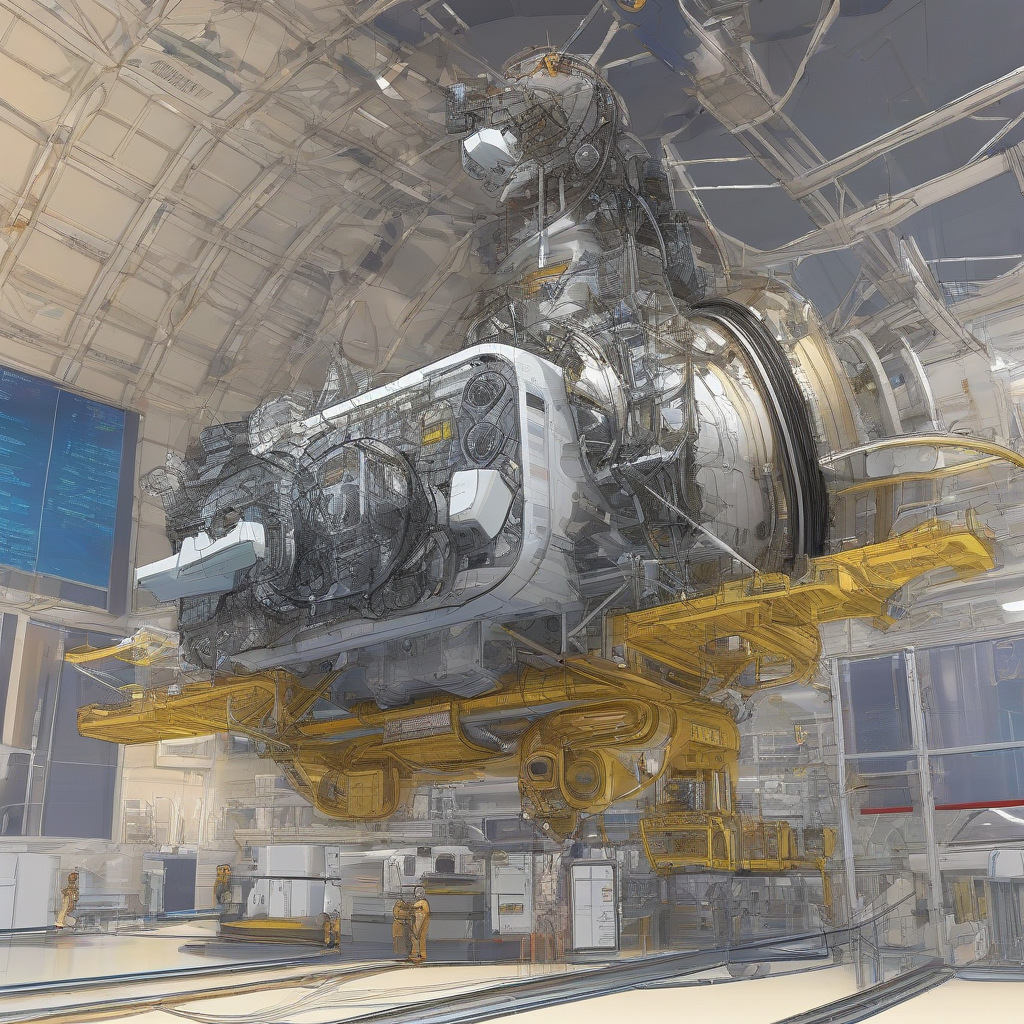
Networks Keeping NASA’s Artemis II Mission Connected
The Backbone of Space Exploration: Networks Keeping NASA's Artemis II Mission Connected
As NASA's Artemis II mission prepares to transport four astronauts around the Moon, the agency's communications systems are playing a crucial role in ensuring the success of the mission. The Near Space Network and the Deep Space Network, managed by NASA's Space Communications and Navigation (SCaN) Program office, will provide seamless communications and tracking services for the Orion spacecraft as it launches, orbits Earth, travels to the Moon, and returns home.
A Legacy of Support: The Near Space Network
The Near Space Network, managed by NASA's Goddard Space Flight Center in Greenbelt, Maryland, has a long legacy of supporting human spaceflight missions near Earth. This network uses ground stations around the globe and a fleet of relay satellites to provide communications and navigation services during multiple stages of the Artemis II mission operations. The Near Space Network has a proven track record of supporting missions such as the International Space Station and the Space Shuttle program.
The Deep Space Network: A Global Array of Giant Radio Antennas
nốiAfter Orion's translunar injection burn, which will set the spacecraft on its planned orbit around the Moon, primary communications support will transition to the Deep Space Network, managed by NASA's Jet Propulsion Laboratory in Southern California. The Deep Space Network's international array of giant radio antennas, located in California, Spain, and Australia, provides a near-continuous connection to Orion and its crew. This network is capable of tracking and communicating with spacecraft at vast distances, making it an essential component of NASA's deep space exploration efforts.
The Orion Artemis II Optical Communications System: A New Era in Space Communications
In addition to traditional radio network support, the spacecraft will host the Orion Artemis II Optical Communications System, a laser communications terminal that will transmit real science and crew data over laser links. Demonstrations like the recent Deep Space Optical Communications payload have proven laser communications systems can send more than 100 times more data than comparable radio networks, even millions of miles away from Earth. While laser communications will not be on Artemis III, the Orion Artemis II Optical Communications System could pave the way for future laser communications systems at the Moon and Mars.
The Mission Control Center: Coordinating Handoffs Between Networks
Specialists will operate the networks in tandem to enable data exchange between spacecraft and mission controllers on Earth. NASA's Mission Control Center at the agency's Johnson Space Center in Houston will track the Space Launch System rocket, Interim Cryogenic Propulsion Stage, and Orion spacecraft through coordinated handoffs between the networks' multiple assets on Earth and in space for the duration of the mission.
Data Compression and Handling: Managing the Large Amount of Information
To manage the large amount of information generated by the mission, data from Orion will be compressed after it reaches Earth. Data compression will reduce image and video quality and give priority to crew communications and mission data. This process will ensure that the most critical information is transmitted efficiently and effectively, allowing mission controllers to make informed decisions in real-time.
Looking Ahead: The Lunar Communications Relay and Navigation Systems Project
As NASA's Artemis program continues to evolve, the agency is working on a new project to eliminate blackouts and support precise navigation by placing relay satellites around the Moon. The Lunar Communications Relay and Navigation Systems project is collaborating with industry to develop a network of orbiting satellites that will deliver persistent, high-bandwidth communications and navigation services for astronauts, landers, and orbiters on and around the lunar surface. In 2024, NASA selected Intuitive Machines to develop the first set of lunar relays for demonstration during the Artemis III lunar surface mission.
Conclusion
The success of NASA's Artemis II mission relies heavily on the agency's communications systems, which will provide seamless communications and tracking services for the Orion spacecraft as it launches, orbits Earth, travels to the Moon, and returns home. The Near Space Network and the Deep Space Network, managed by NASA's SCaN Program office, will play a crucial role in ensuring the success of the mission. As NASA continues to push the boundaries of space exploration, the agency's communications systems will be essential in supporting future missions to the Moon and beyond.
About the Author
Katherine Schauer is a writer for the Space Communications and Navigation (SCaN) Program office and covers emerging technologies, commercialization efforts, exploration activities, and more.
Source: https://www.nasa.gov/missions/artemis/networks-keeping-nasas-artemis-ii-mission-connected/