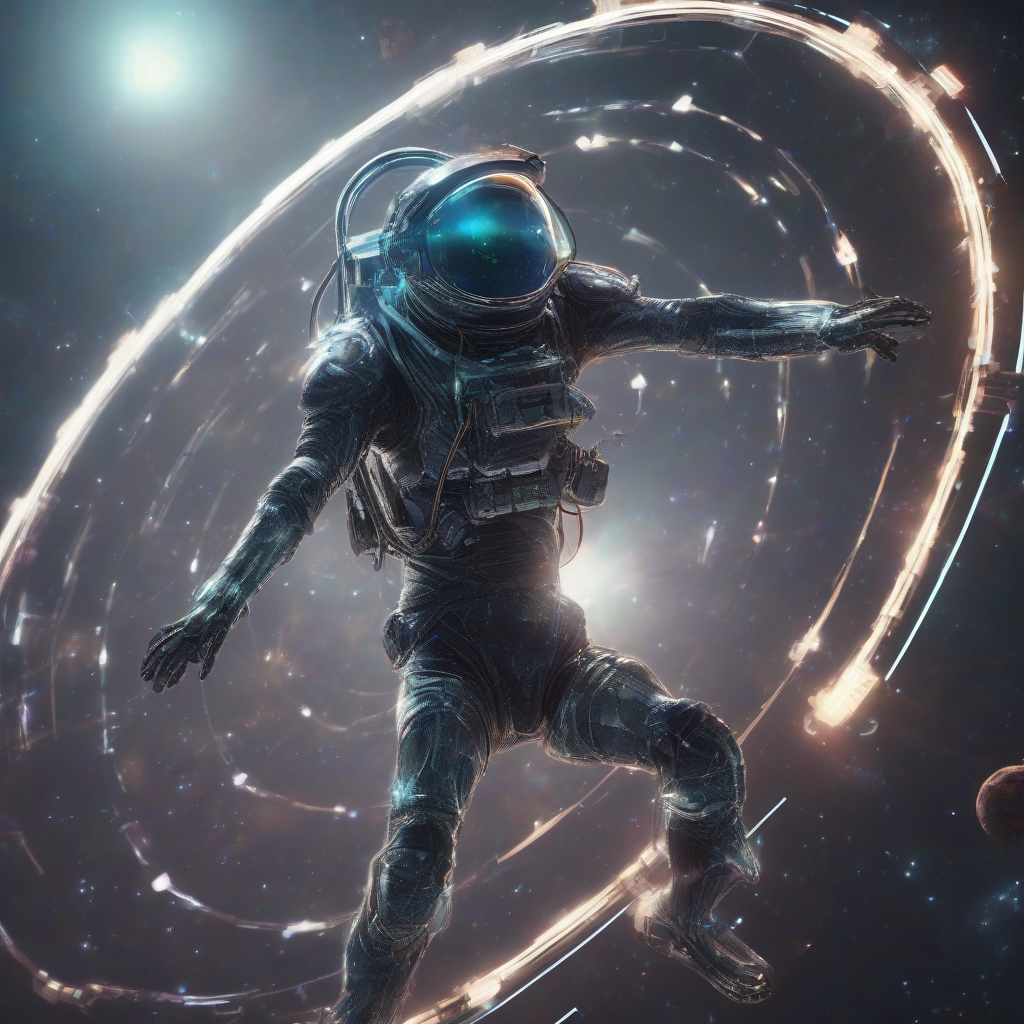
NASA to Preview US Spacewalks at Space Station in January
NASA's Upcoming Spacewalks: A Glimpse into the Future of Space Exploration
As the year draws to a close, NASA is gearing up for a series of spacewalks at the International Space Station (ISS) in January. The space agency has announced that two spacewalks will take place on January 8 and 15, with the aim of preparing the station for the installation of a roll-out solar array and completing other critical tasks. In this article, we will delve into the details of these spacewalks, explore the significance of the ISS, and examine the implications of these missions for the future of space exploration.
The Significance of the ISS
The ISS is a habitable artificial satellite in low Earth orbit, where astronauts and cosmonauts have been living and working since 2000. The station serves as a research laboratory, observatory, and testbed for spaceflight technologies. It has played a crucial role in advancing our understanding of space and has enabled numerous scientific discoveries. The ISS has also provided a platform for testing the technologies and strategies necessary for deep space exploration.
The Upcoming Spacewalks
On January 8, NASA astronauts Mike Fincke and Zena Cardman will exit the station's Quest airlock to prepare the 2A power channel for future installation of International Space Station Roll-Out Solar Arrays. Once installed, the array will provide additional power for the orbital laboratory, including critical support of its safe and controlled deorbit. This spacewalk will be Cardman's first and Fincke's 10th, tying him for the most spacewalks by a NASA astronaut.
On January 15, two NASA astronauts will replace a high-definition camera on camera port 3, install a new navigational aid for visiting spacecraft, called a planar reflector, on the Harmony module's forward port, and relocate an early ammonia servicer jumper — a flexible hose assembly that connects parts of a fluid system — along with other jumpers on the station's S6 and S4 truss.
The Importance of Spacewalks
Spacewalks, also known as EVAs (extravehicular activities), are a critical component of space exploration. They enable astronauts to perform maintenance, repairs, and upgrades on spacecraft and space stations. Spacewalks also provide opportunities for scientists to conduct research and gather data in microgravity environments.
The Future of Space Exploration
The upcoming spacewalks at the ISS are a testament to the ongoing efforts of NASA and its international partners to advance our understanding of space and to push the boundaries of space exploration. As we look to the future, it is clear that spacewalks will continue to play a vital role in the development of new technologies and strategies for deep space exploration.
In the near future, NASA plans to send astronauts to the Moon and eventually to Mars. To achieve these goals, the agency will need to develop new technologies and strategies for spacewalks, including the use of robotic systems and advanced life support systems.
Conclusion
The upcoming spacewalks at the ISS are an exciting development in the field of space exploration. They demonstrate the ongoing efforts of NASA and its international partners to advance our understanding of space and to push the boundaries of space exploration. As we look to the future, it is clear that spacewalks will continue to play a vital role in the development of new technologies and strategies for deep space exploration.
In the words of NASA Administrator, Jim Bridenstine, "The next giant leap for humanity will be to the Moon and beyond. And we're making great progress towards that goal." The upcoming spacewalks at the ISS are a crucial step towards achieving that goal, and we can't wait to see what the future holds for space exploration.
Additional Resources
For more information on the ISS and its research, visit the NASA website at www.nasa.gov.
To learn more about the upcoming spacewalks, visit the NASA website at www.nasa.gov and search for "ISS spacewalks."
To stay up-to-date on the latest news and developments in space exploration, follow NASA on social media at twitter.com/nasa and facebook.com/nasa.
Source: https://www.nasa.gov/news-release/nasa-to-preview-us-spacewalks-at-space-station-in-january/