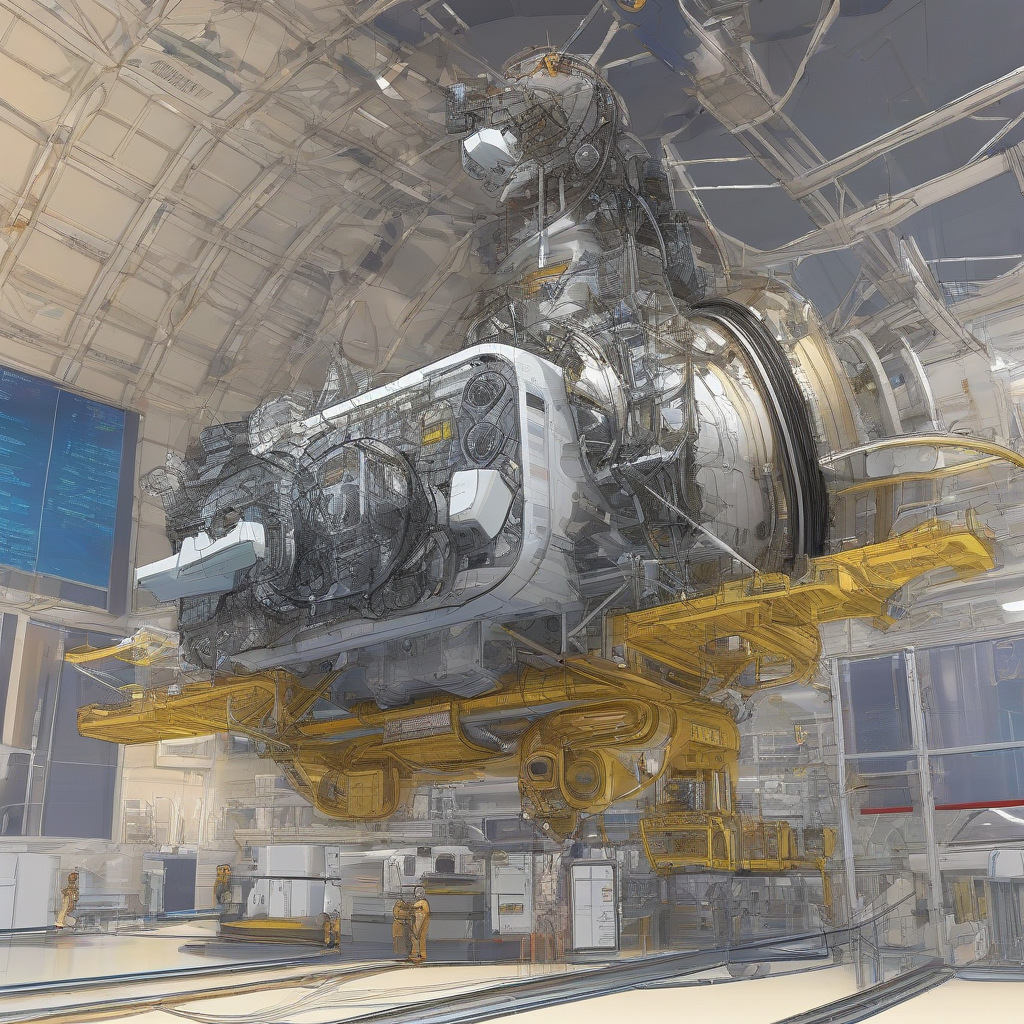
NASA Technology Brings Golden Age of Exploration to Earth
The Golden Age of Exploration: How NASA Technology is Revolutionizing Life on Earth
As NASA celebrates the 50th anniversary of its Spinoff publication, it's clear that the agency's commitment to innovation and technology transfer has led to a golden age of exploration – not just in space, but on Earth. For five decades, Spinoff has documented the countless ways in which NASA's research and development have improved our daily lives, from the food we eat to the homes we live in.
The Power of Technology Transfer
At the heart of NASA's success lies its Technology Transfer program, which has the sole mission of getting the agency's innovations into the hands of companies, entrepreneurs, and everyday people. By partnering with industry leaders and licensing its patents, NASA has created a pipeline of cutting-edge technologies that are transforming industries and improving lives.
From Space to Earth: The Impact of NASA's Innovations
One of the most significant areas where NASA's technology has made a tangible impact is in the field of food safety. The procedures developed by NASA to ensure food safety for Apollo astronauts traveling to the Moon have formed the foundation for safety procedures and regulations governing food production globally. This has led to a significant reduction in foodborne illnesses and has saved countless lives.
Another area where NASA's technology has made a significant impact is in the development of memory foam. Originally designed to absorb pressure and provide comfort for astronauts, memory foam has become a staple in the mattress industry, providing unparalleled comfort and support for millions of people around the world.
The Future of Space Exploration: How NASA's Innovations are Pointing the Way
As NASA looks to the future, it's clear that the agency's innovations will continue to play a critical role in the next great leap for humanity. With the Artemis program, NASA is developing the technologies needed for a sustained presence on the Moon and preparing for human exploration of Mars. These innovations will not only enable us to explore the vastness of space but will also unlock new capabilities across medicine, aviation, agriculture, and other critical sectors.
The Spinoffs of Tomorrow: 20 Technologies Ready for Commercialization
In the latest edition of Spinoff, NASA is inviting readers to contribute to the next "small step" in the agency's history of "giant leaps." The publication features 20 technologies that are ready for commercialization, including:
- Advanced robotic systems for warehouse and assembly line tasks
- Energy-efficient camera technology for compact, high-quality imaging systems
- Scratch-resistant lenses using diamond-hard coatings
- Wireless headsets based on technology pioneered for hands-free communication for astronauts
These technologies have the potential to transform industries and improve lives, and NASA is calling on entrepreneurs and industry leaders to partner with the agency to bring them to market.
Conclusion
As NASA celebrates the 50th anniversary of its Spinoff publication, it's clear that the agency's commitment to innovation and technology transfer has led to a golden age of exploration – not just in space, but on Earth. With its Technology Transfer program and a pipeline of cutting-edge technologies, NASA is poised to continue pushing the boundaries of what is possible and improving lives for generations to come.
Forward-Looking Thoughts
As we look to the future, it's clear that the next great leap for humanity will be driven by innovation and technology. With NASA at the forefront of this effort, we can expect to see significant advancements in areas such as:
- Advanced propulsion systems for deep space exploration
- In-orbit manufacturing and assembly
- Artificial intelligence and machine learning for space operations
- Biotechnology and life support systems for long-duration space missions
These innovations will not only enable us to explore the vastness of space but will also unlock new capabilities across medicine, aviation, agriculture, and other critical sectors. As we continue to push the boundaries of what is possible, we can expect to see a future where space exploration and technology transfer go hand in hand, driving innovation and improving lives for generations to come.
Source: https://www.nasa.gov/news-release/nasa-technology-brings-golden-age-of-exploration-to-earth/