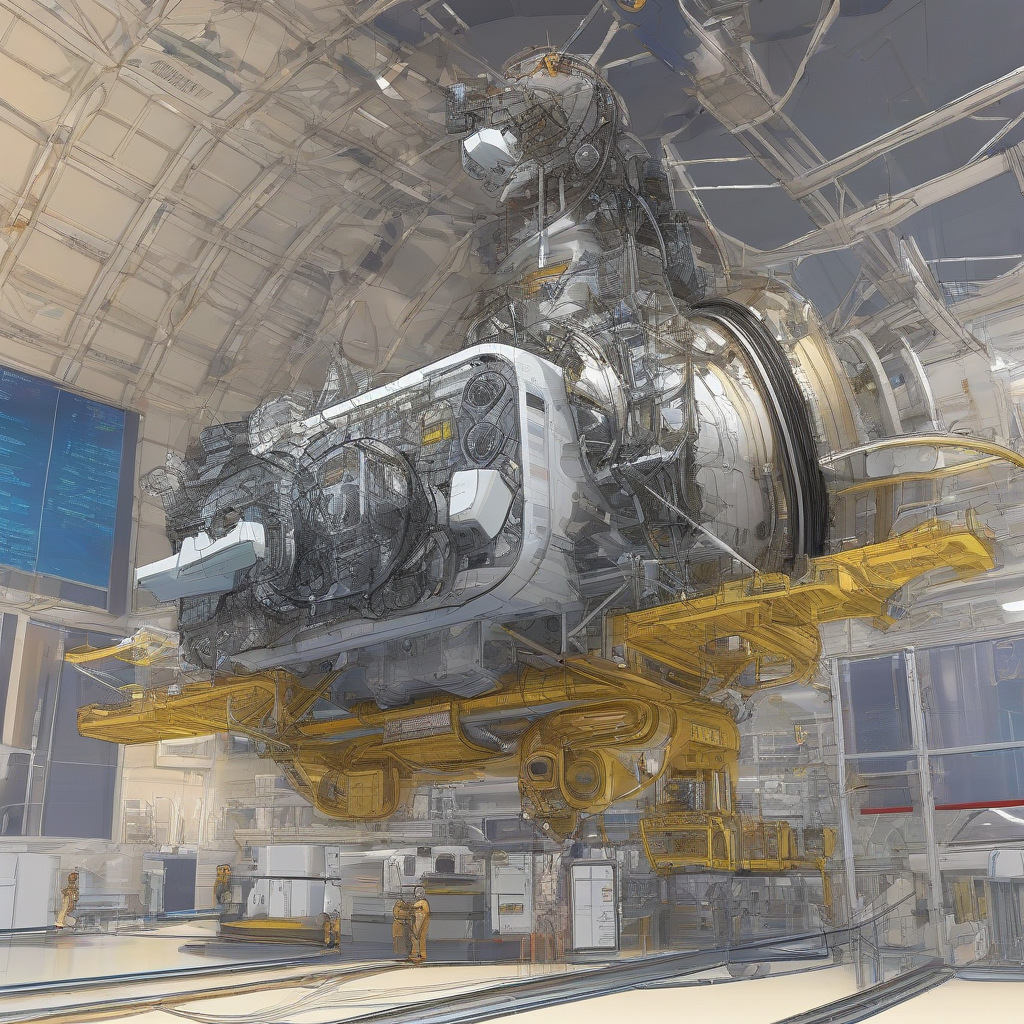
NASA Starts Up Gateway’s Power System for First Time
Unveiling the Power of Gateway: A Breakthrough in Space Exploration
As the world's most ambitious space agencies continue to push the boundaries of human knowledge, NASA's Gateway program has taken a significant leap forward with the successful startup of its Power and Propulsion Element (PPE). This milestone marks a crucial step towards establishing a sustainable presence in lunar orbit, paving the way for future missions to the Moon and beyond.
Located in the heart of the Gateway, the PPE is a solar electric propulsion spacecraft designed to provide power, high-rate communications, attitude control, and the ability to maintain and maneuver between orbits. With a capacity to generate 60 kilowatts of power, this element is a testament to the ingenuity of human innovation and the relentless pursuit of excellence in space exploration.
The Power and Propulsion Element: A Technical Marvel
The PPE is managed by NASA's Glenn Research Center in Cleveland and built by industry partner Lanteris Space Systems in Palo Alto, California. The element's main electrical system has been secured inside protective exterior panels, with three 12-kilowatt advanced electric propulsion system thrusters manufactured by L3Harris and four 6-kilowatt Busek-built BHT-6000 thrusters on deck for installation.
The roll-out solar arrays for Gateway are complete and moving through testing at Redwire's facility in Goleta, California. These arrays will play a critical role in harnessing the energy of the Sun to power the PPE and the Gateway's various systems.
The Significance of the PPE Startup
The successful startup of the PPE is a significant milestone in the Gateway program, marking a major step towards establishing a sustainable presence in lunar orbit. This achievement demonstrates the PPE's ability to provide power, high-rate communications, attitude control, and the ability to maintain and maneuver between orbits.
The PPE will play a critical role in supporting future missions to the Moon, including the Artemis program, which aims to return humans to the lunar surface by 2025. The Gateway will serve as a vital hub for scientific research, exploration, and development, providing a platform for scientists and engineers to conduct experiments, test new technologies, and gain a deeper understanding of the lunar environment.
The Implications of the PPE Startup
The successful startup of the PPE has significant implications for the future of space exploration. It demonstrates the feasibility of solar electric propulsion and the potential for sustainable power generation in space. This achievement will pave the way for future missions to the Moon, Mars, and beyond, enabling scientists and engineers to conduct more extensive and complex research in space.
The PPE startup also highlights the importance of international cooperation in space exploration. The Gateway program is a collaborative effort between NASA and its international partners, including the European Space Agency, the Canadian Space Agency, and the Japan Aerospace Exploration Agency. This collaboration will continue to drive innovation and progress in space exploration, enabling humanity to push the boundaries of knowledge and understanding.
Conclusion
The successful startup of the Power and Propulsion Element (PPE) marks a significant milestone in the Gateway program, demonstrating the feasibility of solar electric propulsion and the potential for sustainable power generation in space. This achievement will pave the way for future missions to the Moon, Mars, and beyond, enabling scientists and engineers to conduct more extensive and complex research in space.
As the world's most ambitious space agencies continue to push the boundaries of human knowledge, the PPE startup serves as a testament to the ingenuity of human innovation and the relentless pursuit of excellence in space exploration. The implications of this achievement will be far-reaching, driving innovation and progress in space exploration and enabling humanity to push the boundaries of knowledge and understanding.
Forward-Looking Thoughts
As the Gateway program continues to evolve, it will be exciting to see the PPE play a critical role in supporting future missions to the Moon and beyond. The successful startup of the PPE demonstrates the potential for sustainable power generation in space, paving the way for more extensive and complex research in space.
The future of space exploration holds much promise, with new technologies and innovations on the horizon. As we continue to push the boundaries of human knowledge, it will be essential to collaborate with international partners, drive innovation, and pursue excellence in space exploration.
The successful startup of the PPE is a significant step towards establishing a sustainable presence in lunar orbit, and it will be exciting to see the implications of this achievement unfold in the years to come.