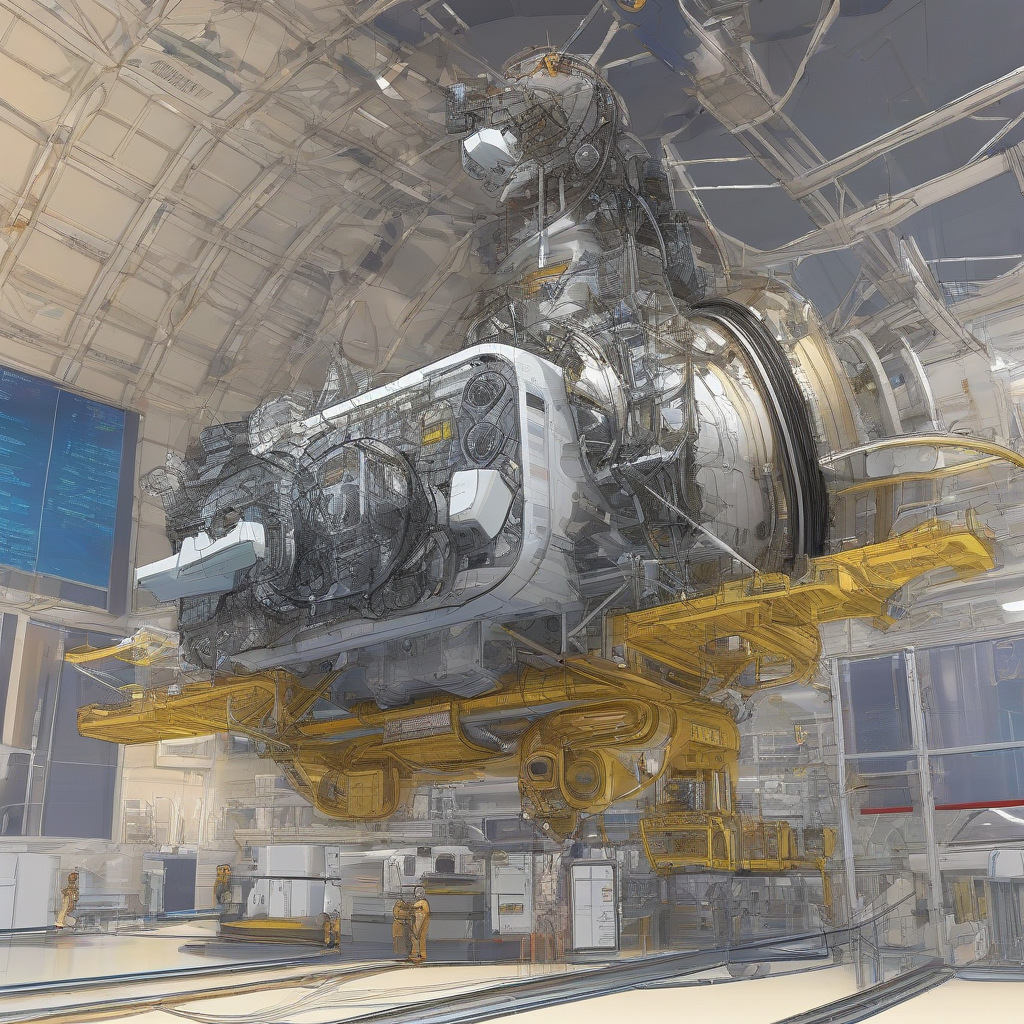
NASA Space Roboticist Challenge
The Future of Space Exploration: NASA's Space Roboticist Challenge
As we continue to push the boundaries of space exploration, the need for innovative and collaborative approaches has never been more pressing. The latest challenge from NASA, the Space Roboticist Challenge, is a prime example of this spirit of innovation and collaboration. By opening up access to a robotic arm in low Earth orbit, NASA is providing a unique opportunity for researchers to conduct experiments that could have a significant impact on our understanding of space and its applications.
The Fly Foundational Robots (FFR) Mission
At the heart of the Space Roboticist Challenge is the Fly Foundational Robots (FFR) mission, which will launch a robotic arm with seven degrees of freedom to low Earth orbit. This robotic arm will provide a versatile platform for researchers to conduct a wide range of experiments, from testing new materials and technologies to studying the effects of microgravity on living organisms.
Eligibility and Registration
To participate in the Space Roboticist Challenge, researchers must meet certain eligibility requirements. These include being a principal investigator, post-doctoral researcher, professor, or highly qualified graduate student at a U.S. institution. Participants must also submit eligibility documentation at registration, which will be reviewed and confirmed before access to the Phase 1 submission portal is granted.
The Challenge Phases
The Space Roboticist Challenge consists of three phases: Phase 0, Phase 1, and Phase 2.
Phase 0: Eligibility Registration
The first phase of the challenge is eligibility registration, which begins on May 20, 2026, and closes on September 23, 2026. During this phase, participants must complete their eligibility registration and submit the required documentation.
Phase 1: White Paper Submission
The second phase of the challenge is the submission of a white paper proposing a short, focused experiment using the FFR robotic arm. Up to 15 teams will be selected to advance to Phase 2, and the submission deadline is October 2, 2026.
Phase 2: Simulation & Validation
The final phase of the challenge is simulation and validation testing, which will be conducted by the invited participants. This phase will include visits to the Goddard Space Flight Center in Greenbelt, Maryland, and will provide an opportunity for participants to refine their experiments and prepare for on-orbit testing.
The Prize
The teams that pass validation will receive an offer of on-orbit experiment time on the FFR Mission, providing a unique opportunity to conduct experiments in a microgravity environment.
Why This Matters
The Space Roboticist Challenge has significant implications for space exploration and research. By providing access to a robotic arm in low Earth orbit, NASA is enabling researchers to conduct experiments that could have a significant impact on our understanding of space and its applications. This challenge also highlights the importance of collaboration and innovation in space research, and demonstrates the potential for space-based research to drive breakthroughs in a wide range of fields.
Real-World Applications
The experiments conducted as part of the Space Roboticist Challenge could have a range of real-world applications, from improving our understanding of the effects of microgravity on living organisms to developing new materials and technologies for use in space exploration. For example, the study of microgravity could provide insights into the effects of aging on the human body, while the development of new materials could enable the creation of more efficient and sustainable spacecraft.
Forward-Looking Thoughts
The Space Roboticist Challenge is an exciting example of the innovative and collaborative approaches that are driving progress in space exploration and research. As we continue to push the boundaries of space exploration, it is likely that we will see even more ambitious and innovative challenges in the future. The Space Roboticist Challenge demonstrates the potential for space-based research to drive breakthroughs in a wide range of fields, and highlights the importance of collaboration and innovation in achieving these breakthroughs.
For more information, visit: https://spaceroboticistchallenge.com/