NASA Sets Coverage for Northrop Grumman’s CRS-24 Resupply Launch
The Next Chapter in Space Exploration: NASA's Northrop Grumman CRS-24 Resupply Launch
As the world continues to gaze up at the stars, NASA is set to embark on its latest mission to the International Space Station (ISS). The Northrop Grumman Commercial Resupply Services 24 (CRS-24) mission, scheduled to launch on April 8, will deliver a cargo of over 11,000 pounds of science investigations, supplies, and equipment to the orbiting laboratory.
A New Era in Space Technology
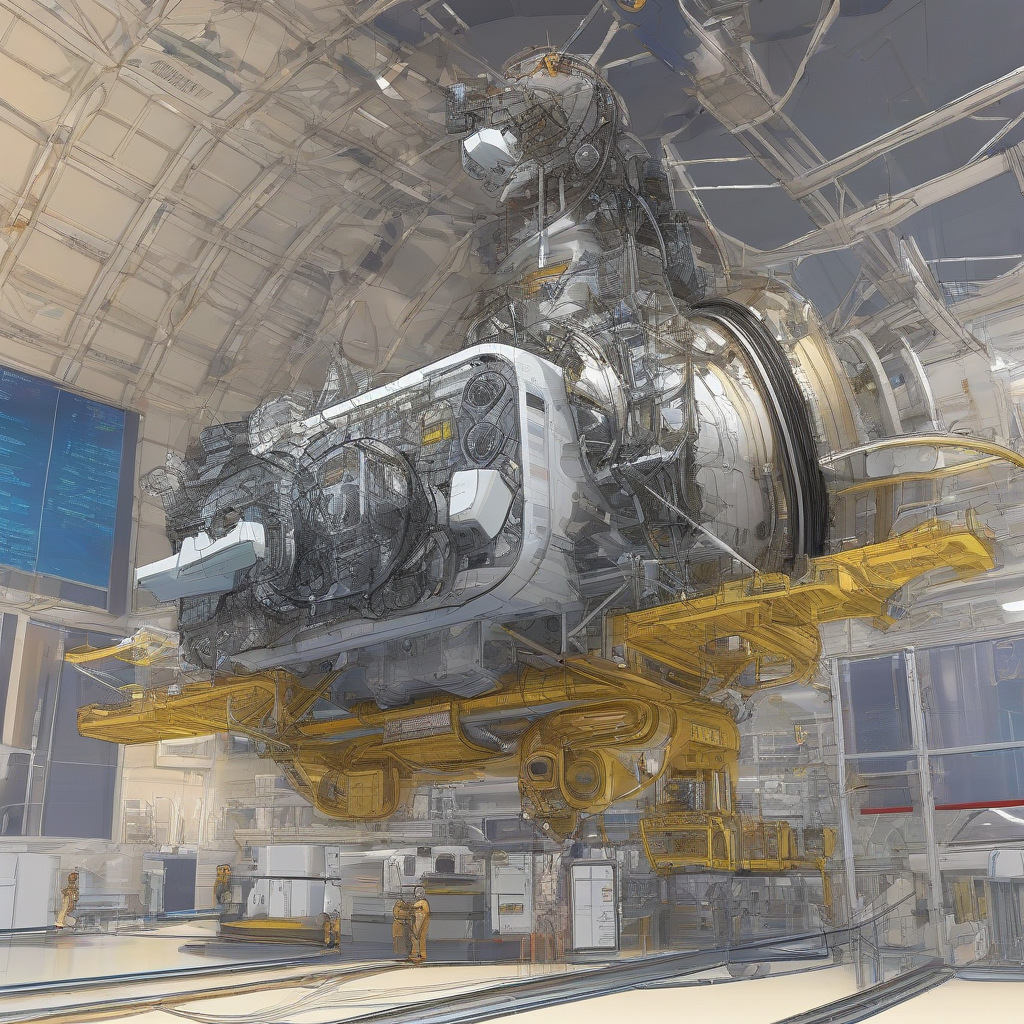
The CRS-24 mission marks a significant milestone in the development of space technology. The Northrop Grumman Cygnus XL spacecraft, which will carry the cargo, is equipped with advanced navigation and communication systems, allowing for more efficient and precise delivery of cargo to the ISS. The spacecraft is also designed to be reusable, with the ability to carry out multiple missions before being retired.
The Science Behind the Mission
The CRS-24 mission will carry a range of scientific experiments and equipment, including a new module for the Cold Atom Lab, which will advance our understanding of quantum science and its potential applications in computing and medicine. The mission will also deliver hardware to produce therapeutic stem cells for blood diseases and cancer, as well as model organisms to study the gut microbiome.
Enhancing Space Weather Models
One of the key objectives of the CRS-24 mission is to enhance space weather models that protect critical space infrastructure such as GPS and radar. The mission will carry a receiver that will collect data on space weather, which will be used to improve our understanding of solar activity and its impact on Earth's magnetic field.
A Tribute to a Space Legend
The Northrop Grumman Cygnus XL spacecraft has been named the S.S. Steven R. Nagel in honor of the former NASA astronaut who flew four space shuttle missions, logging over 720 hours in space. Nagel was a pioneer in space exploration and a dedicated advocate for the advancement of space technology.
Mission Coverage
NASA's mission coverage will be available on NASA+, Amazon Prime, and the agency's YouTube channel. The launch coverage will begin at 8:30 a.m. EDT on April 8, with the launch scheduled for 8:49 a.m. EDT. The arrival coverage will begin at 12:30 a.m. EDT on April 10, with the capture of the Cygnus XL spacecraft by the Canadarm2 robotic arm.
Attend the Launch Virtually
Members of the public can register to attend the launch virtually through NASA's virtual guest program. The program includes curated launch resources, notifications about related opportunities or changes, and a stamp for the NASA virtual guest passport following launch.
Social Media and Engagement
Follow NASA's social media accounts on X, Facebook, and Instagram to stay up-to-date with the latest news and updates about the CRS-24 mission. Use the hashtags #CRS24 and #NASA to join the conversation and share your thoughts about the mission.
Conclusion
The Northrop Grumman CRS-24 resupply launch marks an exciting new chapter in space exploration. With its advanced technology and scientific experiments, this mission has the potential to advance our understanding of the universe and improve our daily lives. As we gaze up at the stars, we are reminded of the incredible achievements of NASA and the dedication of its scientists and engineers.
Source: https://www.nasa.gov/news-release/nasa-sets-coverage-for-northrop-grummans-crs-24-resupply-launch/