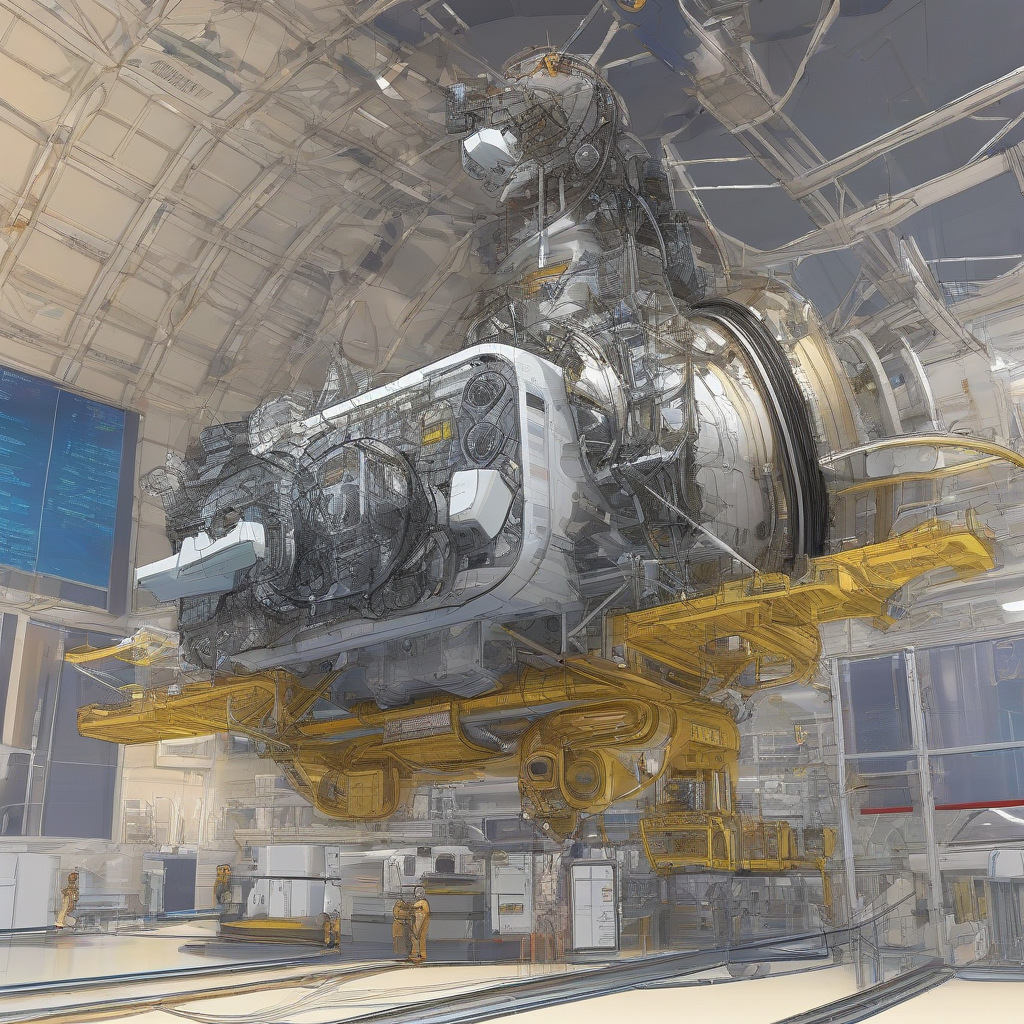
NASA Selects Voyager for Seventh Private Mission to Space Station
NASA Selects Voyager for Seventh Private Mission to Space Station: A New Era for Commercial Spaceflight
As the space industry continues to evolve, NASA has taken another significant step towards fostering a commercial space economy by selecting Voyager Technologies for the seventh private astronaut mission to the International Space Station (ISS). This development marks a major milestone in the agency's ongoing efforts to expand opportunities for private industry in low Earth orbit.
A Growing Commercial Space Economy
Private astronaut missions are accelerating the growth of new ideas, industries, and technologies that strengthen America's presence in low Earth orbit and pave the way for what comes next. With three providers now selected for private missions, NASA is doing everything it can to send more astronauts to space and ignite the orbital economy. Each new partner brings fresh capabilities that move us closer to a future with multiple commercially operated space stations and a vibrant, sustainable marketplace in low Earth orbit.
Voyager's Commitment to Commercial Spaceflight
Voyager Technologies has been a long-time partner with NASA, and this award reflects decades of collaboration and shared vision. The company's chairman and CEO, Dylan Taylor, emphasized the significance of this selection, stating, "This award validates our belief that the infrastructure being built in low Earth orbit today is the launchpad for humanity's future in deep space." Voyager is committed to making American human spaceflight stronger, more capable, and more sustainable at every step of the journey.
The VOYG-1 Mission
The mission, named VOYG-1, is expected to spend as many as 14 days aboard the ISS. A specific launch date will depend on overall spacecraft traffic at the orbital outpost and other planning considerations. Voyager will submit four proposed crew members to NASA and its international partners for review. Once approved and confirmed, they will train with NASA, international partners, and the launch provider for their flight.
The Benefits of Private Astronaut Missions
Missions aboard the ISS, including private astronaut missions, help advance scientific knowledge and demonstrate new technologies in the unique microgravity environment. These commercial efforts in low Earth orbit help develop capabilities and technologies that could support NASA's long-term goals for missions beyond low Earth orbit, including deep space exploration to the Moon and eventually to Mars through the agency's Artemis program.
Implications for the Future of Space Exploration
The selection of Voyager for the seventh private astronaut mission to the ISS marks a significant step towards a future with multiple commercially operated space stations and a vibrant, sustainable marketplace in low Earth orbit. This development has important implications for the future of space exploration, as it demonstrates the potential for private industry to play a major role in advancing scientific knowledge and developing new technologies.
Conclusion
The selection of Voyager for the seventh private astronaut mission to the ISS is a major milestone in the development of a commercial space economy. This development has important implications for the future of space exploration, as it demonstrates the potential for private industry to play a major role in advancing scientific knowledge and developing new technologies. As the space industry continues to evolve, it will be exciting to see how this development contributes to the growth of a vibrant, sustainable marketplace in low Earth orbit.
Forward-Looking Thoughts
As we look to the future, it will be interesting to see how the development of a commercial space economy will continue to evolve. With multiple commercially operated space stations and a vibrant, sustainable marketplace in low Earth orbit, the possibilities for scientific research and technological development will be endless. The selection of Voyager for the seventh private astronaut mission to the ISS is a significant step towards this future, and it will be exciting to see how this development contributes to the growth of a commercial space economy.
Real-World Applications
The development of a commercial space economy has important real-world applications, including the potential for private industry to play a major role in advancing scientific knowledge and developing new technologies. This development could also lead to the creation of new industries and jobs, as well as the growth of a vibrant, sustainable marketplace in low Earth orbit.
Technical Details
The VOYG-1 mission will involve the launch of a spacecraft from Florida, which will carry a crew of four astronauts to the ISS. The mission is expected to spend as many as 14 days aboard the ISS, during which time the crew will conduct scientific research and demonstrations of new technologies. The spacecraft will be equipped with a range of scientific instruments and equipment, including cameras, sensors, and communication systems.
Conclusion
In conclusion, the selection of Voyager for the seventh private astronaut mission to the ISS is a significant step towards the development of a commercial space economy. This development has important implications for the future of space exploration, as it demonstrates the potential for private industry to play a major role in advancing scientific knowledge and developing new technologies. As the space industry continues to evolve, it will be exciting to see how this development contributes to the growth of a vibrant, sustainable marketplace in low Earth orbit.
Source: https://www.nasa.gov/news-release/nasa-selects-voyager-for-seventh-private-mission-to-space-station/