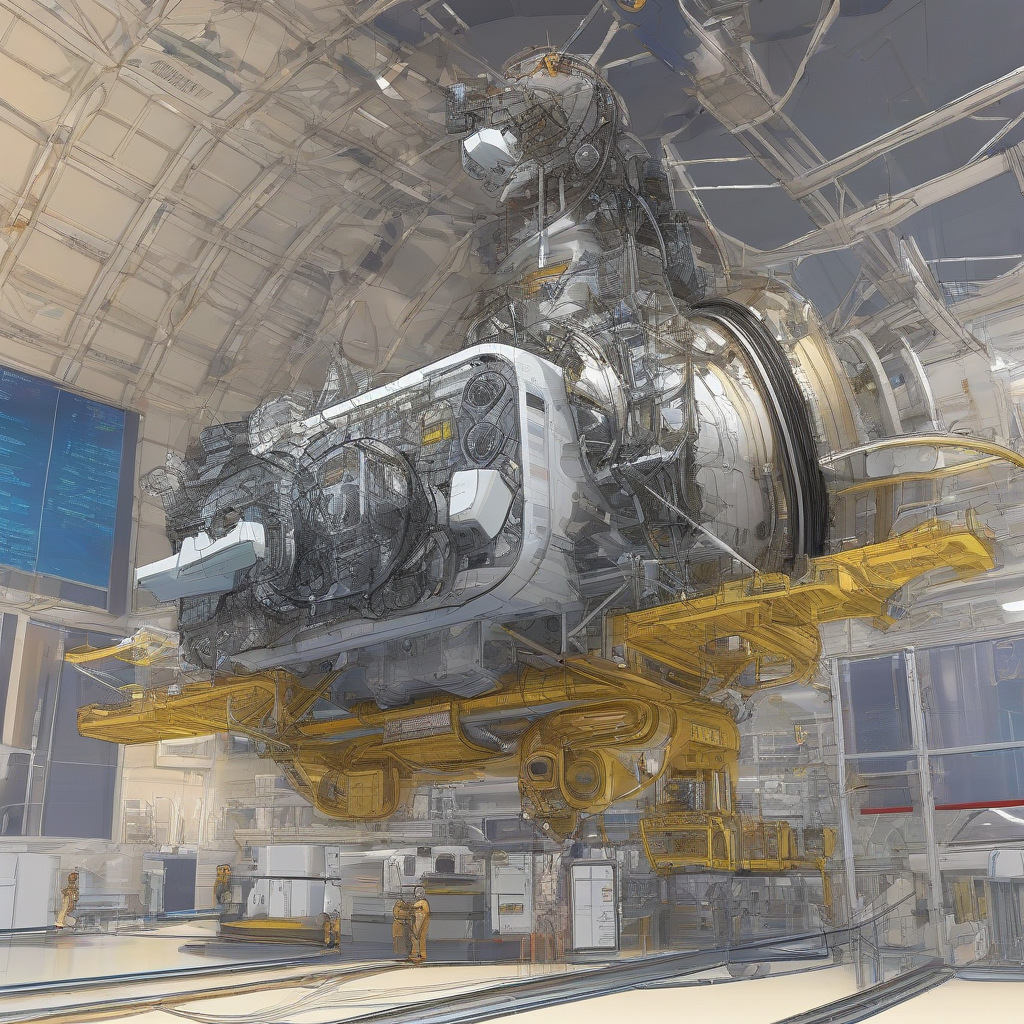
NASA’s SLS Rocket: Secondary Payloads
Unlocking the Power of Secondary Payloads: NASA's SLS Rocket and the Artemis II Mission
As NASA prepares to launch the Artemis II mission to the Moon, a crucial aspect of the space agency's strategy is often overlooked: secondary payloads. These small satellites, or CubeSats, are an integral part of the mission, providing a cost-effective and efficient way to conduct scientific research and gather valuable data.
The Artemis Accords and International Cooperation
The Artemis Accords, signed by 14 countries, aim to promote international cooperation in space exploration and development. As part of this agreement, four countries – Japan, Canada, Australia, and the United Arab Emirates – have contributed CubeSats to the Artemis II mission. These small satellites will be launched aboard the Space Launch System (SLS) rocket, which will carry the Orion spacecraft to the Moon.
The Benefits of Secondary Payloads
Secondary payloads offer several advantages over traditional, dedicated satellites. Firstly, they are significantly cheaper to launch, with costs ranging from $100,000 to $500,000 per unit, compared to tens of millions of dollars for a dedicated satellite. This makes them an attractive option for space agencies and private companies looking to conduct scientific research without breaking the bank.
CubeSat Technology and Design
CubeSats are small, cube-shaped satellites that typically measure 10 cm x 10 cm x 10 cm in size. They are designed to be relatively simple, with a focus on conducting a specific scientific experiment or gathering data. The Artemis II CubeSats, for example, will be equipped with a range of instruments, including cameras, spectrometers, and magnetometers.
Payload Deployment and Control
The Artemis II CubeSats will be deployed from the Orion stage adapter (OSA) approximately five hours after launch. The avionics unit will control the deployment process, ensuring that the satellites are released safely and efficiently. Once deployed, the CubeSats will begin their scientific mission, gathering data and transmitting it back to Earth.
Real-World Applications and Implications
The use of secondary payloads on the Artemis II mission has significant implications for space exploration and development. By providing a cost-effective and efficient way to conduct scientific research, secondary payloads can help to accelerate the pace of discovery and innovation in space. This, in turn, can lead to new technologies, new industries, and new opportunities for economic growth.
Examples of Successful Secondary Payloads
Several examples of successful secondary payloads can be cited, including the European Space Agency's (ESA) Fly Your Satellite! program, which has launched over 100 CubeSats into space since 2003. Another example is the NASA's CubeSat Launch Initiative, which has launched over 100 CubeSats into space since 2010.
Forward-Looking Thoughts and Implications
As the Artemis II mission prepares to launch, the use of secondary payloads is set to become an increasingly important aspect of space exploration and development. With the cost of launching dedicated satellites continuing to rise, secondary payloads offer a cost-effective and efficient way to conduct scientific research and gather valuable data. As the space industry continues to evolve and grow, it is likely that secondary payloads will play an increasingly important role in shaping the future of space exploration and development.
In conclusion, the use of secondary payloads on the Artemis II mission is a crucial aspect of NASA's strategy, providing a cost-effective and efficient way to conduct scientific research and gather valuable data. As the space industry continues to evolve and grow, it is likely that secondary payloads will play an increasingly important role in shaping the future of space exploration and development.
Source: https://www.nasa.gov/image-article/nasas-sls-rocket-secondary-payloads/