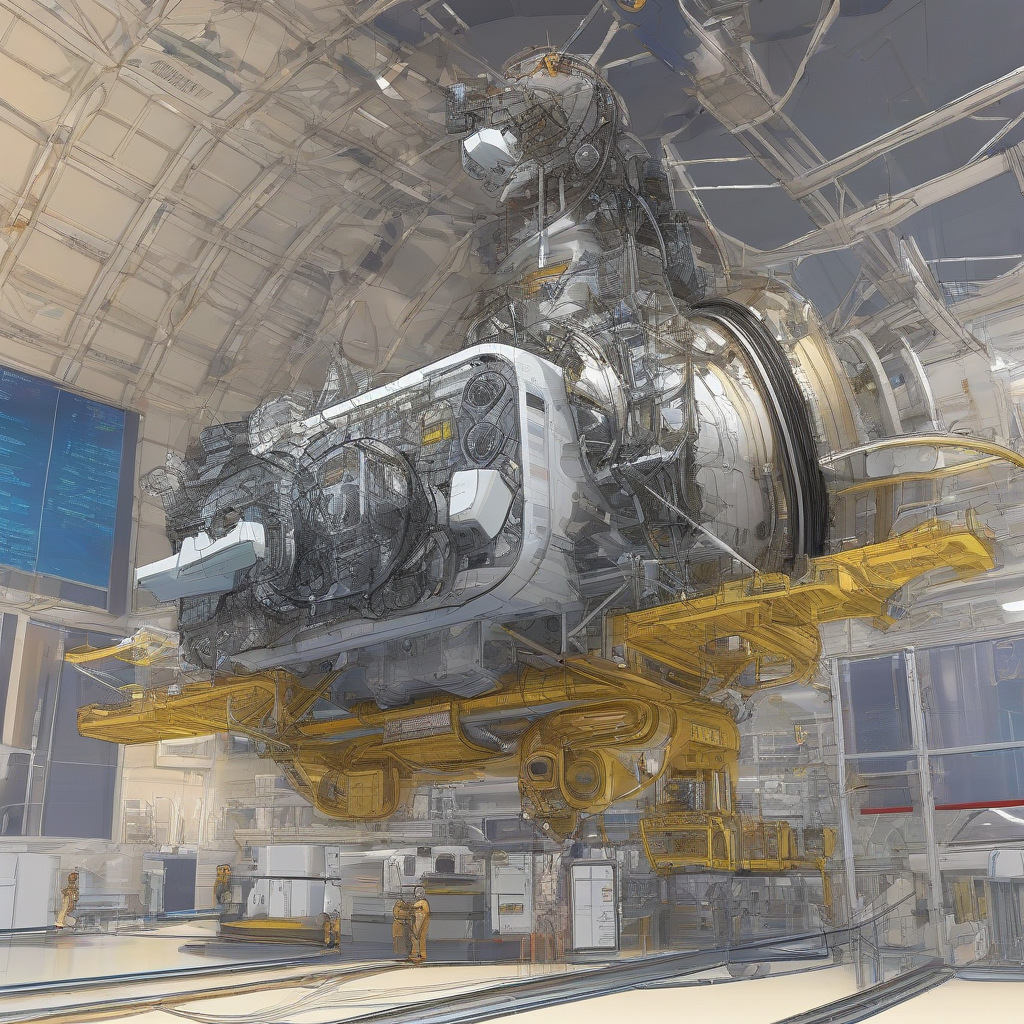
NASA’s Home for Experimental Flight Advances Aeronautics Mission
A Culture of Innovation: How NASA's Armstrong Flight Research Center is Advancing the Future of Flight
Located in the Mojave Desert, NASA's Armstrong Flight Research Center in Edwards, California, has been at the forefront of flight research and innovation for over seven decades. From the historic X-1 supersonic flight to the cutting-edge X-59 quiet supersonic technology aircraft, Armstrong has played a pivotal role in shaping the future of aviation. In this article, we'll delve into the center's rich history, its current mission, and the exciting advancements being made in the field of aeronautics.
A Legacy of Innovation
The story of Armstrong Flight Research Center begins in 1947, when a team of 13 engineers and technicians from the National Advisory Committee for Aeronautics (NACA) arrived at Muroc Army Airfield, now Edwards Air Force Base, to establish the Station for High-Speed Research. Their mission was to prepare for the first supersonic research flights of the X-1 rocket plane, piloted by Chuck Yeager, who would go on to break the sound barrier on October 14, 1947. This historic achievement marked the dawn of a new era in aviation and cemented Edwards Air Force Base as a cornerstone of NASA's flight research enterprise.
Since then, Armstrong has continued to push the boundaries of flight, testing and developing new technologies that have revolutionized the field of aeronautics. From lifting body designs to digital fly-by-wire systems, the center has played a leading role in the development of many of the technologies that are now standard in commercial aviation.
A Culture of Collaboration
One of the key factors that has contributed to Armstrong's success is its culture of collaboration. The center works closely with other NASA centers, industry partners, and government agencies to advance the state of the art in aeronautics. This collaborative approach has enabled the development of many of the technologies that are now being used in commercial aviation, including advanced air mobility systems, electrified propulsion, and autonomous flight systems.
Supporting a Broad Mission Portfolio
While Armstrong is best known for its experimental aircraft, the center also supports a diverse mission portfolio, including Earth science missions, airborne sensor testing, and planetary exploration. The center's aircraft, including the ER-2 and Gulfstream, carry instruments that study climate, weather, and atmospheric composition, contributing vital data to NASA's science goals in partnership with agency science teams.
Milestones that Matter
Armstrong's flight research heritage includes many milestones that have shaped aviation history. Some of the most notable include:
- 1947: Chuck Yeager breaks the sound barrier in the Bell X-1.
- 1960s-70s: Lifting body aircraft tested at Edwards lay the groundwork for the space shuttle.
- 1980s: Digital fly-by-wire systems validated at NASA Armstrong become standard in commercial aviation.
- 2000s and beyond: Two successful flights of a scramjet-powered airplane, the X-43A, at hypersonic speeds – greater than Mach 5, or five times the speed of sound.
Each of these achievements reflects NASA collaboration, drawing on location, infrastructure, and culture to deliver agency impact.
Looking Ahead
As aviation enters a new era of fuel savings, autonomy, and accessibility, NASA's aeronautics team – through flight research at Armstrong and elsewhere – remains steady to test the technologies that will define the future of flight. With growing interest in advanced air mobility, high-speed flight research, and new aircraft technologies, NASA's integrated approach is more critical than ever.
Conclusion
Armstrong Flight Research Center has a rich history of innovation and collaboration, and its contributions to the field of aeronautics have been nothing short of remarkable. From the historic X-1 supersonic flight to the cutting-edge X-59 quiet supersonic technology aircraft, the center has played a pivotal role in shaping the future of aviation. As we look to the future, it is clear that Armstrong will continue to be at the forefront of flight research and innovation, pushing the boundaries of what is possible and advancing the state of the art in aeronautics.