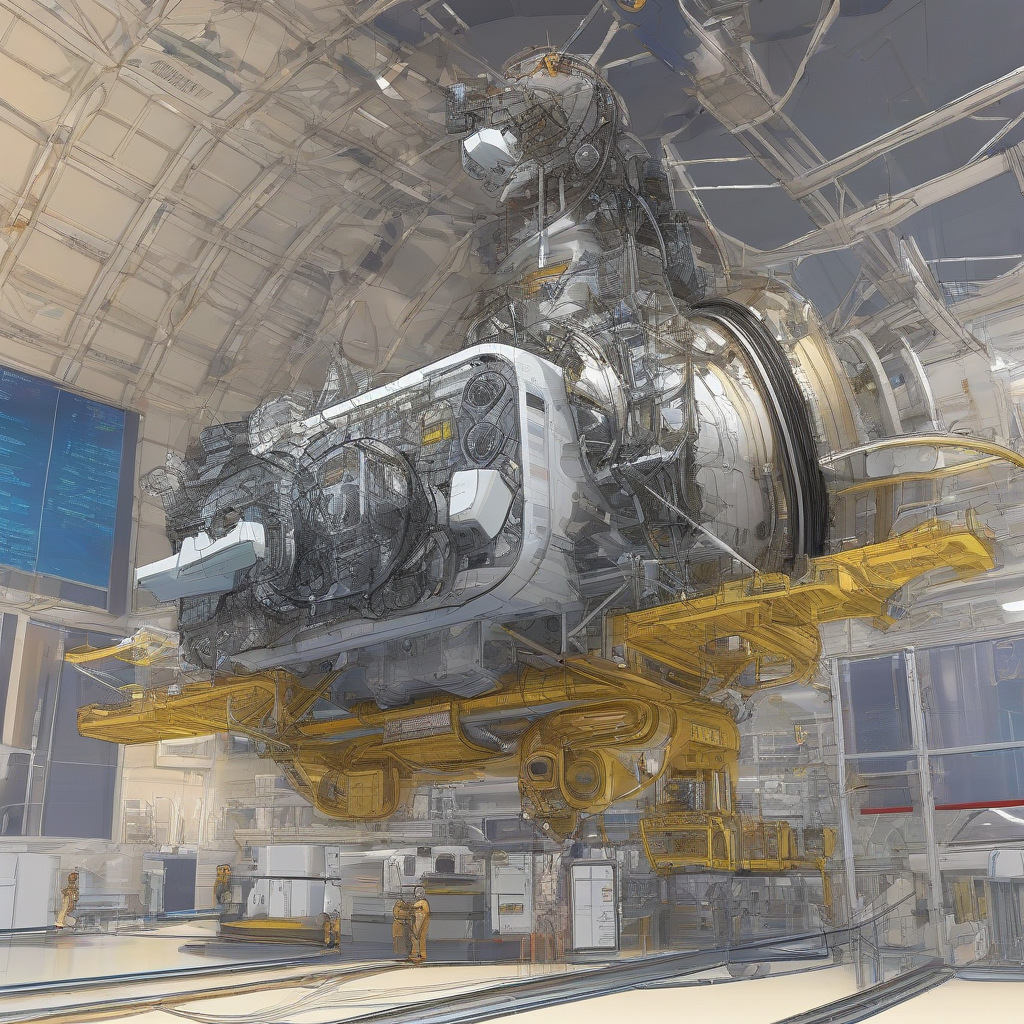
NASA’s Artemis II Rocket and Spacecraft Make Their Way to Launch Pad
NASA's Artemis II Mission: A Giant Leap for Space Exploration
As the world's most powerful rocket, the Space Launch System (SLS), and the Orion spacecraft begin their journey to Launch Pad 39B at NASA's Kennedy Space Center in Florida, excitement is building for the Artemis II mission. Scheduled to launch in the near future, this historic test flight will send four astronauts on an approximately 10-day journey around the Moon and back, marking a crucial step towards establishing a sustained presence on the lunar surface.
The Road to the Moon: A Complex and Ambitious Mission
The Artemis II mission is the culmination of years of hard work and dedication from NASA engineers, scientists, and astronauts. The mission's primary objective is to test the SLS rocket and the Orion spacecraft in a lunar-bound trajectory, pushing the boundaries of space exploration and paving the way for future human missions to the Moon's surface.
The SLS rocket, with its massive core stage and four solid rocket boosters, is the most powerful rocket ever built by NASA. The rocket's core stage is powered by four RS-25 engines, which are capable of producing 512,000 pounds of thrust each. The solid rocket boosters, on the other hand, provide an additional 3.6 million pounds of thrust during the rocket's ascent phase.
The Orion spacecraft, designed to carry astronauts on long-duration missions, is equipped with a powerful propulsion system, life support systems, and advanced communication equipment. The spacecraft's heat shield is designed to protect it from the intense heat generated during re-entry into Earth's atmosphere.
The Crawler-Transporter: A Giant Among Machines
The Artemis II mission's journey to the launch pad was made possible by the massive Crawler-Transporter, a 6.5-million-pound machine that is capable of moving the SLS rocket and the Orion spacecraft at a speed of just 0.82 miles per hour. The Crawler-Transporter is an upgraded version of the machine used during the Apollo era, and it has been specifically designed for the Artemis program.
The Crawler-Transporter's journey to the launch pad took nearly 12 hours, during which time it had to navigate through a complex network of roads and infrastructure at the Kennedy Space Center. The machine's slow and deliberate pace was necessary to ensure that the SLS rocket and the Orion spacecraft were not subjected to any excessive stress or vibration.
The Astronauts: Heroes of the Artemis II Mission
The Artemis II mission will be crewed by four astronauts: Reid Wiseman, Victor Glover, Christina Koch, and Jeremy Hansen. These astronauts have undergone rigorous training to prepare them for the challenges of space travel and the lunar environment.
Reid Wiseman, a NASA astronaut and commander of the mission, has extensive experience in space exploration, having flown on the International Space Station and performed spacewalks. Victor Glover, a NASA astronaut and pilot of the mission, has also flown on the International Space Station and has experience in spacewalks. Christina Koch, a NASA astronaut and mission specialist, has spent a record-breaking 328 days on the International Space Station. Jeremy Hansen, a Canadian Space Agency astronaut and mission specialist, has experience in spacewalks and has flown on the International Space Station.
The Implications of the Artemis II Mission
The Artemis II mission has significant implications for space exploration and the future of human spaceflight. The mission's success will pave the way for future human missions to the Moon's surface, which will be a crucial step towards establishing a sustained presence on the lunar surface.
The mission's success will also demonstrate the capabilities of the SLS rocket and the Orion spacecraft, which will be used for future human missions to the Moon and beyond. The mission's success will also provide valuable insights into the challenges of space travel and the lunar environment, which will be essential for future human missions to the Moon and beyond.
Conclusion
The Artemis II mission is a historic and ambitious undertaking that will mark a crucial step towards establishing a sustained presence on the lunar surface. The mission's success will pave the way for future human missions to the Moon's surface and will demonstrate the capabilities of the SLS rocket and the Orion spacecraft. The mission's success will also provide valuable insights into the challenges of space travel and the lunar environment, which will be essential for future human missions to the Moon and beyond.
As the world watches with bated breath, the Artemis II mission is poised to make history and push the boundaries of space exploration. The mission's success will be a testament to the ingenuity and determination of the astronauts, engineers, and scientists who have worked tirelessly to make this mission a reality.