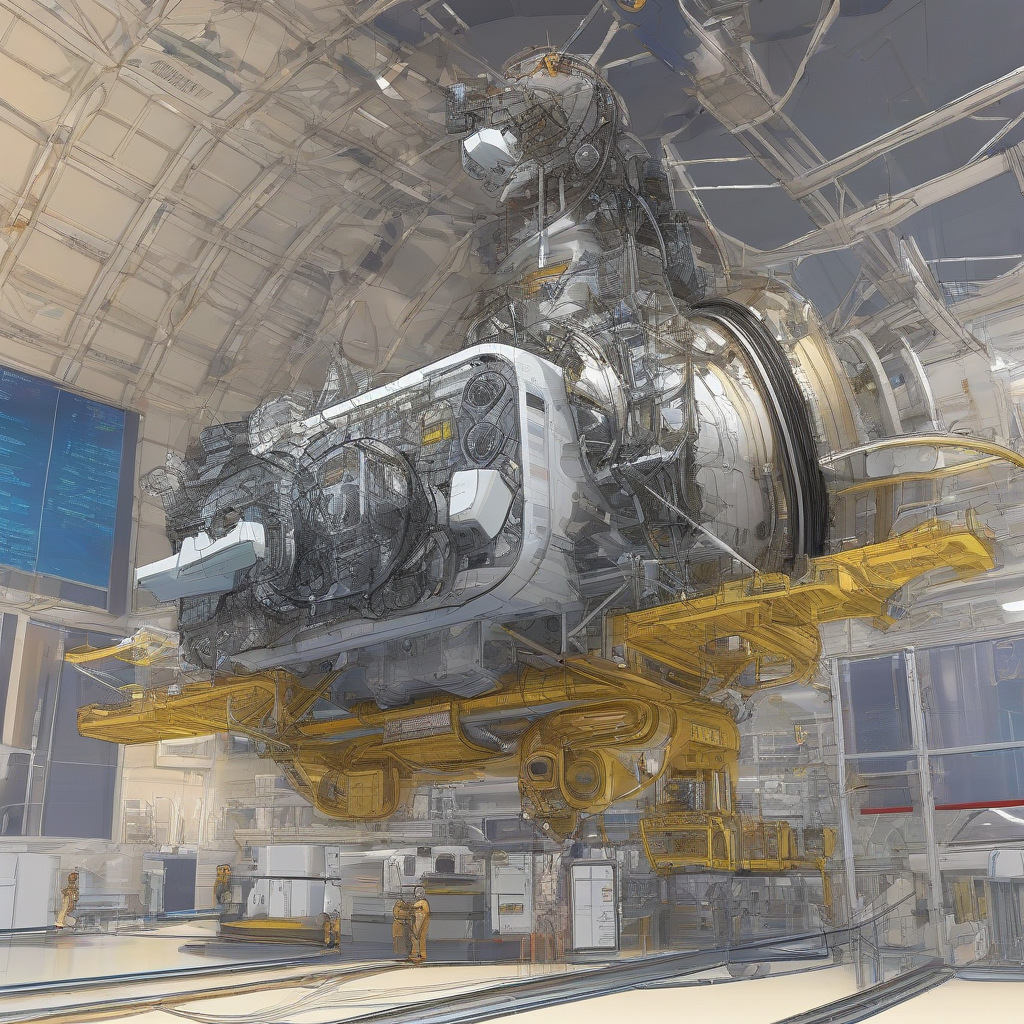
NASA Launches Six CubeSats to International Space Station
The Next Frontier of Space Exploration: NASA's CubeSat Launch Initiative
As the world continues to push the boundaries of space exploration, NASA's CubeSat Launch Initiative (CSLI) has taken a significant step forward with the launch of six CubeSats to the International Space Station (ISS). This mission, part of the Northrop Grumman Commercial Resupply Services 24 (CRS-24) mission, marks a major milestone in the agency's efforts to democratize access to space and enable the next generation of space researchers and engineers.
The CubeSat Revolution
CubeSats, also known as nanosatellites, are small, lightweight satellites that are designed to be compact and affordable. They typically measure 10x10x10 centimeters in size and weigh around 1 kilogram. Despite their small size, CubeSats are capable of conducting a wide range of scientific experiments and can be used for a variety of applications, including Earth observation, communication, and technology demonstration.
The launch of the six CubeSats, built by U.S. educational institutions and non-profit organizations, is a testament to the growing popularity of CubeSats as a platform for space research and development. These satellites, which include Coconut, Harvard Undergraduate CubeSat (HUCSat), Low Earth Orbit Platform for Aerospace Research and Development Satellite 1 (LEOPARDSat-1), and three Pleiades Rapid Orbital Verification Experiment System (PROVES) CubeSats, will deploy into orbit from the ISS to conduct their experiments.
The Benefits of CubeSats
So, why are CubeSats so important? For one, they offer a cost-effective way for researchers and organizations to access space and conduct experiments that would be impossible or prohibitively expensive with larger satellites. CubeSats also provide a platform for students and young researchers to gain hands-on experience in space research and development, which can help to inspire the next generation of space professionals.
In addition, CubeSats can be used to test new technologies and concepts in a low-risk and low-cost environment, which can help to reduce the risks and costs associated with larger satellite missions. They can also be used to provide real-time data and insights on a wide range of scientific and technological phenomena, from Earth's climate and weather patterns to the behavior of materials and systems in microgravity.
The Future of Space Exploration
The launch of the six CubeSats to the ISS is a significant step forward in the development of space exploration and research. As the world continues to push the boundaries of space travel and exploration, CubeSats will play an increasingly important role in enabling new discoveries and breakthroughs.
In the near future, we can expect to see a wide range of new CubeSat missions and applications, from Earth observation and communication to technology demonstration and scientific research. We can also expect to see the development of new CubeSat technologies and capabilities, such as advanced propulsion systems and high-gain antennas.
Conclusion
The launch of the six CubeSats to the ISS marks a major milestone in the development of space exploration and research. As the world continues to push the boundaries of space travel and exploration, CubeSats will play an increasingly important role in enabling new discoveries and breakthroughs. With their cost-effectiveness, flexibility, and scalability, CubeSats offer a powerful platform for space research and development, and we can expect to see a wide range of new applications and innovations in the years to come.
Source: https://www.nasa.gov/image-article/nasa-launches-six-cubesats-to-international-space-station/