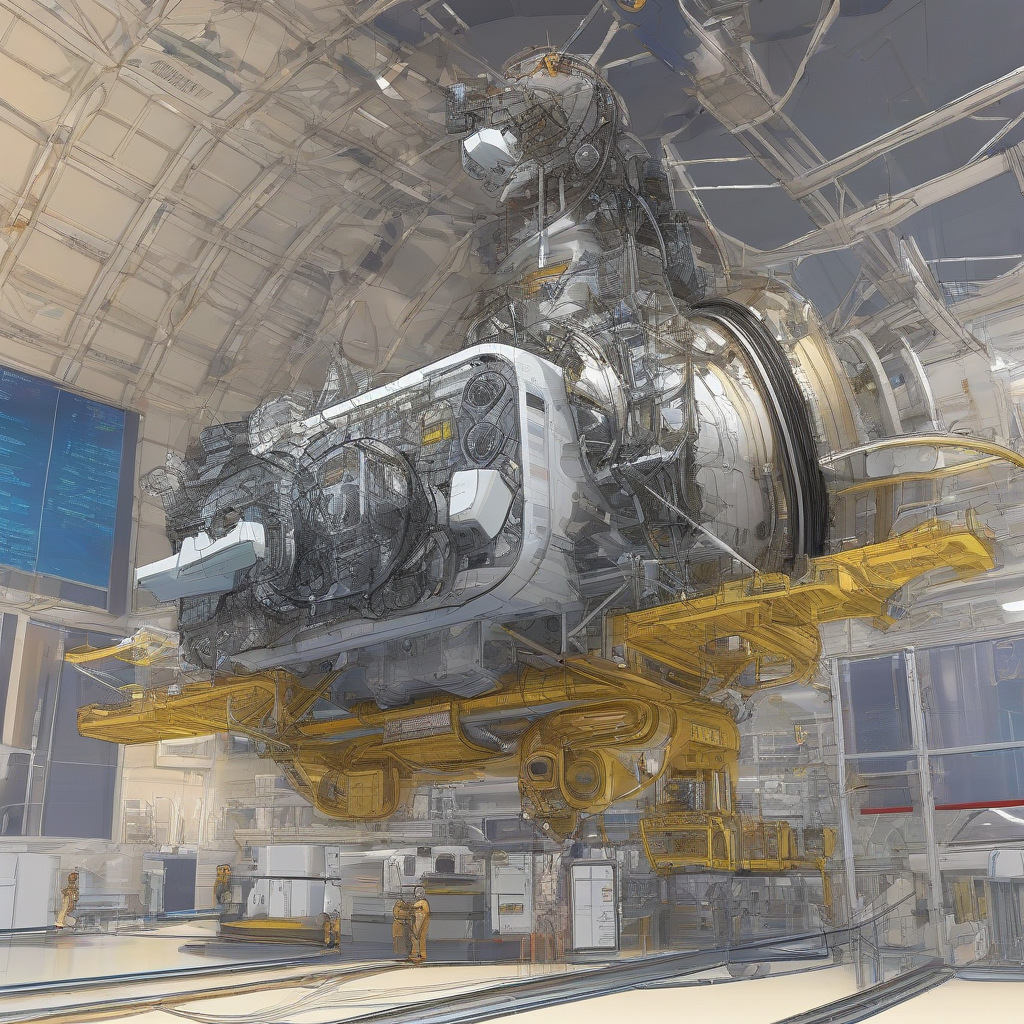
NASA launches science balloon in Antarctica | Space photo of the day for Dec. 22, 2025
Unlocking the Secrets of the Universe: NASA's Scientific Balloon Campaign in Antarctica
As the world's most advanced space agencies continue to push the boundaries of space exploration, a lesser-known yet equally fascinating field of research has been gaining momentum: high-altitude scientific balloons. These balloons can loft instruments to altitudes of up to 120,000 feet (36.6 kilometers), above most of Earth's atmosphere, at a fraction of the cost and complexity of a space mission. One of the best places on Earth to fly these missions is Antarctica, where NASA's annual Antarctic Long-Duration Balloon campaign operates from a site on the Ross Ice Shelf near the U.S. National Science Foundation's McMurdo Station.
The Perfect Storm for Scientific Discovery
In the austral summer, near-constant sunlight and stable polar wind patterns can support extended-duration flights, allowing payloads to gather data for days to weeks as they circle the continent. This unique combination of factors makes Antarctica an ideal location for scientific balloon flights. The first scientific balloon flight of the 2025 Antarctica Balloon Campaign lifted off from the agency's Antarctic facility at 5:30 a.m. NZST on Tuesday, Dec. 16 (11:30 a.m. Monday, Dec. 15 U.S. Eastern Time) and reached float altitude carrying an experiment called GAPS – the General AntiParticle Spectrometer.
GAPS: Unveiling the Mysteries of Antimatter
GAPS' goal is to look for rare particles from space called antimatter nuclei, specifically antideuterons, antiprotons, and antihelium. Scientists have never clearly seen antideuterons or antihelium in cosmic rays before. If GAPS detects even a single antideuteron, it could give us important clues about the mysterious substance known as dark matter, which makes up most of the universe but is invisible to us. GAPS uses a time-of-flight system to measure how fast the particles are moving and a tracker system to record the interaction.
The Significance of GAPS
The detection of antimatter particles in cosmic rays could have far-reaching implications for our understanding of the universe. Dark matter is thought to be composed of particles that interact with normal matter only through gravity, making it invisible to our telescopes. The detection of antideuterons or antihelium could provide evidence of dark matter's existence and shed light on its properties. This could lead to a deeper understanding of the universe's evolution and the formation of structure within it.
The Future of Scientific Balloon Research
The success of GAPS and other scientific balloon experiments demonstrates the potential of this field of research. As technology continues to advance, we can expect to see even more sophisticated instruments and experiments being launched on high-altitude balloons. The Antarctic Long-Duration Balloon campaign is just one example of the many initiatives underway to explore the upper atmosphere and beyond. As we continue to push the boundaries of space exploration, we may uncover new and exciting discoveries that challenge our current understanding of the universe.
The Human Element: Why This Matters
The GAPS experiment and the Antarctic Long-Duration Balloon campaign are not just about scientific discovery; they are also about human exploration and the drive to push beyond the boundaries of what is thought possible. The scientists and engineers involved in these projects are driven by a passion for discovery and a desire to understand the universe and our place within it. Their work has the potential to inspire future generations and shape our understanding of the world around us.
Conclusion
The launch of GAPS and the Antarctic Long-Duration Balloon campaign mark an exciting new chapter in the field of scientific balloon research. As we continue to explore the upper atmosphere and beyond, we may uncover new and exciting discoveries that challenge our current understanding of the universe. The GAPS experiment and its potential to detect antimatter particles in cosmic rays could have far-reaching implications for our understanding of dark matter and the universe's evolution. As we look to the future, we can expect to see even more sophisticated instruments and experiments being launched on high-altitude balloons, pushing the boundaries of what is thought possible and inspiring future generations.