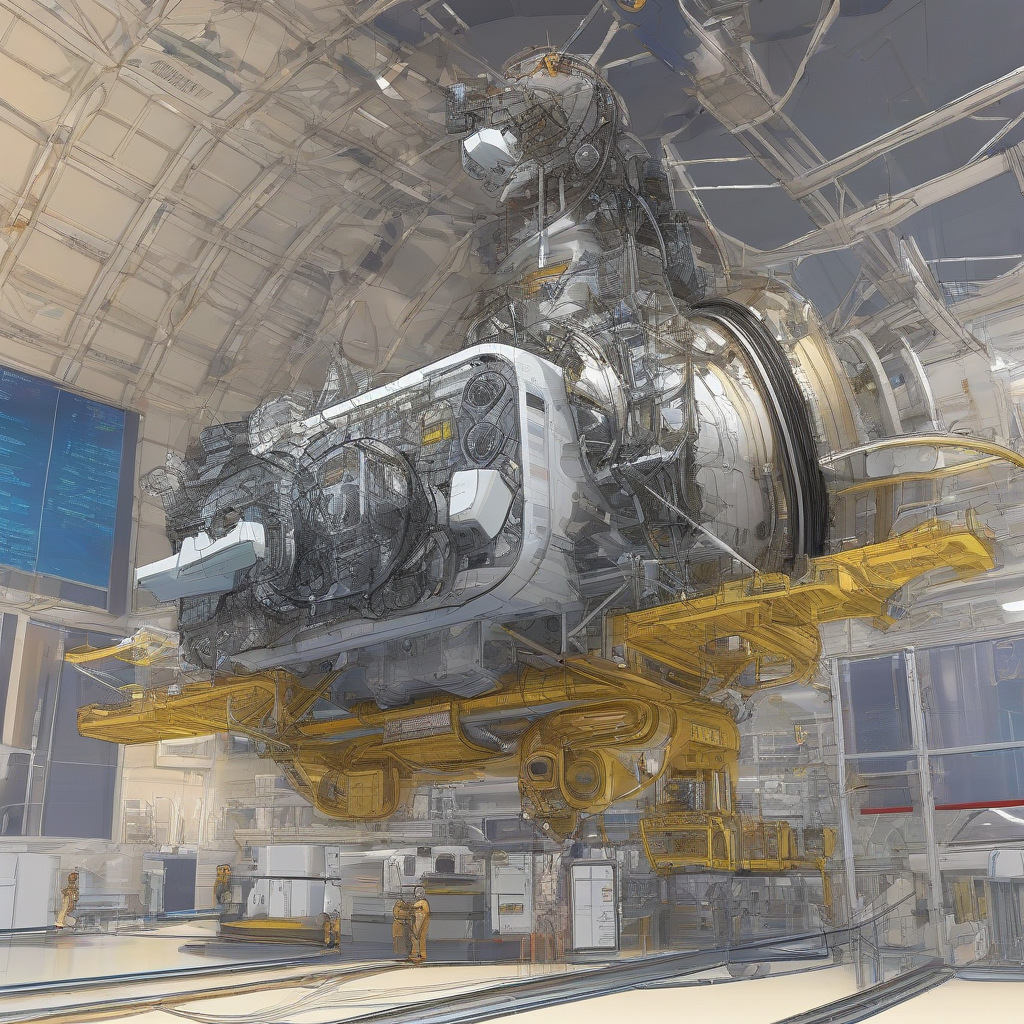
NASA JPL Unveils Rover Operations Center for Moon, Mars Missions
Genesis of a New Era in Space Exploration
The Rover Operations Center (ROC) at NASA's Jet Propulsion Laboratory (JPL) in Southern California has officially opened its doors, marking a significant milestone in the history of space exploration. This state-of-the-art facility is designed to support the development and operation of future planetary surface missions, with a focus on the Moon and Mars. The ROC is a result of JPL's decades-long experience in developing and operating Mars surface missions, including the successful Perseverance rover mission.
A Force Multiplier for Space Exploration
The ROC is a collaborative effort between JPL and industry partners, with the goal of accelerating the development of next-generation space exploration capabilities. According to JPL Director Dave Gallagher, "The Rover Operations Center is a force multiplier. It integrates decades of specialized knowledge with powerful new tools, and exports that knowledge through partnerships to catalyze the next generation of Moon and Mars surface missions."
Leveraging AI and Autonomy
One of the key areas of focus for the ROC is the development and application of artificial intelligence (AI) and autonomy in space exploration. The center is exploring the use of generative AI to assist rover planners in creating future routes for the Perseverance rover, analyzing high-resolution orbital images of Jezero Crater and other relevant data to generate waypoints that keep the rover away from hazardous terrain.
A New Era of Space Exploration
The ROC is not just a facility, but a symbol of a new era in space exploration. With the explosion of AI capabilities, the possibilities for space exploration are endless. As Jennifer Trosper, ROC program manager at JPL, notes, "We had a small team complete a 'three-week challenge,' applying generative AI to a few of our operational use cases. During this challenge, it became clear there are many opportunities for AI infusion that can supercharge our capabilities."
Implications for Space Exploration
The ROC has significant implications for space exploration, both in the short and long term. In the short term, the center will support the development of next-generation space exploration capabilities, including the use of AI and autonomy. In the long term, the ROC will help to accelerate the development of human missions to the Moon and Mars, enabling humans to explore and settle these destinations.
Practical Applications
The ROC has several practical applications, including:
- Improved mission planning: The use of AI and autonomy will enable more efficient and effective mission planning, reducing the risk of mission failure and improving the chances of success.
- Enhanced rover capabilities: The development of next-generation rover capabilities will enable more efficient and effective exploration of planetary surfaces, including the use of AI and autonomy to navigate and sample terrain.
- Increased scientific discovery: The use of AI and autonomy will enable more efficient and effective scientific discovery, including the analysis of large datasets and the identification of patterns and trends.
Conclusion
The Rover Operations Center at NASA's Jet Propulsion Laboratory is a significant milestone in the history of space exploration. The center is a collaborative effort between JPL and industry partners, with the goal of accelerating the development of next-generation space exploration capabilities. The ROC has significant implications for space exploration, both in the short and long term, and will help to accelerate the development of human missions to the Moon and Mars.
Forward-Looking Thoughts
As we look to the future of space exploration, it is clear that the ROC will play a critical role in enabling humans to explore and settle the Moon and Mars. The use of AI and autonomy will be key to the success of these missions, enabling more efficient and effective exploration and discovery. As we continue to push the boundaries of space exploration, it is clear that the ROC will be a vital part of our journey to the stars.
Related Topics
- Mars Exploration: Learn more about the Mars missions and the latest developments in Mars exploration.
- How We Land on Mars: Discover how NASA gets its Mars rovers and landers safely to the surface of the Red Planet.
- Mars 2020: Perseverance Rover: Learn more about the Mars Perseverance rover and its mission to seek signs of ancient life on Mars.
- Mars Exploration Rovers: Spirit and Opportunity: Discover the history of the Mars Exploration Rovers and their contributions to our understanding of the Red Planet.