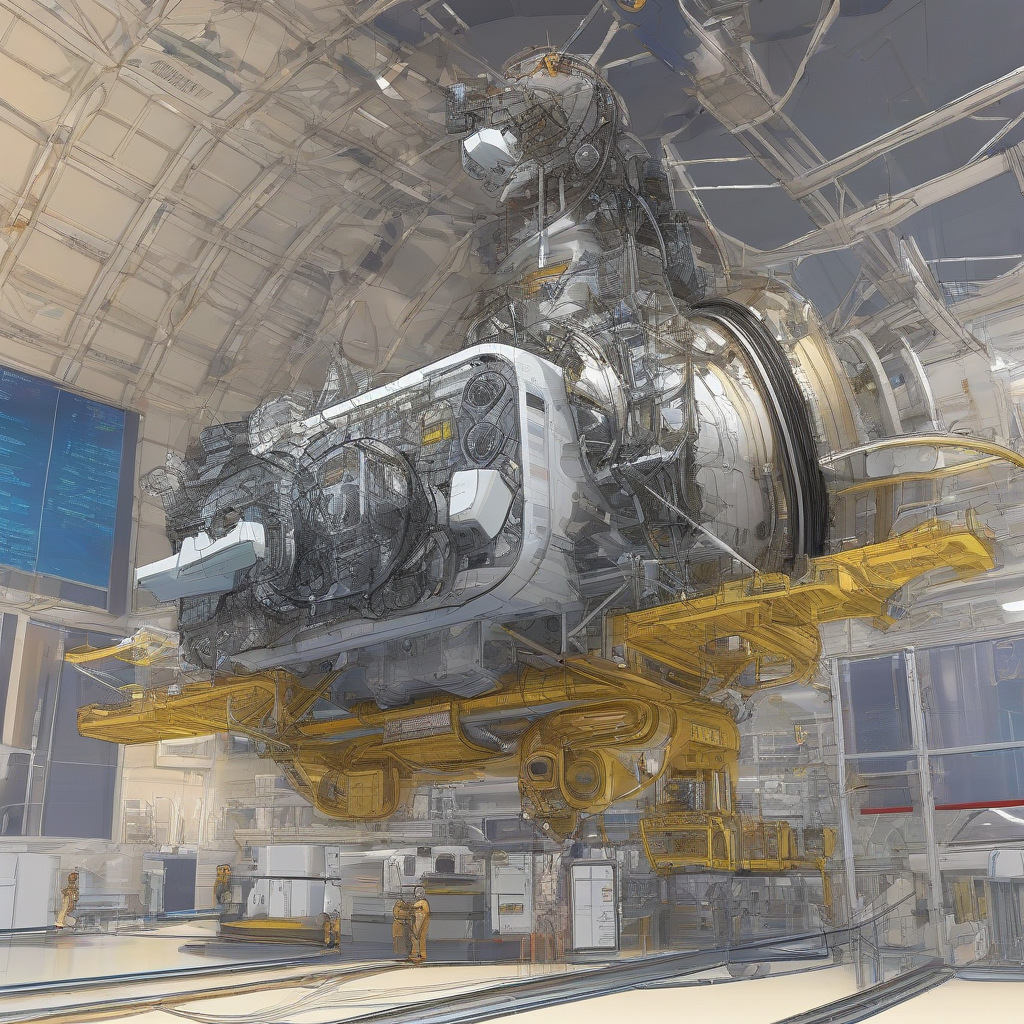
NASA JPL Shakes Things Up Testing Future Commercial Lunar Spacecraft
The Future of Space Exploration: NASA JPL's Crucial Role in Testing Commercial Lunar Spacecraft
The historic facilities at NASA's Jet Propulsion Laboratory (JPL) in Southern California have been the site of some of the most groundbreaking moments in space exploration. From the Ranger spacecraft of the dawning Space Age to the Perseverance Mars rover, every NASA spacecraft built or assembled at JPL has been subjected to the rigorous testing and preparation necessary to ensure their success in the unforgiving environment of space. Now, as NASA continues to push the boundaries of space exploration, JPL is playing a crucial role in testing and qualifying commercial lunar spacecraft for the Artemis program.
The Artemis Program: A New Era of Space Exploration
The Artemis program is a bold new initiative aimed at returning humans to the lunar surface by 2025. The program is a key step towards establishing a sustainable presence on the Moon and ultimately, sending humans to Mars. As part of this effort, NASA is partnering with private companies to develop and launch commercial lunar spacecraft that will deliver payloads and provide critical services to support the Artemis mission.
Firefly Aerospace's Blue Ghost Mission 2: A Commercial Lunar]")]
The Blue Ghost Mission 2 is a commercial lunar spacecraft developed by Firefly Aerospace, a leading provider of launch services and spacecraft. The mission is designed to deliver multiple payloads to the lunar surface, including a radio telescope and a compact, low-cost S-band radio communications system. The spacecraft will also deploy a lunar communications satellite into lunar orbit, providing critical services to support future missions.
Environmental Testing at JPL: The Crucial Role of Simulation
To ensure the success of the Blue Ghost Mission 2, Firefly Aerospace has been working closely with JPL to conduct environmental testing and qualification of the spacecraft. The testing program includes a range of simulations, including vibration, acoustic, and thermal testing, to ensure that the spacecraft can withstand the harsh conditions of launch and space travel.
Vibration Testing: The Shaker Table
One of the key components of the environmental testing program is vibration testing. The shaker table at JPL is a sophisticated piece of equipment that simulates the violent motion of launch, subjecting the spacecraft to intense vibrations in three directions. The testing is designed to ensure that the spacecraft can withstand the stresses of launch and remain stable in space.
Acoustic Testing: The Horns of Silence
Acoustic testing is another critical component of the environmental testing program. The horns at JPL are designed to simulate the intense noise of launch, subjecting the spacecraft to sound levels of up to 153 decibels. The testing is designed to ensure that the spacecraft can withstand the noise and remain functional in space.
Thermal Testing: The Chamber of Extreme Temperatures
Thermal testing is a critical component of the environmental testing program. The thermal vacuum chamber at JPL is designed to simulate the extreme temperatures of space, subjecting the spacecraft to temperatures ranging from -170°C to 127°C. The testing is designed to ensure that the spacecraft can withstand the temperature extremes and remain functional in space.
The Importance of Environmental Testing
Environmental testing is a critical component of the development and launch of any spacecraft. The testing ensures that the spacecraft can withstand the harsh conditions of launch and space travel, and remain functional in the unforgiving environment of space. The success of the Blue Ghost Mission 2 is a testament to the importance of environmental testing and the critical role that JPL plays in ensuring the success of commercial lunar spacecraft.
Forward-Looking Thoughts
As NASA continues to push the boundaries of space exploration, the role of JPL in testing and qualifying commercial lunar spacecraft will become increasingly important. The success of the Blue Ghost Mission 2 is a key step towards establishing a sustainable presence on the Moon and ultimately, sending humans to Mars. As we look to the future, it is clear that the work being done at JPL will play a critical role in shaping the next generation of space exploration.
Related Terms:
- Commercial Lunar Payload Services (CLPS): A NASA program aimed at enabling rapid, frequent, and affordable access to the lunar surface.
- Artemis Program: A NASA initiative aimed at returning humans to the lunar surface by 2025.
- Firefly Aerospace: A leading provider of launch services and spacecraft.
- Blue Ghost Mission 2: A commercial lunar spacecraft developed by Firefly Aerospace.
- Environmental Testing: A critical component of the development and launch of any spacecraft.
Keep Exploring:
- Commercial Lunar Payload Services (CLPS): Learn more about the CLPS program and its goals.
- Artemis Program: Discover more about the Artemis program and its objectives.
- Firefly Aerospace: Explore Firefly Aerospace's services and spacecraft offerings.
- Blue Ghost Mission 2: Learn more about the Blue Ghost Mission 2 and its payloads.
- Environmental Testing: Understand the importance of environmental testing in spacecraft development.