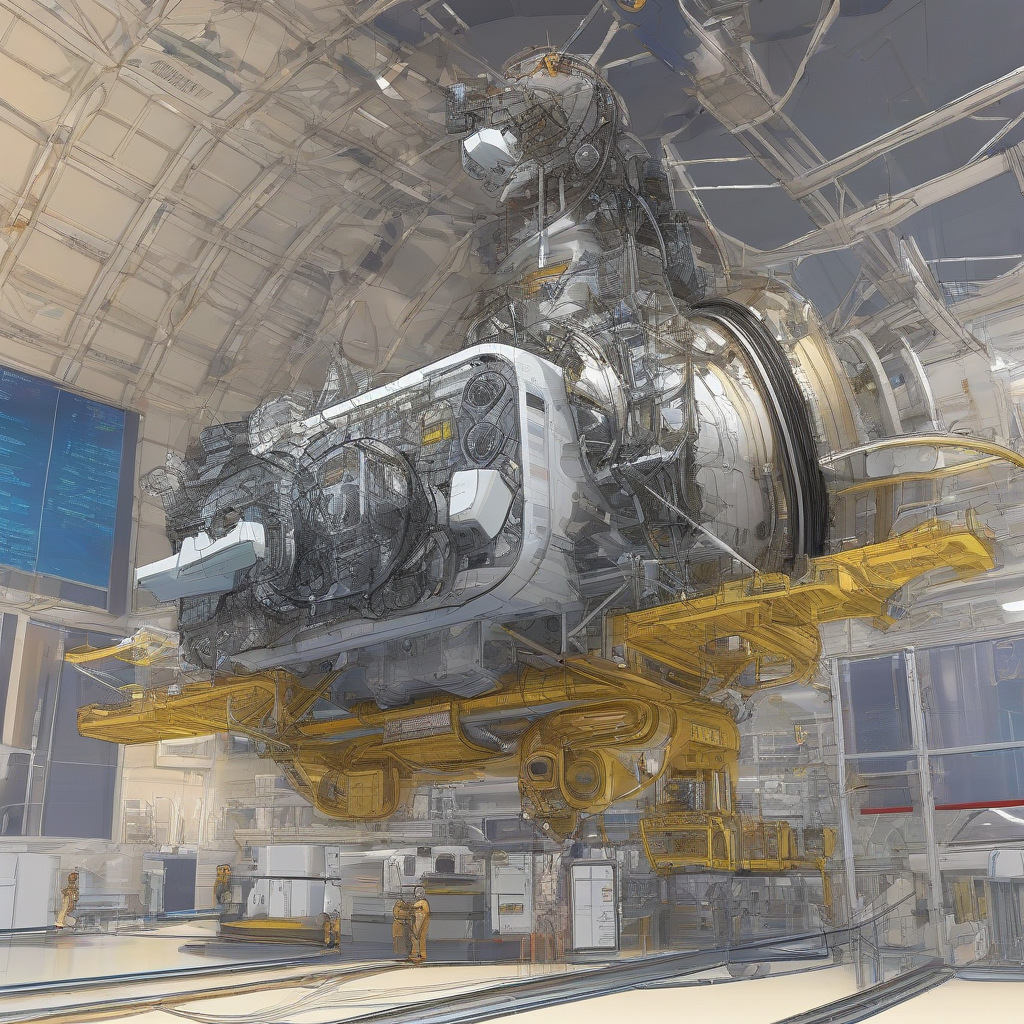
NASA Invites Media to Crew-10 Visit at Marshall
Unlocking the Future of Space Exploration: NASA's Crew-10 Mission
The International Space Station (ISS) has been a cornerstone of human spaceflight for over two decades, serving as a springboard for scientific research, technological innovation, and exploration. On March 14, 2025, NASA's SpaceX Crew-10 mission launched, marking the agency's 11th human spaceflight with SpaceX to the ISS. This mission was a significant milestone in the Commercial Crew Program, which provides reliable access to space and supports future missions beyond low Earth orbit.
Aboard the ISS: Scientific Research and Technological Demonstrations
The Crew-10 mission was crewed by NASA astronauts Anne McClain and Nichole Ayers, JAXA (Japan Aerospace Exploration Agency) astronaut Takuya Onishi, and Roscosmos cosmonaut Kirill Peskov. During their time on the ISS, the crew completed dozens of experiments and technology demonstrations, pushing the boundaries of scientific knowledge and innovation.
One of the key areas of focus for the Crew-10 mission was the study of microgravity's effects on living organisms. The crew conducted experiments on plant growth, animal development, and human physiology, providing valuable insights into the long-term effects of microgravity on the human body.
The Role of the Commercial Crew Program
The Commercial Crew Program is a critical component of NASA's space exploration strategy, providing reliable access to space and supporting future missions beyond low Earth orbit. By partnering with private companies like SpaceX, NASA is able to leverage the expertise and resources of the private sector to achieve its goals.
The Commercial Crew Program has already achieved significant milestones, including the successful launch of Crew-10 and the return of the crew to Earth on August 9, 2025. This program is expected to continue playing a critical role in NASA's space exploration strategy, enabling the agency to focus on its core mission of advancing scientific knowledge and pushing the boundaries of human achievement.
Engineering and Mission Operations Support
The Huntsville Operations Support Center (HOSC) at Marshall Space Flight Center provides critical engineering and mission operations support for the ISS, Commercial Crew Program, and other missions. The HOSC's Payload Operations Integration Center (POIC) operates, plans, and coordinates science experiments aboard the ISS 365 days a year, 24 hours a day.
The POIC's expertise in managing communications between the ISS crew and researchers worldwide is essential to the success of the Crew-10 mission. By providing a seamless interface between the crew and the research community, the POIC enables scientists to conduct experiments and gather data in real-time, accelerating the pace of scientific discovery.
The Future of Space Exploration
The Crew-10 mission is a significant step forward in NASA's space exploration strategy, demonstrating the agency's commitment to advancing scientific knowledge and pushing the boundaries of human achievement. As the agency looks to the future, it is clear that the ISS will continue to play a critical role in NASA's plans for space exploration.
The ISS is a stepping stone for future missions to the Moon and, eventually, Mars. By leveraging the expertise and resources of the private sector through the Commercial Crew Program, NASA is able to focus on its core mission of advancing scientific knowledge and pushing the boundaries of human achievement.
Conclusion
The Crew-10 mission is a testament to the power of collaboration and innovation in space exploration. By working together with the private sector and leveraging the expertise of the research community, NASA is able to achieve its goals and push the boundaries of human achievement.
As the agency looks to the future, it is clear that the ISS will continue to play a critical role in NASA's plans for space exploration. The Crew-10 mission is a significant step forward in the agency's strategy, demonstrating its commitment to advancing scientific knowledge and pushing the boundaries of human achievement.
Additional Resources
For more information on the Crew-10 mission and NASA's Commercial Crew Program, please visit:
Source: https://www.nasa.gov/news-release/nasa-invites-media-to-crew-10-visit-at-marshall/