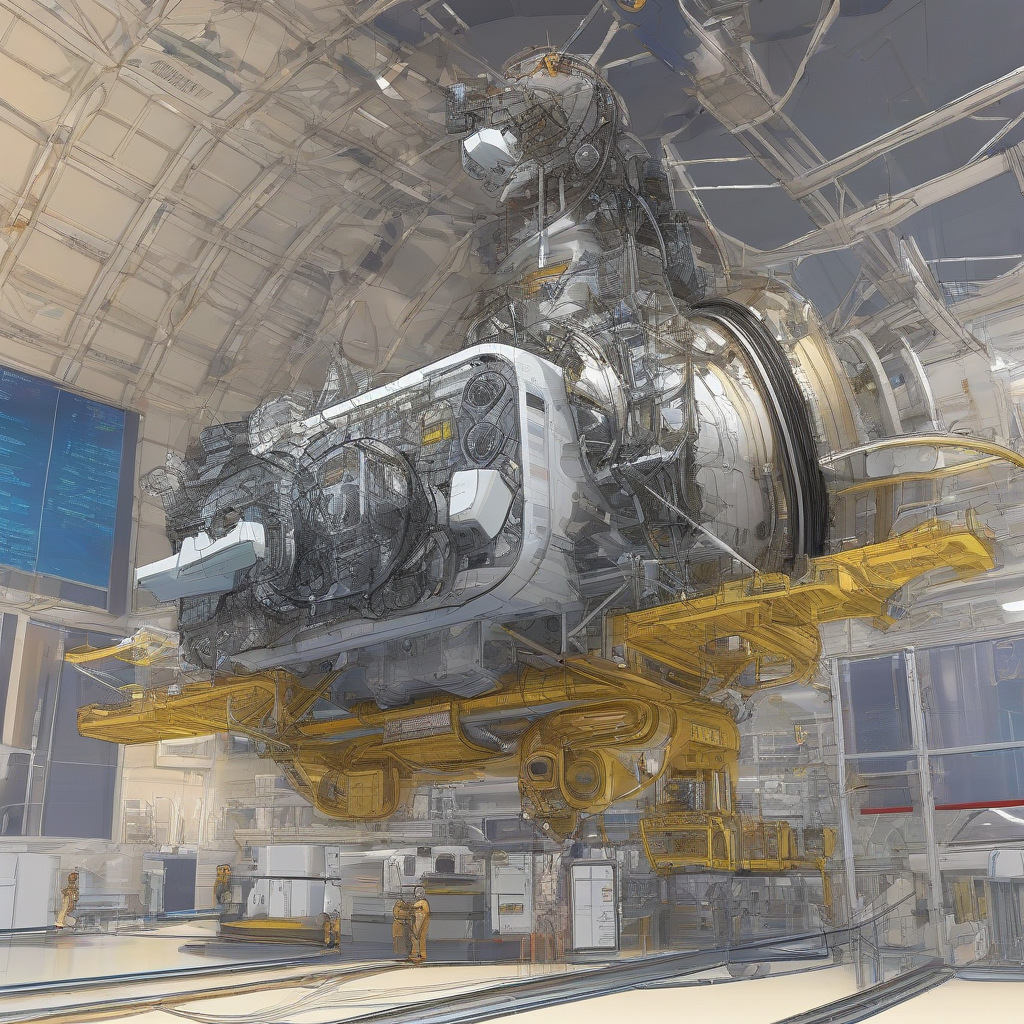
NASA Hosts 2026 Review on Advanced Composite Manufacturing
The Future of Aircraft Manufacturing: NASA's HiCAM Project Takes Flight
In a significant step towards revolutionizing the aerospace industry, NASA's Hi-Rate Composite Aircraft Manufacturing (HiCAM) project has brought together a team of experts from around the world to accelerate the development of advanced composite materials and manufacturing processes. The project's latest review, held at NASA's Langley Research Center in Hampton, Virginia, marked a major milestone in the journey towards creating faster, more efficient, and cost-effective aircraft production.
The HiCAM Project: A Public-Private Partnership
The HiCAM project is a 22-member public-private partnership that includes some of the world's leading aerospace companies, research institutions, and government agencies. The project's goal is to develop and demonstrate the capabilities of advanced composite materials and manufacturing processes that can be used to produce lightweight, high-performance aircraft structures. The project's success will have a significant impact on the aerospace industry, enabling the production of faster, more efficient, and cost-effective aircraft that can meet the demands of the 21st century.
Advanced Composite Materials: The Key to Lightweight Aircraft
Advanced composite materials, such as carbon fiber reinforced polymers (CFRP), are the foundation of the HiCAM project. These materials offer a significant advantage over traditional aluminum alloys, providing a much higher strength-to-weight ratio, improved corrosion resistance, and reduced maintenance costs. The use of advanced composite materials in aircraft production has already been proven in several high-profile projects, including the Boeing 787 Dreamliner and the Airbus A350 XWB.
The HiCAM Project's Development Phase: Progress and Challenges
The HiCAM project's Development Phase has been underway since 2020, with a focus on developing and demonstrating the capabilities of advanced composite materials and manufacturing processes. The project's teams have made significant progress in developing new manufacturing technologies, including automated fiber placement (AFP) and out-of-autoclave (OOA) processing. However, the project has also faced several challenges, including the need to develop new testing and inspection methods to ensure the quality and reliability of the composite materials.
The Demonstration Phase: Scaling Up Manufacturing Technologies
The HiCAM project's Demonstration Phase, which began in 2022, is focused on scaling up the manufacturing technologies developed during the Development Phase. The project's teams are working to demonstrate the capabilities of advanced composite materials and manufacturing processes in a large-scale production environment. The Demonstration Phase will involve the production of several large aircraft structures, including a composite fuselage barrel and wing box.
Collaboration and Coordination: The Key to Success
The HiCAM project's success is heavily dependent on the collaboration and coordination between its teams. The project's teams訳 come from a variety of backgrounds, including aerospace engineering, materials science, and manufacturing. The project's leaders have recognized the importance of collaboration and have established a number of mechanisms to facilitate communication and knowledge sharing between the teams.
Implications and Applications
The HiCAM project's success will have significant implications for the aerospace industry, enabling the production of faster, more efficient, and cost-effective aircraft that can meet the demands of the 21st century. The project's advanced composite materials and manufacturing processes will also have applications in other industries, including automotive, energy, and construction.
Forward-Looking Thoughts
The HiCAM project is an exciting example of the potential of public-private partnerships to drive innovation and progress in the aerospace industry. As the project continues to advance, it will be important to continue to foster collaboration and coordination between its teams, as well as to explore new opportunities for application and commercialization of the project's technologies.
Conclusion
The HiCAM project is a significant step towards revolutionizing the aerospace industry, enabling the production of faster, more efficient, and cost-effective aircraft that can meet the demands of the 21st century. The project's advanced composite materials and manufacturing processes will also have applications in other industries, including automotive, energy, and construction. As the project continues to advance, it will be important to continue to foster collaboration and coordination between its teams, as well as to explore new opportunities for application and commercialization of the project's technologies.