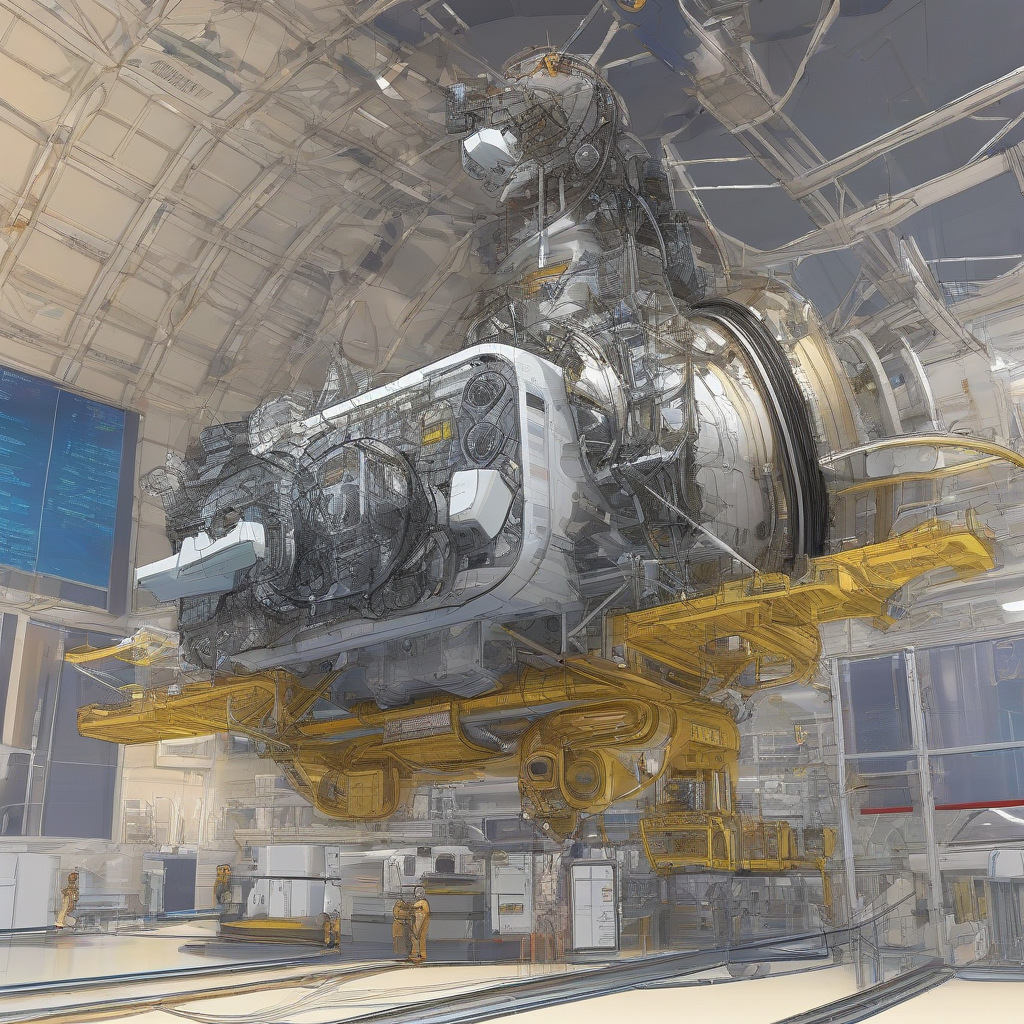
NASA Conducts Hot Fire of RS-25 Engine
NASA's RS-25 Engine Hot Fire Test: A Crucial Step Towards Artemis IV
NASA's Stennis Space Center near Bay St. Louis, Mississippi, was abuzz with activity on January 22, 2026, as the agency conducted a hot fire test of the RS-25 engine No. 2063. This critical test marked a significant milestone in the development of the Space Launch System (SLS) rocket, which will carry astronauts to the Moon under the Artemis campaign. The successful test clears the way for the engine to be installed on the SLS core stage for the Artemis IV mission.
A Brief History of the RS-25 Engine
The RS-25 engine is a workhorse of NASA's SLS rocket, providing the necessary thrust to propel the spacecraft to the Moon. Originally designed for the Space Shuttle program, the RS-25 engine has undergone significant modifications to meet the demands of the Artemis mission. Engine No. 2063, in particular, has a storied past, having been installed on the SLS core stage for the Artemis II mission. However, in 2025, engineers discovered a hydraulic leak on the engine's main oxidizer valve actuator, which controls propellant flow into the engine combustion chamber. Following standard NASA procedures, teams removed the engine from the core stage and replaced the actuator.
The Hot Fire Test: A Confidence Test for Flight-Worthiness
The hot fire test, also known as a confidence test, is a critical step in verifying the engine's flight-worthiness. During the test, the engine was fired for five minutes (300 seconds) at up to 109% of its rated power level. This intense test demonstrated the engine's ability to perform under the stresses of launch and operation. The test was conducted by a team of operators from NASA, L3Harris Technologies, and Sierra Lobo, Inc., the NASA Stennis test operations contractor.
The Importance of the Test
The successful hot fire test of the RS-25 engine No. 2063 is a significant milestone in the development of the SLS rocket. With the engine now proven flight-worthy, it can be installed on the SLS core stage for the Artemis IV mission. This mission will carry astronauts to the Moon and back, marking a major step towards returning humans to the lunar surface. The Artemis campaign is a critical step in NASA's plans to send humans to Mars, and the successful development of the SLS rocket is essential to achieving this goal.
The Artemis Campaign: A New Era in Space Exploration
The Artemis campaign is a bold new era in space exploration, with NASA targeting as soon as February to send four astronauts around the Moon and back on the Artemis II mission. During launch, the SLS rocket will use four RS-25 engines, along with a pair of solid rocket boosters, to help lift the Orion spacecraft and the crew away from Earth using more than 8.8 million pounds of thrust. The Artemis campaign is not just about sending humans to the Moon; it's about establishing a sustainable presence on the lunar surface and using the Moon as a stepping stone for further human exploration of the solar system.
Conclusion
The successful hot fire test of the RS-25 engine No. 2063 is a significant milestone in the development of the SLS rocket and the Artemis campaign. With the engine now proven flight-worthy, it can be installed on the SLS core stage for the Artemis IV mission, marking a major step towards returning humans to the lunar surface. The Artemis campaign is a critical step in NASA's plans to send humans to Mars, and the successful development of the SLS rocket is essential to achieving this goal. As we look to the future, it's clear that the Artemis campaign will be a major driver of innovation and exploration in the years to come.
Source: https://www.nasa.gov/image-article/hot-fire-of-rs25-engine/