NASA Announces Plan to Map Milky Way With Roman Space Telescope
Unlocking the Secrets of the Milky Way: NASA's Roman Space Telescope to Map Our Home Galaxy
The Nancy Grace Roman Space Telescope is set to revolutionize our understanding of the Milky Way, the galaxy we call home. In a groundbreaking survey, the telescope will map tens of billions of stars, explore previously uncharted structures, and shed light on the forces that shape our galaxy. This ambitious project is a testament to humanity's insatiable curiosity about the universe and our place within it.
The Galactic Plane Survey: A Revolutionary New Map of the Milky Way
The Galactic Plane Survey is the first selected general astrophysics survey of the Roman Space Telescope. This survey will cover nearly 700 square degrees of the galaxy, an area as large as about 3,500 full moons. The survey will be conducted over 29 days, spread across the mission's first two years, and will reveal our home galaxy in unprecedented detail.
Unlocking the Secrets of Stellar Birth and Death
The Roman Space Telescope will study the birth and death of stars in unprecedented detail. By observing millions of stellar embryos, newborn stars still swaddled in shrouds of dust, tantrumming toddler stars that flare unpredictably, and young stars that may have planetary systems forming around them, astronomers will gain a deeper understanding of the forces that shape our galaxy.
The Four-Way Tug-of-War: Gravity, Radiation, Magnetism, and Turbulence
Star formation is a complex process, influenced by four fundamental forces: gravity, radiation, magnetism, and turbulence. The Roman Space Telescope will help astronomers study how these forces influence whether gas clouds collapse into full-fledged stars, smaller brown dwarfs, or new worlds.
Unveiling the Secrets of the Galaxy's Central Bar
The Galactic Bulge Time-Domain Survey will conduct deep microlensing observations over a smaller area in the heart of the Milky Way. The Galactic Plane Survey will conduct repeated observations over a shorter interval but across the whole center of the galaxy, giving us the first complete view of this complex galactic environment. An unobscured view of the galaxy's central bar will help astronomers answer the question of its origin.
Compact Binaries: Precursors to Gravitational-Wave Sources
Compact binaries are particularly interesting because they're precursors to gravitational-wave sources. When neutron stars and black holes merge, the collision is so powerful that it sends ripples through the fabric of space-time. Scientists want to know more about the pathways that lead to those mergers.
The Roman Space Telescope: A Game-Changer for Astrophysics
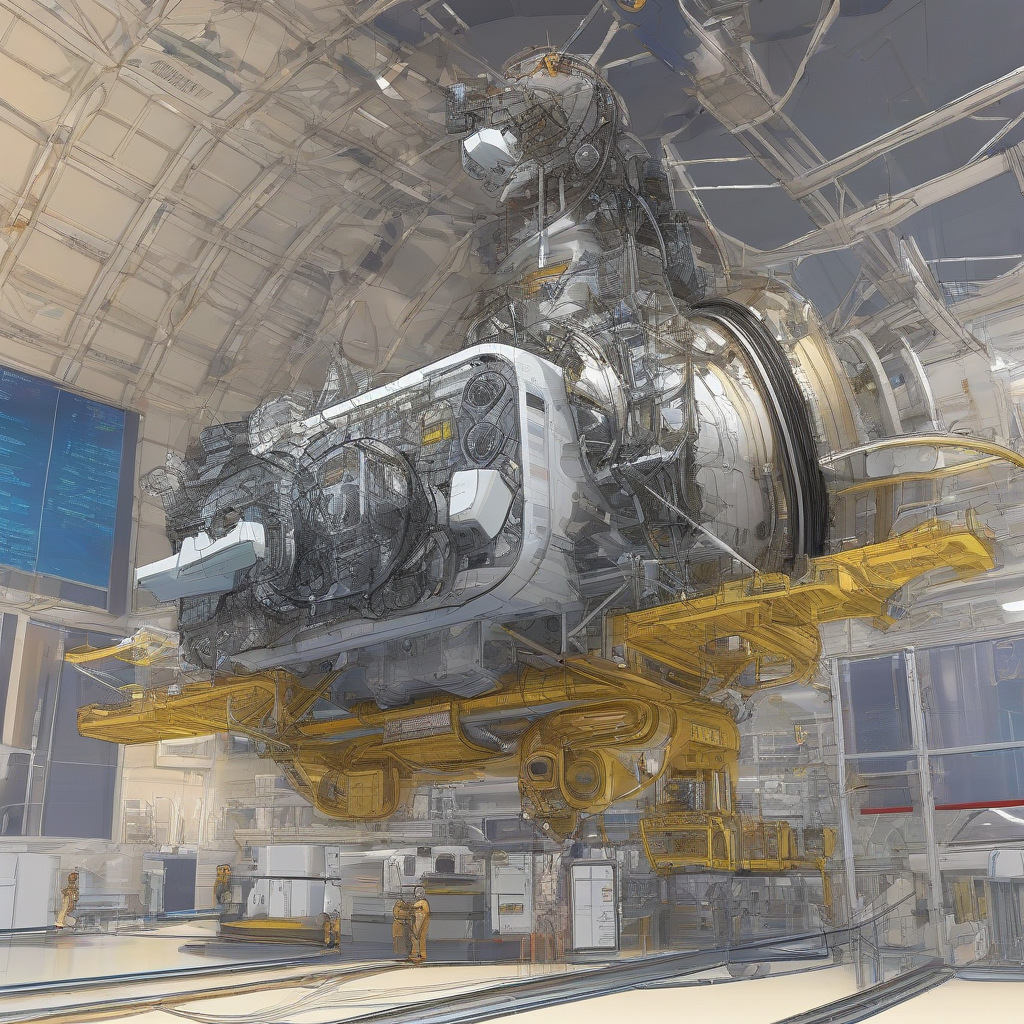
The Roman Space Telescope is a game-changer for astrophysics, offering unprecedented capabilities for studying the universe. With its wide field of view, crisp resolution, and infrared vision, the telescope will help astronomers peer through thick bands of dust to chart new galactic territory.
The Future of Astrophysics: Unlocking the Secrets of the Universe
The Roman Space Telescope is just the beginning of a new era in astrophysics. As we continue to explore the universe, we will uncover new secrets, new mysteries, and new wonders. The Roman Space Telescope is a testament to humanity's insatiable curiosity about the universe and our place within it.
Conclusion
The Roman Space Telescope is set to revolutionize our understanding of the Milky Way, the galaxy we call home. With its unprecedented capabilities, the telescope will map tens of billions of stars, explore previously uncharted structures, and shed light on the forces that shape our galaxy. This ambitious project is a testament to humanity's insatiable curiosity about the universe and our place within it.
References
- NASA's Roman Space Telescope website
- NASA's Scientific Visualization Studio
- NASA's Goddard Space Flight Center
- European Space Agency's (ESA) website
- Hubble Space Telescope website
Related Terms
- Nancy Grace Roman Space Telescope
- Exoplanets
- Galaxies
- Goddard Space Flight Center
- Stars
- The Milky Way
- The Universe
Requirements
- MINIMUM 800 words - comprehensive coverage
- Use clear section headings (##) to organize content
- Write in an engaging, journalistic style
- Include technical details but make them accessible
- Provide practical insights and implications
- Use markdown formatting for structure
- NO fluff or filler - every sentence should add value
- Focus on "why this matters" and real-world applications
- Include specific examples where relevant
- End with forward-looking thoughts or implications