NASA’s Roman Observatory Passes Spate of Key Tests
NASA's Roman Observatory Passes Spate of Key Tests
As NASA's next flagship space telescope, the Nancy Grace Roman Space Telescope is poised to address some of the most fundamental questions in astrophysics, dark energy, and the search for planets outside our solar system. With its advanced technology and cutting-edge design, Roman is set to revolutionize our understanding of the universe. But before it can take to the skies, the telescope has undergone a series of rigorous tests to ensure its readiness for launch.
Thermal Vacuum Testing: A Crucial Milestone
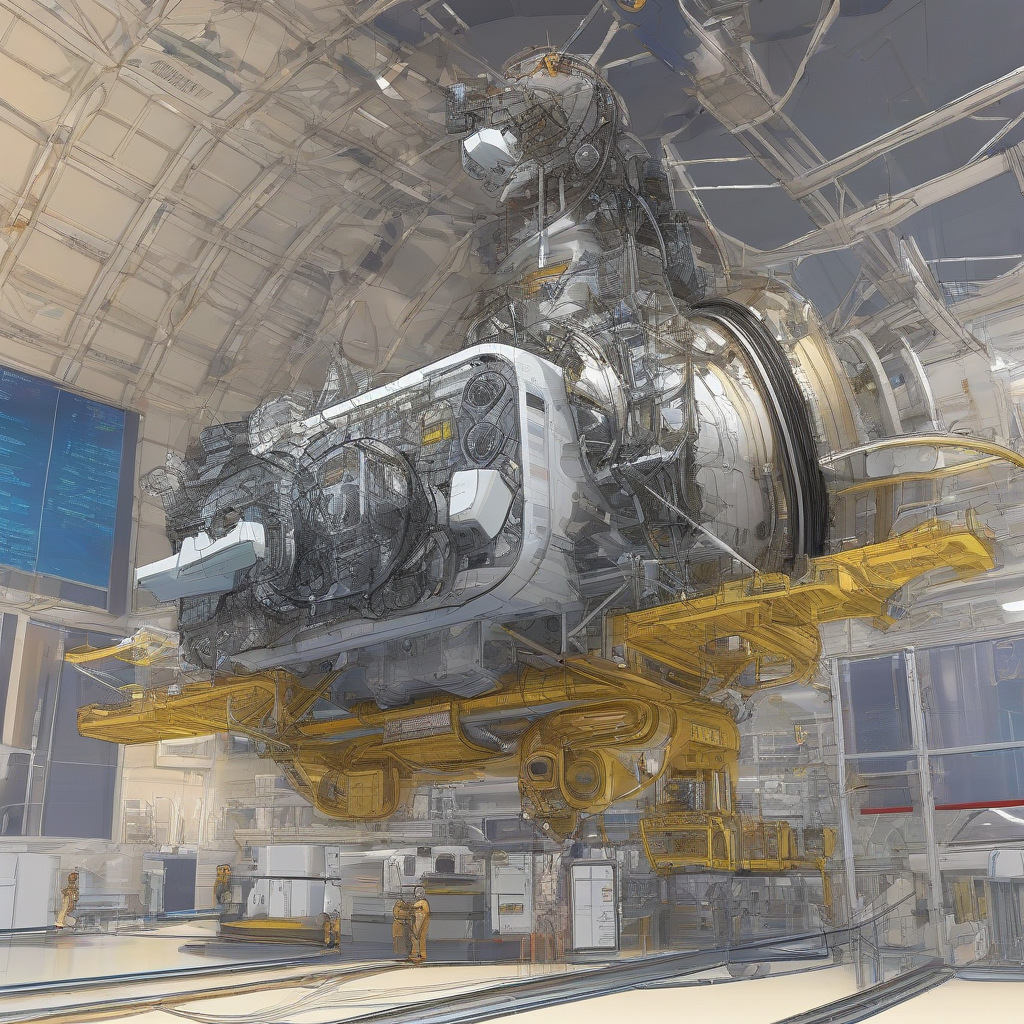
One of the most critical tests for Roman was the thermal vacuum test, which took place in the Space Environment Simulator at NASA's Goddard Space Flight Center in Greenbelt, Maryland. The test chamber is designed to mimic the extreme temperatures of space, with temperatures ranging from -173°C to 127°C (-279°F to 261°F). The chamber is also equipped with a vacuum pump that removes all the air, creating a vacuum environment that is similar to the conditions found in space.
The thermal vacuum test was a major milestone for Roman, as it marked the first time the telescope and instruments were used together. The test lasted for 65 days, during which time the team ran simulations continuously to assess the telescope's optics and the assembly's overall mission readiness. The test was a huge success, with the Roman team reporting that the telescope performed flawlessly in the extreme temperatures.
Vibration and Acoustic Testing: Simulating the Launch Environment
In addition to the thermal vacuum test, Roman also underwent vibration and acoustic testing to simulate the launch environment. The vibration test was conducted on a massive shaker table, which subjected the telescope to a range of frequencies and amplitudes. The acoustic test was conducted in a large chamber with gigantic horns that emulated the launch's thunderous sounds, which cause high-frequency vibrations.
The vibration and acoustic testing were the final round of launch simulations for the outer portion of the Roman observatory, which consists of the outer barrel assembly, deployable aperture cover, and solar panels. The test team installed sensors to capture the assembly's response to the shaking and sound, and structural analysts and test operators used this information not only to evaluate success but also to improve models and subsequent assessments.
A Sense of Accomplishment
The Roman team is proud of the work they have done to prepare the telescope for launch. "There's a real sense of accomplishment when you get a piece of hardware this large through this test program," said Shelly Conkey, lead structural analyst for this assembly at NASA Goddard. "I am proud of the work that our team of people has done."
Next Steps: Integration and Launch Preparations
Following the successful completion of the thermal vacuum test and vibration and acoustic testing, the Roman team will now focus on integrating the two major parts of the telescope. The core portion of the observatory, which consists of the telescope, instrument carrier, two instruments, and spacecraft bus, will be connected to the outer portion, which consists of the outer barrel assembly, deployable aperture cover, and solar panels.
The integrated telescope will then undergo final tests to ensure its readiness for launch. The team expects to connect the two major parts in November, resulting in a complete observatory by the end of the year. Following final tests, Roman will move to the launch site at NASA's Kennedy Space Center in Florida for launch preparations in summer 2026. Roman remains on schedule for launch by May 2027, with the team aiming for as early as fall 2026.
The Nancy Grace Roman Space Telescope: A New Era in Space Exploration
The Nancy Grace Roman Space Telescope is a game-changer in space exploration, with its advanced technology and cutting-edge design. The telescope will address some of the most fundamental questions in astrophysics, dark energy, and the search for planets outside our solar system. With its ability to observe the universe in unprecedented detail, Roman will revolutionize our understanding of the cosmos and open up new avenues for scientific discovery.
The Roman team is excited to see the telescope take to the skies and begin its mission to explore the universe. "The thermal vacuum test marked the first time the telescope and instruments were used together," said Dominic Benford, Roman's program scientist at NASA Headquarters in Washington. "The next time we turn everything on will be when the observatory is in space!"
Conclusion
The Nancy Grace Roman Space Telescope has passed a series of critical tests, including thermal vacuum testing and vibration and acoustic testing. The telescope is now ready for integration and launch preparations, with a scheduled launch date of May 2027. The Roman team is proud of the work they have done to prepare the telescope for launch and is excited to see it take to the skies and begin its mission to explore the universe.
The Roman Space Telescope is a testament to the ingenuity and dedication of the scientists and engineers who have worked tirelessly to bring this project to life. As the telescope begins its journey into space, it will revolutionize our understanding of the universe and open up new avenues for scientific discovery.