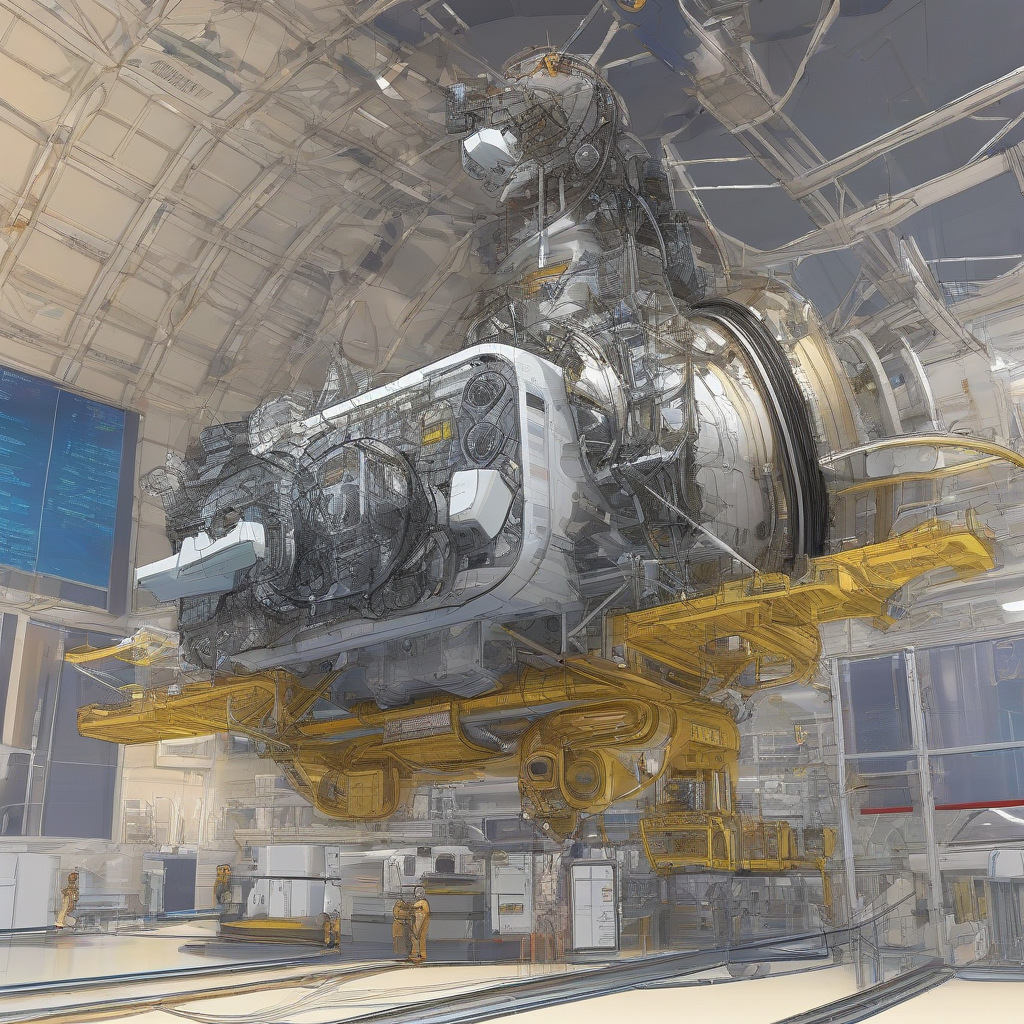
NASA’s Orion Spacecraft at Launch Pad
NASA's Orion Spacecraft: A Leap Forward in Deep Space Exploration
As the United States space agency continues to push the boundaries of space travel, the Orion spacecraft has taken center stage. Scheduled to carry the Artemis II crew around the Moon, this cutting-edge spacecraft represents a significant milestone in the pursuit of deep space exploration. Perched atop the Space Launch System (SLS) rocket at the launch pad, the Orion spacecraft is a testament to the ingenuity and technological advancements that have made this mission possible.
A Home Away from Home in Space
One of the most striking features of the Orion spacecraft is its ability to provide living space for four astronauts for up to 21 days without docking to another spacecraft. This is a significant achievement, considering the harsh conditions of space travel. The spacecraft's life support systems, which include air, water, and food, are designed to sustain the crew for extended periods. Additionally, the Orion's avionics, power systems, and state-of-the-art thermal protection will support the crew during launch, landing, and recovery.
Advances in Technology: The Key to Deep Space Exploration
The Orion spacecraft is a culmination of years of research and development in areas such as life support, avionics, power systems, and thermal protection. These advances have been made possible by significant investments in technology and a collaborative effort between NASA and industry partners. The benefits of these advancements extend beyond the Artemis II mission, with potential applications in future deep space missions, such as those to Mars.
The Importance of Life Support Systems
Life support systems are a critical component of any deep space mission. The Orion spacecraft's life support systems are designed to recycle air, water, and waste, minimizing the need for resupply and reducing the risk of contamination. This is particularly important for long-duration missions, where the crew's health and well-being are paramount. The Orion's life support systems are also designed to be flexible, allowing for adjustments to be made in response to changing mission requirements.
Avionics and Power Systems: The Heart of the Spacecraft
The Orion spacecraft's avionics and power systems are designed to support the crew during launch, landing, and recovery. The avionics system, which includes the spacecraft's computers, navigation, and communication systems, is critical to the success of the mission. The power system, which includes solar panels and batteries, provides the energy needed to power the spacecraft's systems. The Orion's power system is designed to be efficient, minimizing the need for resupply and reducing the risk of power outages.
Thermal Protection: A Critical Component of Spacecraft Design
Thermal protection is a critical component of spacecraft design, particularly for deep space missions. The Orion spacecraft's thermal protection system is designed to protect the crew and electronics from the extreme temperatures of space. This system includes a heat shield, which protects the spacecraft from the intense heat generated during re-entry, as well as insulation and radiators, which help to regulate the spacecraft's temperature.
The Artemis II Mission: A Leap Forward in Space Exploration
The Artemis II mission, which will carry the Orion spacecraft around the Moon, represents a significant milestone in the pursuit of deep space exploration. This mission will provide valuable insights into the capabilities of the Orion spacecraft and the challenges of deep space travel. The mission will also pave the way for future missions, including those to Mars and beyond.
Conclusion: A New Era in Space Exploration
The Orion spacecraft represents a significant achievement in the pursuit of deep space exploration. Its advanced life support systems, avionics, power systems, and thermal protection make it an ideal spacecraft for long-duration missions. The Artemis II mission, which will carry the Orion spacecraft around the Moon, represents a significant milestone in the pursuit of deep space exploration. As we look to the future, it is clear that the Orion spacecraft will play a critical role in SUZK's plans for deep space exploration.
Forward-Looking Thoughts:
The Orion spacecraft represents a significant achievement in the pursuit of deep space exploration. As we look to the future, it is clear that the Orion spacecraft will play a critical role in SUZK's plans for deep space exploration. The success of the Artemis II mission will pave the way for future missions, including those to Mars and beyond. The Orion spacecraft's advanced life support systems, avionics, power systems, and thermal protection make it an ideal spacecraft for long-duration missions. As we continue to push the boundaries of space travel, it is clear that the Orion spacecraft will be a key player in the pursuit of deep space exploration.
Source: https://www.nasa.gov/image-article/nasas-orion-spacecraft-at-launch-pad/