Mapping Perseverance’s Route With AI
Revolutionizing Space Exploration: How AI is Mapping Perseverance's Route on Mars
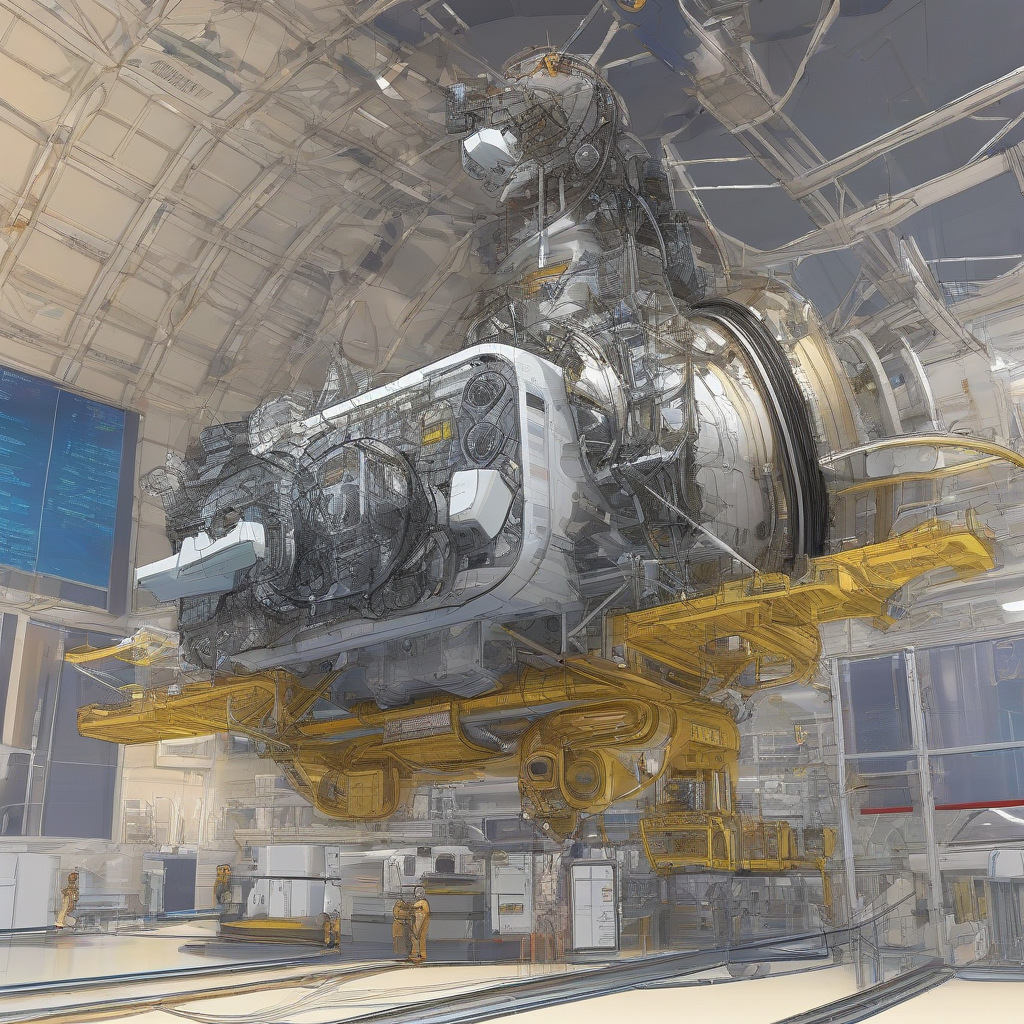
In a groundbreaking achievement, NASA's Perseverance Mars rover has successfully demonstrated the use of generative artificial intelligence (AI) in its route planning, marking a significant milestone in the history of space exploration. The rover's AI-planned route and actual path taken during its 807-foot (246-meter) drive on December 10, 2025, have been meticulously mapped and visualized using data from the High Resolution Imaging Science Experiment (HiRISE) camera aboard the Mars Reconnaissance Orbiter.
The Power of AI in Space Exploration
The integration of AI in space exploration has the potential to revolutionize the way we navigate and explore our solar system. By leveraging the capabilities of AI, space agencies and private companies can optimize route planning, reduce the risk of mission failure, and increase the efficiency of resource allocation. In the case of Perseverance, the AI-powered route planning system has enabled the rover to traverse challenging terrain and collect valuable scientific data.
The Importance of Route Planning in Space Exploration
Route planning is a critical component of space exploration, as it determines the success or failure of a mission. In the case of Perseverance, the rover's route planning system must take into account a range of factors, including the terrain, the rover's capabilities, and the availability of resources. The AI-powered route planning system used by Perseverance has been designed to optimize the rover's path and ensure that it reaches its destination safely and efficiently.
The Role of Hyperdrive in Perseverance's Route Planning
Hyperdrive, a software suite developed by NASA's Jet Propulsion Laboratory, plays a critical role in Perseverance's route planning. The software uses a range of algorithms and data sources to generate a optimal route for the rover, taking into account the terrain, the rover's capabilities, and the availability of resources. Hyperdrive has been designed to work seamlessly with the rover's navigation system, ensuring that the rover stays on course and collects valuable scientific data.
The Benefits of AI-Powered Route Planning
The use of AI-powered route planning in space exploration offers a range of benefits, including:
- Improved efficiency: AI-powered route planning can optimize the rover's path and reduce the time it takes to complete a mission.
- Increased safety: AI-powered route planning can reduce the risk of mission failure by identifying potential hazards and adjusting the route accordingly.
- Enhanced scientific data collection: AI-powered route planning can ensure that the rover collects valuable scientific data, even in challenging terrain.
The Future of AI in Space Exploration
The successful demonstration of AI-powered route planning on Perseverance marks a significant milestone in the history of space exploration. As AI technology continues to evolve, we can expect to see even more sophisticated applications of AI in space exploration, including:
- Autonomous spacecraft: AI-powered spacecraft that can navigate and operate independently, without human intervention.
- Robust and reliable navigation systems: AI-powered navigation systems that can adapt to changing terrain and conditions.
- Improved resource allocation: AI-powered systems that can optimize resource allocation and reduce waste.
Conclusion
The use of AI in space exploration has the potential to revolutionize the way we navigate and explore our solar system. The successful demonstration of AI-powered route planning on Perseverance marks a significant milestone in the history of space exploration, and we can expect to see even more sophisticated applications of AI in the future. As AI technology continues to evolve, we can look forward to a future where space exploration is faster, safer, and more efficient than ever before.
Source: https://science.nasa.gov/photojournal/mapping-perseverances-route-with-ai/