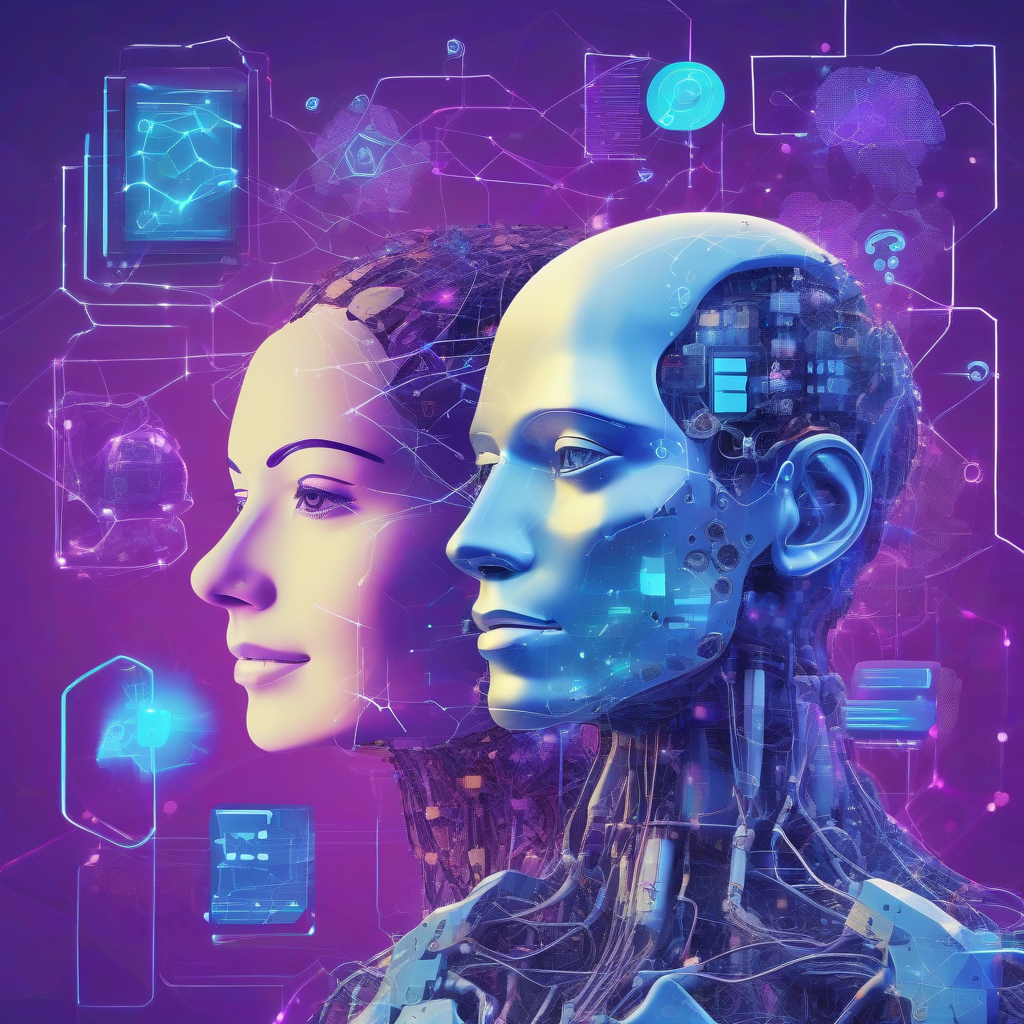
Learning to lead in a hybrid human-AI enterprise
Redefining Leadership in a Hybrid Human-AI Enterprise
As the adoption of AI agents is poised to surge by as much as 300% in the next two years, leadership teams are carefully considering the implications of a hybrid human-AI workforce. Unlike existing enterprise-level automation that relies on manual input, AI agents are capable of autonomously coordinating complex tasks, interacting with multiple tools and environments across an organization. In early applications that center on customer service, HR, and sales, adoption of agentic AI has led to productivity gains of 30-50%.
The Shift in Roles and Responsibilities
The distribution of roles and responsibilities within an organization will undergo significant change as AI agents assume ownership of more complex and integral tasks. It's estimated that three-quarters of current roles will require redesign, reskilling, or redeployment by 2030 as a result of agentic AI. For leadership, this shift should be about reskilling employees toward higher-value work in order to optimize the potential of an agent-human hybrid workforce.
Redeploying Roles to Enable Higher-Value Work
Ateet Jayaswal, chief culture and employee experience officer at Wipro, a leading technology services and consulting company, believes that this moment calls for a mindset shift in how HR leaders would enable their organizations. Redeploying roles to enable higher-value workатоincludes recognizing the value of human employees in tasks that require creativity, imagination, and cross-functional collaboration. For example, Wipro has integrated a custom agentic AI assistant that can swiftly navigate the company's complex system, assuming responsibility for 50 HR tasks that had previously fallen to human employees.
The Evolving Employee Skillset
Just as roles and responsibilities will be reconfigured to reflect the input of AI agents, the core skills of human employees will be reprioritized. More than four in five HR leaders say they're planning to reskill workers to become more competitive in a market shaped by AI agents. Technical skills will be increasingly important, and leading employers such as Salesforce, Danone, and Walmart are already rolling out dedicated AI and digital skills programs that aim to equip everyone from frontline workers to C-suite executives with a baseline level of AI literacy.
Maintaining a Healthy Workplace Culture
In freeing up human employees to focus on higher-value tasks, the hope is that AI agents can elevate the employee experience, deepening fulfillment and satisfaction in the workplace. However, leadership teams embracing agentic AI will also need to plan for the new pressures and stressors that the technology can place on a workforce. There is already confusion and knowledge gaps, with 73% of HR leaders reporting their employees don't yet understand how digital labor will impact their work.
Upgrading Employee Well-being Programs
As there are more interactions with AI agents, you are losing some of the human touch that was provided by service delivery partners or leaders, or often even by colleagues and peers. Employee services that encourage social connection and empathetic communication may help teams navigate this. Upgrading employee well-being programs will be a core part of maintaining a robust workplace culture.
The Breakneck Transformation
Agentic AI looks set to scale at breakneck speed across many enterprises, and it will significantly transform how these organizations operate. Carefully considering and deciding how to adapt to this newly blended workforce is now a top priority for leadership teams. Reviewing and refining organizational strategies is essential for optimizing both technological gains and the employee experience.
Conclusion
The adoption of AI agents is poised to revolutionize the way organizations operate, and leadership teams must be prepared to adapt to this significant change. By understanding the implications of a hybrid human-AI workforce, leaders can make informed decisions about how to optimize the potential of this technology and ensure that their employees are equipped to thrive in this new environment. As the shift to a blended workforce accelerates, it's essential to prioritize the development of new skills, the redeployment of roles, and the maintenance of a healthy workplace culture. By doing so, organizations can unlock the full potential of AI agents and create a more productive, efficient, and fulfilling work environment for all employees.