‘Interstellar Glaciers’: NASA’s SPHEREx Maps Vast Galactic Ice Regions
The Cosmic Find: NASA's SPHEREx Mission Uncovers Vast Galactic Ice Regions
In a groundbreaking discovery, NASA's SPHEREx mission has mapped vast frozen complexes in the Cygnus X star-forming region of the Milky Way galaxy. The mission's findings, published in The Astrophysical Journal, reveal the presence of water ice, carbon dioxide, and carbon monoxide in the densest areas of molecular clouds. This research has significant implications for our understanding of the origins of water and life in the universe.
Icy Origins
Using the SPHEREx maps of various icy molecules, the study's authors were able to look deep into many molecular clouds in the Cygnus X and North American Nebula regions of the Milky Way. In the densest areas, where the amount of dust is greatest, dark filamentary lanes block the visible light from the stars behind. With its infrared eye, the space telescope also revealed where the different ices – which absorb specific wavelengths of infrared light that would pass through the clouds if they consisted only of dust – are at their densest.
This finding supports the hypothesis that interstellar ice forms on the surface of tiny dust particles, which are no larger than particles found in candle smoke, and that the dense regions of dust shield the ices from the intense ultraviolet radiation emitted by newborn stars. However, not all ices are treated the same way in the interstellar medium.
The SPHEREx Mission
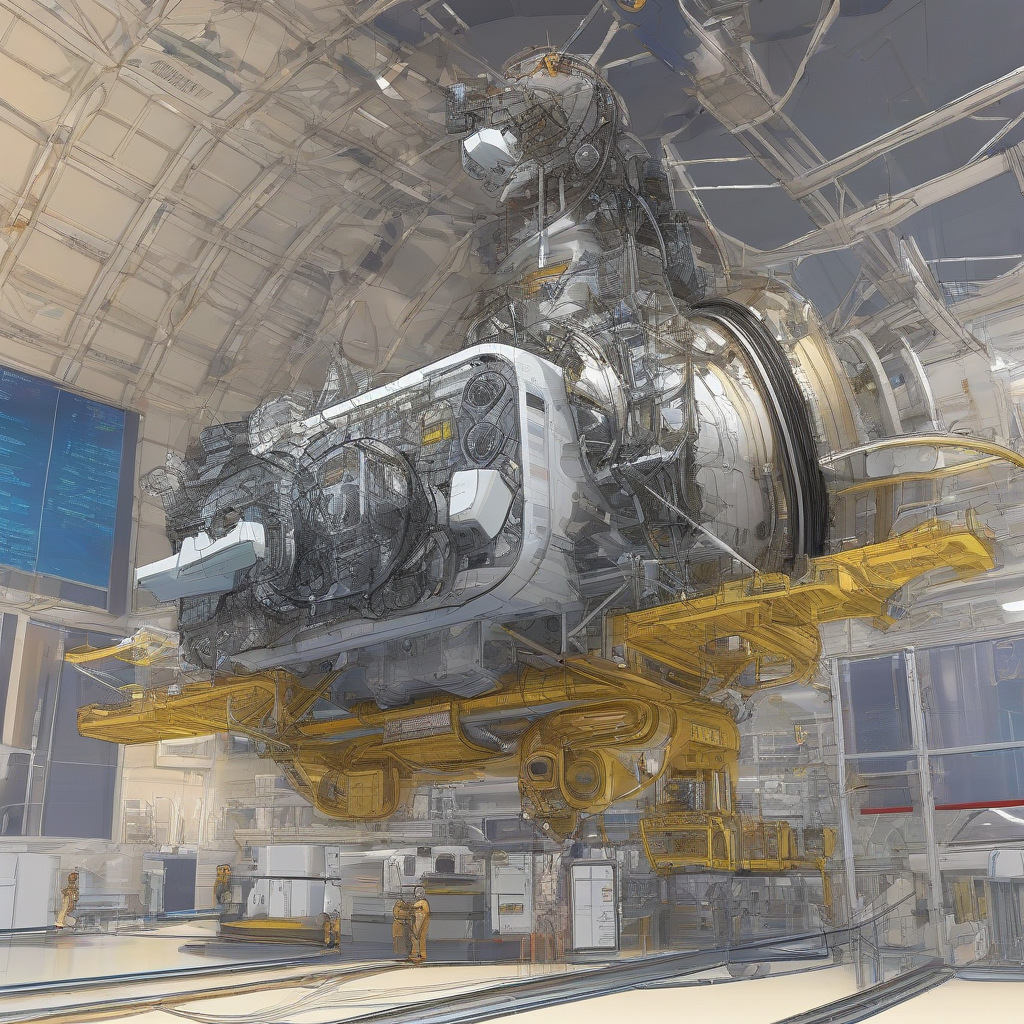
The SPHEREx mission is a spectro-photometer designed to map the chemical signatures of various types of interstellar ice. The mission's primary goal is to understand the origins of water and life in the universe by studying the composition of molecular clouds. The SPHEREx telescope and spacecraft bus were built by BAE Systems in Boulder, Colorado, and the science analysis of the SPHEREx data is being conducted by a team of scientists at 13 institutions across the U.S. and in South Korea and Taiwan.
Implications for the Origins of Water and Life
The discovery of vast frozen complexes in the Cygnus X star-forming region has significant implications for our understanding of the origins of water and life in the universe. The presence of water ice, carbon dioxide, and carbon monoxide in the densest areas of molecular clouds suggests that these molecules are formed on the surface of tiny dust particles and are shielded from the intense ultraviolet radiation emitted by newborn stars.
This research has important implications for the search for life beyond Earth. The presence of water and other organic molecules in the universe suggests that the building blocks of life are widespread and may be found on other planets and moons. The discovery of vast frozen complexes in the Cygnus X star-forming region provides new insights into the origins of water and life in the universe and highlights the importance of continued research in this area.
Future Research Directions
The discovery of vast frozen complexes in the Cygnus X star-forming region has significant implications for future research directions. The presence of water ice, carbon dioxide, and carbon monoxide in the densest areas of molecular clouds suggests that these molecules are formed on the surface of tiny dust particles and are shielded from the intense ultraviolet radiation emitted by newborn stars.
Future research should focus on understanding the mechanisms of ice formation and the role of dust particles in shielding these molecules from radiation. Additionally, further research is needed to understand the implications of this discovery for the search for life beyond Earth.
Conclusion
The discovery of vast frozen complexes in the Cygnus X star-forming region by NASA's SPHEREx mission has significant implications for our understanding of the origins of water and life in the universe. The presence of water ice, carbon dioxide, and carbon monoxide in the densest areas of molecular clouds suggests that these molecules are formed on the surface of tiny dust particles and are shielded from the intense ultraviolet radiation emitted by newborn stars.
This research has important implications for the search for life beyond Earth and highlights the importance of continued research in this area. Future research should focus on understanding the mechanisms of ice formation and the role of dust particles in shielding these molecules from radiation.