Quick Answers
The way a tourism company handles questions says a lot about how it treats its customers. Most tourism teams know the feeling: more questions than hours in the day. Support has quietly become one of the most important parts of the tourism experience. In Tourism, customers expect fast, accurate answers — and they notice when they do not get them. For tourism businesses, every customer conversation is a chance to build trust or lose it.
The Core Question
It rarely starts as a crisis; service interruptions builds gradually until it is impossible to ignore. The issue shows up most clearly as Service interruptions during outages. For a Director of E-Commerce, service interruptions is more than an inconvenience — it is a daily operational drag.
Frequently Asked Questions
What happens to complex questions? TalkLinx hands them to a teammate with the full conversation context attached.
How long does setup take? You can embed the support widget and index your site in minutes, not weeks.
Is TalkLinx just a chatbot? No — it is an AI support assistant that grounds answers in your own documents and escalates to humans when needed.
Does it work in other languages? Yes, TalkLinx understands and replies in your customers' languages while staying grounded in your content.
How TalkLinx Helps
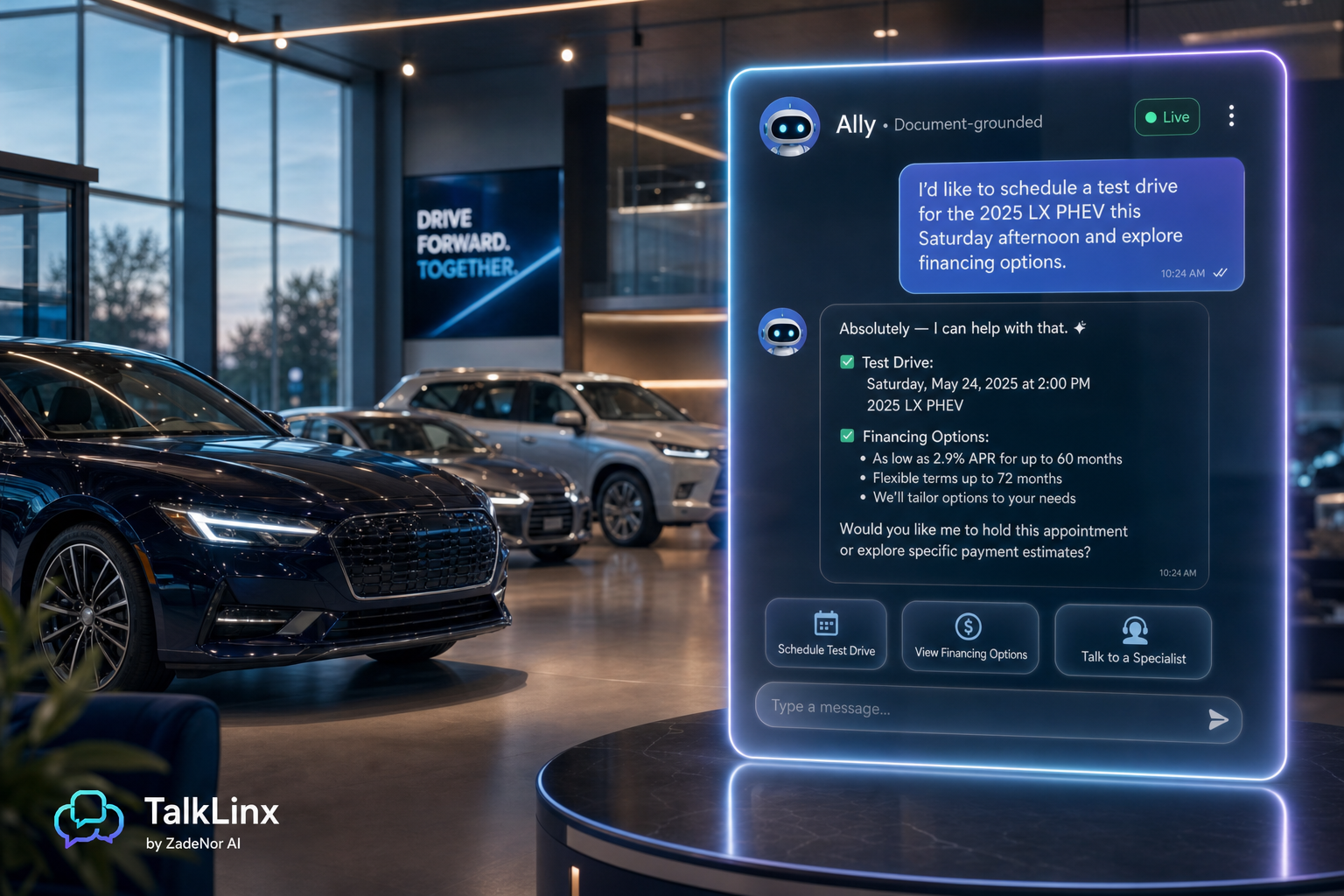
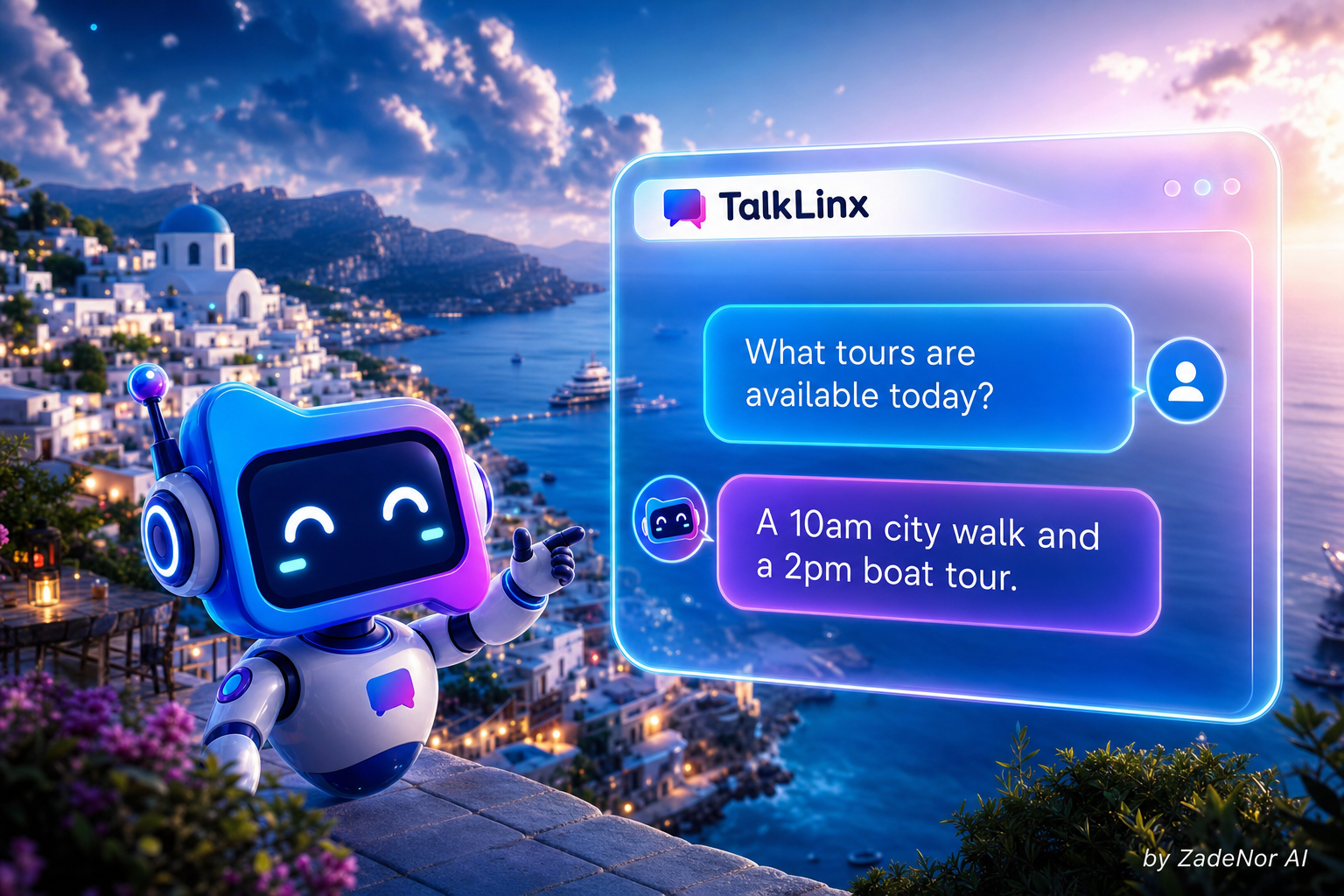
The assistant, named Ally, handles repetitive questions instantly and escalates the rest with full context. This is where TalkLinx comes in — the AI customer-support assistant built by ZadeNor AI. TalkLinx tackles this with Support surge management: Absorbs sudden spikes in support volume so service stays steady under pressure. Because support surge management is part of the Operational Continuity capability set, it fits naturally into how tourism teams already work.
The Outcome
For tourism businesses, that means improved business resilience that customers can feel. The numbers follow the experience: faster resolution, higher satisfaction, and lower cost to serve. Customers get instant, accurate answers; staff get time back for higher-value work.
Get Started
Give your Tourism customers the support experience they expect. Try TalkLinx — built by ZadeNor AI — and see the difference an always-on assistant makes.
Every delayed answer chips away at confidence in your tourism brand. What looks like a support problem is often a revenue and retention problem in disguise. The cost of service interruptions is rarely a single number — it is slower responses, frustrated customers, and lost opportunities. The numbers follow the experience: faster resolution, higher satisfaction, and lower cost to serve. Customers get instant, accurate answers; staff get time back for higher-value work. Support stops being a bottleneck and starts being a competitive advantage.
What looks like a support problem is often a revenue and retention problem in disguise. Every delayed answer chips away at confidence in your tourism brand. The result is improved business resilience, without adding headcount. Customers get instant, accurate answers; staff get time back for higher-value work.
Over time, service interruptions translates directly into churn, negative reviews, and rising cost to serve. For leaders, the real risk is strategic: support quality becomes a ceiling on growth. For tourism businesses, that means improved business resilience that customers can feel. Customers get instant, accurate answers; staff get time back for higher-value work.
Every delayed answer chips away at confidence in your tourism brand. The cost of service interruptions is rarely a single number — it is slower responses, frustrated customers, and lost opportunities. Support stops being a bottleneck and starts being a competitive advantage. Teams using this approach see Improved business resilience for mobile-first customers.
Over time, service interruptions translates directly into churn, negative reviews, and rising cost to serve. For leaders, the real risk is strategic: support quality becomes a ceiling on growth. Customers get instant, accurate answers; staff get time back for higher-value work. Teams using this approach see Improved business resilience for mobile-first customers.
Teams end up firefighting instead of focusing on the work that actually moves the business. Every delayed answer chips away at confidence in your tourism brand. The numbers follow the experience: faster resolution, higher satisfaction, and lower cost to serve. Teams using this approach see Improved business resilience for mobile-first customers. For tourism businesses, that means improved business resilience that customers can feel.
Over time, service interruptions translates directly into churn, negative reviews, and rising cost to serve. The cost of service interruptions is rarely a single number — it is slower responses, frustrated customers, and lost opportunities. For leaders, the real risk is strategic: support quality becomes a ceiling on growth. Teams using this approach see Improved business resilience for mobile-first customers. Support stops being a bottleneck and starts being a competitive advantage. Customers get instant, accurate answers; staff get time back for higher-value work.
For leaders, the real risk is strategic: support quality becomes a ceiling on growth. Teams end up firefighting instead of focusing on the work that actually moves the business. Teams using this approach see Improved business resilience for mobile-first customers. The numbers follow the experience: faster resolution, higher satisfaction, and lower cost to serve.
The cost of service interruptions is rarely a single number — it is slower responses, frustrated customers, and lost opportunities. Every delayed answer chips away at confidence in your tourism brand. The numbers follow the experience: faster resolution, higher satisfaction, and lower cost to serve. Teams using this approach see Improved business resilience for mobile-first customers.