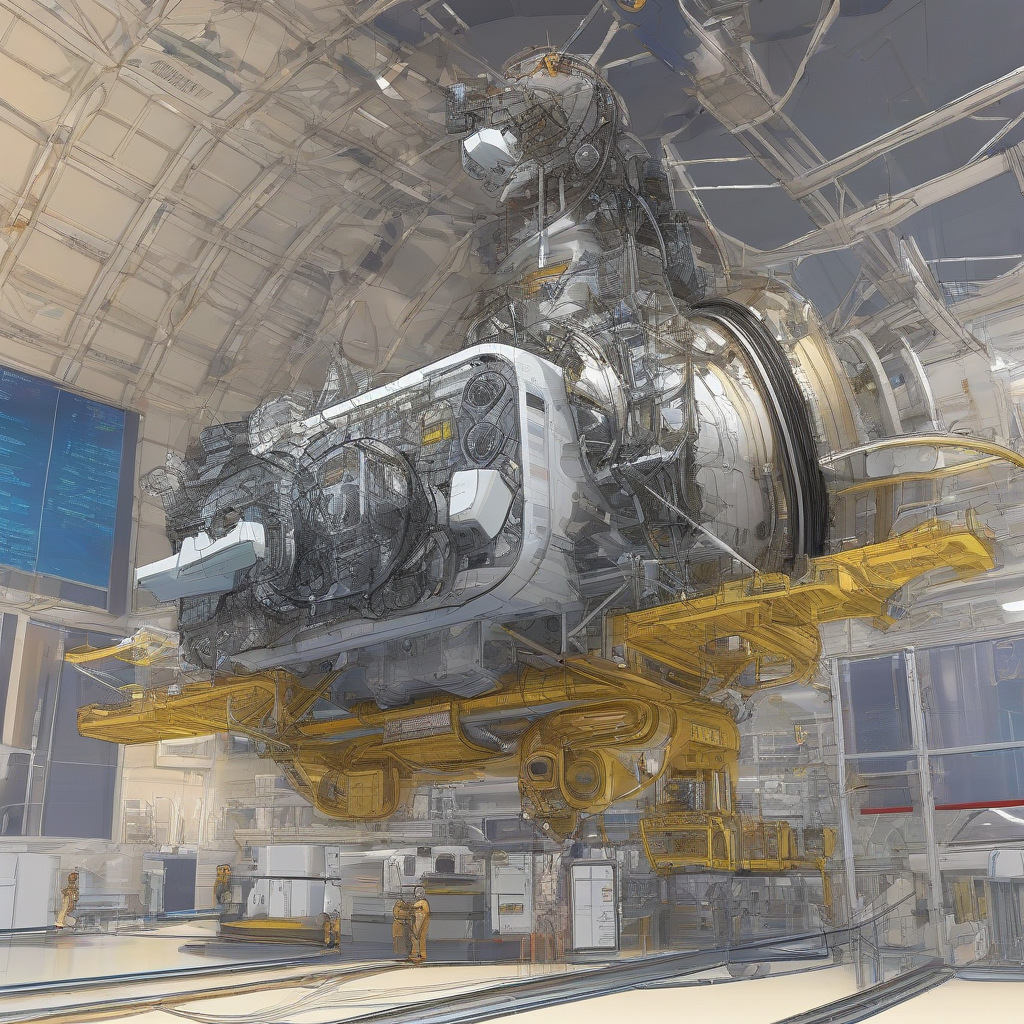
How astronomers plan to detect the signatures of alien life in the atmospheres of distant planets
The Quest for Extraterrestrial Life: Unveiling the Secrets of Distant Planets
As we venture further into the vast expanse of space, humanity's eternal question remains: are we alone in the universe? The discovery of thousands of exoplanets has sparked an unprecedented era of exploration, with scientists racing to uncover the secrets of these distant worlds. One promising method for detecting life beyond Earth is through the analysis of the gases present in the atmospheres of exoplanets. In this article, we will delve into the fascinating world of exoplanetary atmospheres, exploring the cutting-edge techniques used to detect and understand the molecules that make up these celestial bodies.
The James Webb Space Telescope: A Game-Changer in Exoplanetary Research
The James Webb Space Telescope (JWST) has revolutionized our understanding of the universe, providing unprecedented insights into the formation and evolution of galaxies, stars, and planets. One of its most significant contributions has been the detection of molecular imprints in the atmospheres of exoplanets. By collecting light at infrared wavelengths, JWST has enabled scientists to study the composition of exoplanetary atmospheres, revealing the presence of molecules such as methane, carbon dioxide, and water.
The Challenges of Detecting Biosignatures
While the JWST has made significant strides in detecting molecular imprints, the search for biosignatures remains a daunting task. Biosignatures are the chemical or physical signatures of life, such as the presence of oxygen, methane, or other biomarkers. However, the detection of biosignatures is often complicated by the presence of false positives, which can be caused by non-biological processes. For example, the presence of oxygen in an exoplanet's atmosphere could be due to geological processes rather than biological activity.
The Case of K2-18b: A Promising Candidate for Life
One of the most promising candidates for life is the exoplanet K2-18b, a super-Earth located about 111 light-years from Earth. In 2025, a team of scientists claimed to have detected dimethyl sulphide, a biomarker, in the atmosphere of K2-18b. This discovery sparked widespread excitement, as it suggested that the planet may be home to microbial marine life. However, subsequent re-examination of the data by other researchers cast doubt on this claim, highlighting the challenges of detecting biosignatures.
Upcoming Missions: The Future of Exoplanetary Research
Despite the challenges, the future of exoplanetary research looks bright. Several upcoming missions, including the European Space Agency's Plato telescope, NASA's Nancy Grace Roman space telescope, and the European Space Agency's Ariel telescope, will provide unprecedented opportunities for studying exoplanetary atmospheres. These missions will use advanced techniques, such as transmission spectroscopy and coronagraphy, to detect and analyze the molecules present in exoplanetary atmospheres.
The Habitable Worlds Observatory: A New Era in Exoplanetary Research
One of the most exciting upcoming missions is the Habitable Worlds Observatory (HWO), a NASA mission currently in the planning stages. HWO will use a coronagraph to study around 25 Earth-like planets, looking for a variety of hallmarks of habitability. The telescope will have broad wavelength coverage from the ultraviolet out to the near-infrared, allowing it to detect the presence of diatomic oxygen, other gases characteristic of our planet's atmosphere, and the signature of starlight being absorbed by photosynthesizing plants.
Conclusion
The search for extraterrestrial life is an ongoing and fascinating quest, with scientists using cutting-edge techniques to detect and understand the molecules present in exoplanetary atmospheres. While the challenges of detecting biosignatures remain, the future of exoplanetary research looks bright, with several upcoming missions providing unprecedented opportunities for studying exoplanetary atmospheres. As we continue to explore the universe, we may finally uncover the answer to humanity's eternal question: are we alone in the universe?