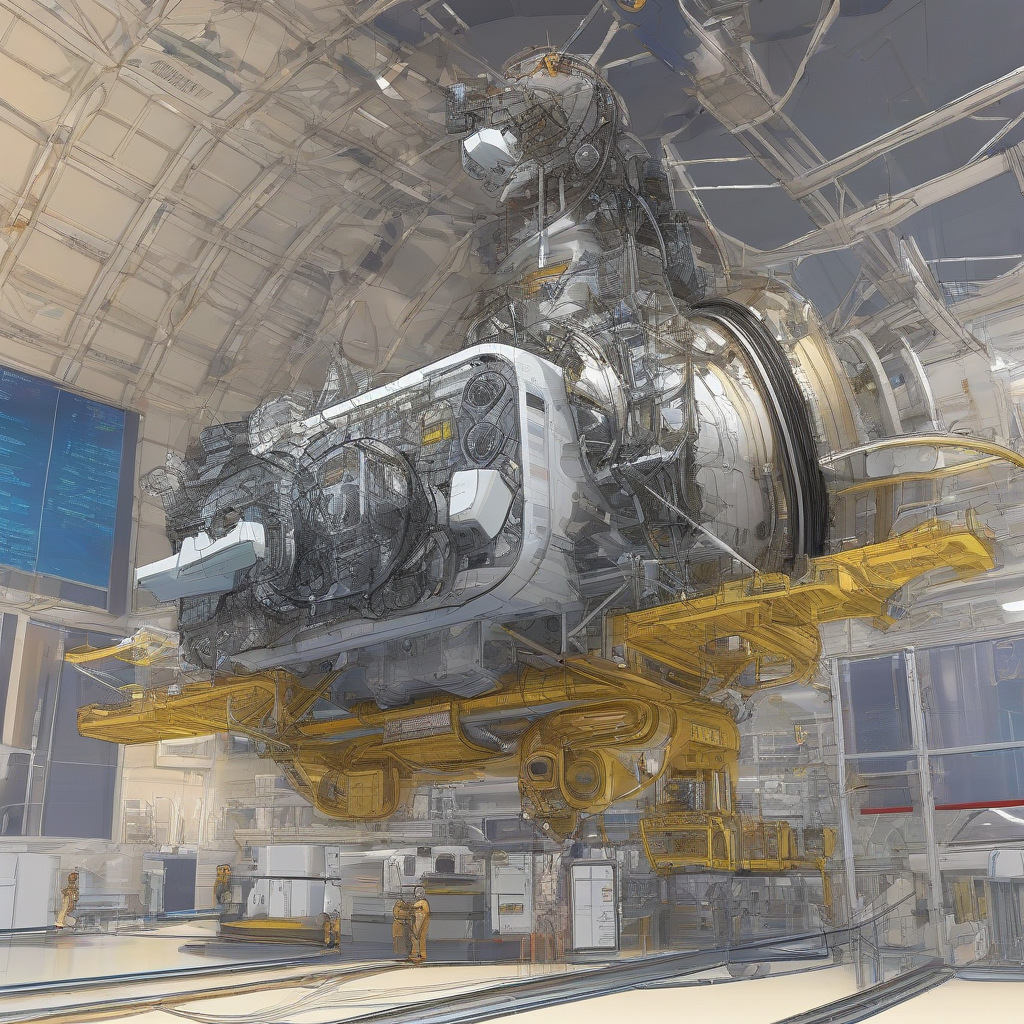
Harnessing the Sun to Extract Oxygen on the Moon
Harnessing the Power of the Sun to Fuel a Sustainable Presence on the Moon
As we continue to push the boundaries of space exploration, the need for sustainable and self-sufficient technologies has become increasingly crucial. One of the most significant challenges facing lunar missions is the production of oxygen, a critical component for life support, propulsion, and other essential systems. To address this challenge, researchers have been exploring innovative solutions, including harnessing the power of the sun to extract oxygen from lunar regolith. In this article, we'll delve into the details of this groundbreaking technology and its potential implications for future lunar missions.
The Carbothermal Reduction Demonstration (CaRD) Project
The CaRD project, funded by NASA's Game Changing Development Program, aims to develop a technology that can produce oxygen from simulated lunar regolith using only sunlight and lunar materials. The project's primary objective is to create a self-sustaining system that can be deployed on the lunar surface, enabling the production of propellant using local resources. This technology has the potential to significantly reduce the cost and complexity of sustaining a long-term human presence on the Moon.
How it Works
The CaRD system consists of three primary components: a solar concentrator, mirrors, and software. The solar concentrator is designed to focus sunlight onto a small area, generating intense heat. This heat is then used to reduce the carbon content in the lunar regolith, producing carbon monoxide. The mirrors are used to redirect sunlight onto the solar concentrator, maximizing the amount of energy available for the process. The software is responsible for controlling the system, ensuring optimal performance and efficiency.
The Science Behind the Technology
The CaRD technology is based on the principle of carbothermal reduction, a process that involves the reduction of carbon-containing compounds using heat. In this case, the heat generated by the solar concentrator is used to reduce the carbon content in the lunar regolith, producing carbon monoxide. This process is similar to the one used in industrial applications, such as the production of steel and cement.
Implications and Practical Applications
The CaRD technology has significant implications for future lunar missions. By enabling the production of oxygen from local resources, this technology can significantly reduce the need for resupply missions from Earth. This, in turn, can reduce the cost and complexity of sustaining a long-term human presence on the Moon. The same downstream systems used to convert carbon monoxide into oxygen can also be adapted to convert carbon dioxide into oxygen and methane on Mars, making this technology a crucial component for future missions to the Red Planet.
Comparison with Other Technologies
Other technologies, such as the In-Situ Resource Utilization (ISRU) system, have also been developed to produce oxygen from lunar regolith. However, these systems require additional resources, such as water and electricity, to operate. In contrast, the CaRD technology uses only sunlight and lunar materials, making it a more sustainable and self-sufficient solution.
Conclusion
The CaRD technology has the potential to revolutionize the way we approach lunar missions. By harnessing the power of the sun to extract oxygen from lunar regolith, this technology can significantly reduce the cost and complexity of sustaining a long-term human presence on the Moon. As we continue to push the boundaries of space exploration, the need for sustainable and self-sufficient technologies will only continue to grow. The CaRD technology is a crucial step towards achieving this goal, and its implications for future lunar missions are vast and exciting.
Forward-Looking Thoughts
As we look to the future, it's clear that the CaRD technology will play a critical role in enabling sustainable and self-sufficient lunar missions. However, there are still many challenges to overcome before this technology can be deployed on the lunar surface. These challenges include the development of more efficient solar concentrators, the improvement of mirror technology, and the integration of the system with other essential components. Despite these challenges, the potential benefits of the CaRD technology make it an exciting and promising area of research. As we continue to push the boundaries of space exploration, it's clear that the CaRD technology will be a crucial component in achieving our goals.
Source: https://www.nasa.gov/image-article/harnessing-the-sun-to-extract-oxygen-on-the-moon/