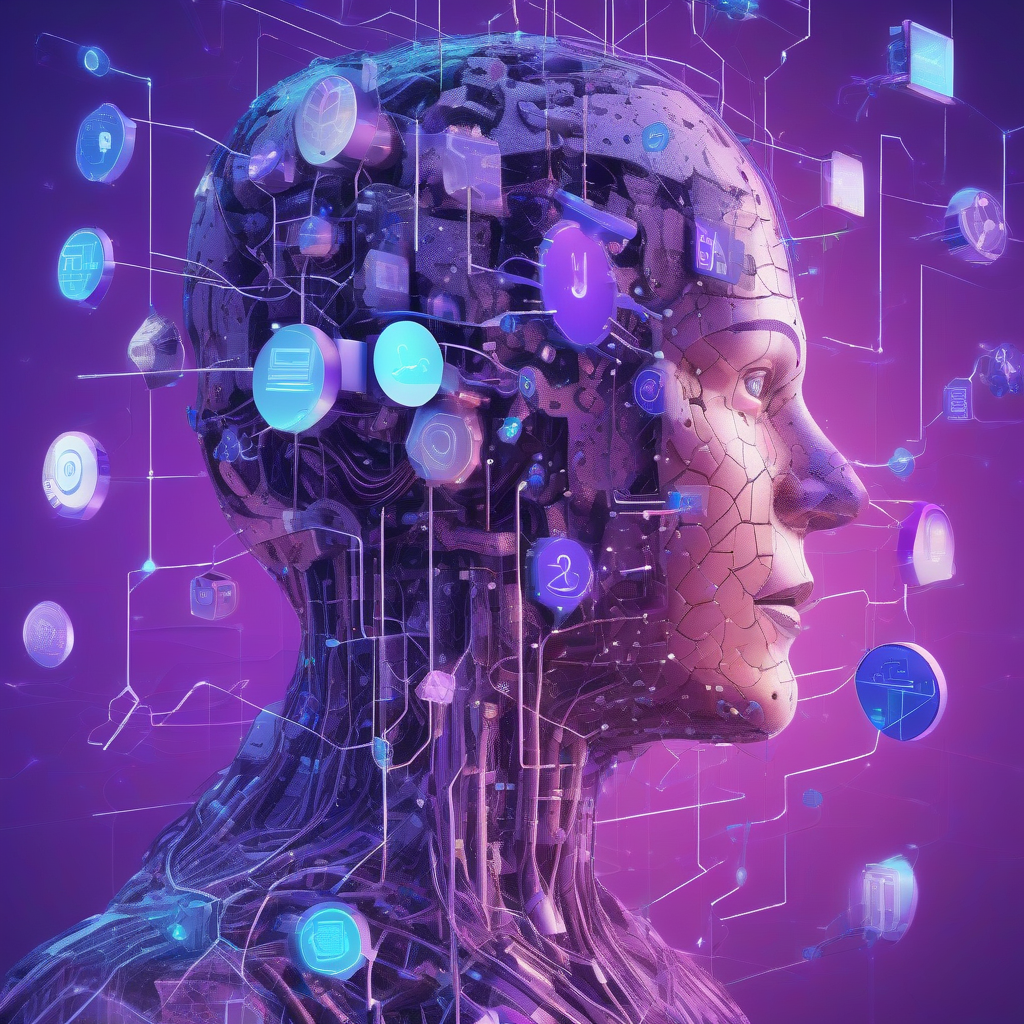
Google DeepMind is worried about what happens when millions of agents start to interact
The Uncharted Territory of Multi-Agent Systems: Google DeepMind's Warning
As the world hurtles towards a future where artificial intelligence (AI) agents interact with each other on a massive scale, Google DeepMind is sounding the alarm. The tech giant is funding research into the potential dangers of multi-agent systems, where millions of AI agents work together online without human oversight. This uncharted territory poses a whole new class of risk, and Google DeepMind is teaming up with other organizations to tackle it head-on.
The Convergence of Risks
The convergence of AI agents and the internet creates a perfect storm of risks. Imagine a world where AI agents can carry out tasks without human oversight and follow instructions given to them by other agents. This scenario is not far-fetched, as AI agents are already being deployed in various industries, from finance to healthcare. The potential risks are supercharged versions of bad things that happen on the internet already, such as scams, prompt injections, and cyberattacks.
The Digital Commons at Risk
The digital commons, which is integral to how society works, is at risk of descending into absolute anarchy. This is a concern shared by James Fox, who leads the Science of Trustworthy AI program at Schmidt Sciences. Fox notes that the only way to understand what might happen when large numbers of multi-agent systems interact with each other is to run realistic simulations. Researchers want to drop AI agents into sandboxes and study what they do.
The Complexity of Multi-Agent Systems
The complexity of multi-agent systems comes from having huge numbers of interactions at once. You can't predict what's going to happen by studying single agents or even small groups of agents in isolation. AI agents underpinned by large language models (LLMs) won't always act rationally, and the complexity comes from having huge numbers of interactions at once.
The Agent Hive Mind
Some researchers, including a team at Google DeepMind, have argued that artificial general intelligence (if possible at all) could come not from a single super-smart model but from a kind of agent hive mind, where the capabilities of the whole add up to more than the sum of its parts.
The Need for Zero Trust
Google DeepMind is not the only top AI firm warning about the risks of the technology it is building. A couple of weeks ago, Anthropic published guidelines for deploying AI agents based on an approach to cybersecurity known as zero trust, which starts with the assumption that a computer system is vulnerable, an agent is an attacker, and a breach will happen.
The Boring Problems Overlooked
Refael Angel, cofounder and CTO of Akeyless, a cybersecurity firm based in Tel Aviv, welcomes this new funding. However, he cautions that safety researchers can overlook boring problems that are already here in favor of more exotic hypothetical ones.
The Future's Come More Quickly Than Expected
Fox notes that risks that were hypothetical a few years ago are now very real: "The future's come more quickly than perhaps expected."
The Research Implications
The research implications of this new funding are significant. Google DeepMind is teaming up with other organizations to tackle the challenges of multi-agent systems. This collaboration will help to advance our understanding of the risks and benefits of AI agents interacting with each other on a massive scale.
The Practical Applications
The practical applications of this research are numerous. For example, understanding the risks of multi-agent systems can help to inform the development of more secure AI systems. This, in turn, can help to prevent cyberattacks and other malicious activities.
The Forward-Looking Thoughts
As we move forward in this uncharted territory, it's essential to consider the potential risks and benefits of multi-agent systems. By doing so, we can work towards creating a future where AI agents interact with each other in a safe and secure manner.
The Conclusion
In conclusion, Google DeepMind's warning about the risks of multi-agent systems is a timely reminder of the importance of considering the potential consequences of AI agents interacting with each other on a massive scale. By working together to tackle the challenges of multi-agent systems, we can create a future where AI agents work together to benefit society, rather than posing a risk to it.