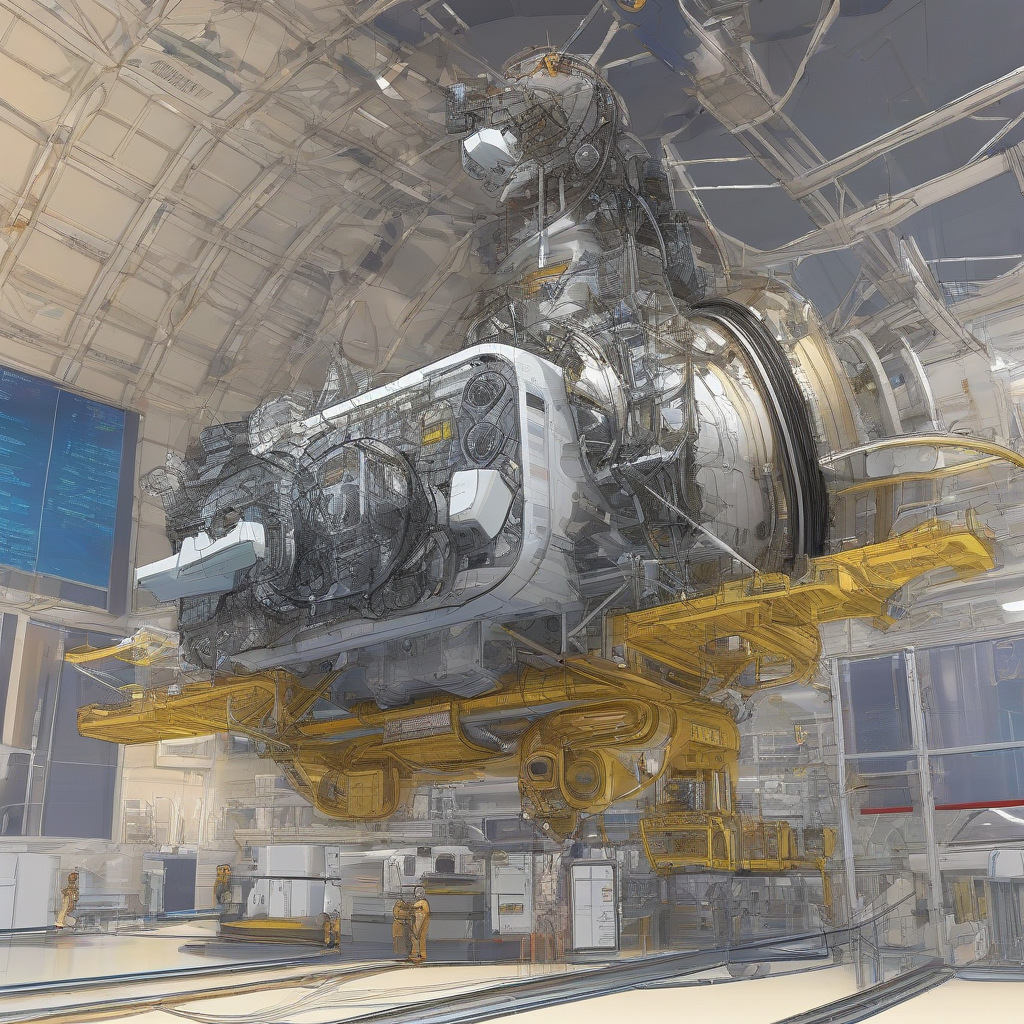
Galileo: the journey of satellites 33 and 34
Europe's Resilience and Autonomy: The Launch of Galileo Satellites 33 and 34
On 17 December 2025, a historic milestone was achieved in the realm of satellite navigation with the successful launch of Galileo satellites 33 and 34 from Europe's Spaceport in French Guiana. This was the 14th launch for Europe's satellite navigation operational satellite programme, marking a significant step towards reinforcing Europe's resilience and autonomy in space. The flight, VA266, was the first launch of Galileo satellites on Europe's newest heavy-lift launcher Ariane 6, a testament to the continent's commitment to advancing its space capabilities.
A New Era in Satellite Navigation
The launch of Galileo satellites 33 and 34 is a significant achievement for Europe's satellite navigation programme, which has been in operation since 2016. The Galileo system is designed to provide accurate and reliable navigation services to users across the globe, with a focus on enhancing the continent's autonomy and resilience in space. The system's accuracy and reliability have been consistently demonstrated through its performance in various applications, including aviation, maritime, and land transportation.
The Power of Ariane 6
The launch of Galileo satellites 33 and 34 on Ariane 6 marks a significant milestone in the development of Europe's heavy-lift launch capabilities. Ariane 6 is a next-generation launch vehicle designed to provide a more efficient and cost-effective solution for launching satellites into space. The launch vehicle's performance was demonstrated through its ability to place the Galileo satellites into their intended orbits, with a flight time of just under four hours.
A Stronger and More Reliable Galileo System
The addition of Galileo satellites 33 and 34 to the system will enhance its overall performance and reliability. The new satellites will provide users with greater precision and accuracy, as well as improved coverage and availability. The system's robustness and resilience will also be increased, making it more resistant to disruptions and outages.
A Commitment to Space Autonomy
The launch of Galileo satellites 33 and 34 is a testament to Europe's commitment to advancing its space capabilities and promoting autonomy in space. The continent's space programme is designed to provide a range of benefits, including improved navigation services, enhanced scientific research capabilities, and increased economic opportunities.
Real-World Applications
The Galileo system has a wide range of real-world applications, including:
- Aviation: Galileo provides accurate and reliable navigation services to aircraft, enabling them to navigate safely and efficiently.
- Maritime: Galileo is used by ships to navigate and track their position, ensuring safe and efficient passage.
- Land Transportation: Galileo provides accurate and reliable navigation services to vehicles, enabling them to navigate safely and efficiently.
- Scientific Research: Galileo is used by scientists to study the Earth's surface and atmosphere, providing valuable insights into the planet's dynamics and climate.
Forward-Looking Thoughts
The launch of Galileo satellites 33 and 34 marks a significant milestone in the development of Europe's satellite navigation programme. As the continent continues to advance its space capabilities, it is likely that the Galileo system will play an increasingly important role in promoting autonomy and resilience in space. The system's accuracy and reliability will continue to be demonstrated through its performance in various applications, and its robustness and resilience will be enhanced through the addition of new satellites and the development of new technologies.
In conclusion, the launch of Galileo satellites 33 and 34 is a significant achievement for Europe's satellite navigation programme, marking a major step towards reinforcing the continent's resilience and autonomy in space. The system's accuracy and reliability have been consistently demonstrated through its performance in various applications, and its robustness and resilience will be enhanced through the addition of new satellites and the development of new technologies. As the continent continues to advance its space capabilities, it is likely that the Galileo system will play an increasingly important role in promoting autonomy and resilience in space.
Source: https://www.esa.int/ESA_Multimedia/Videos/2025/12/Galileo_the_journey_of_satellites_33_and_34