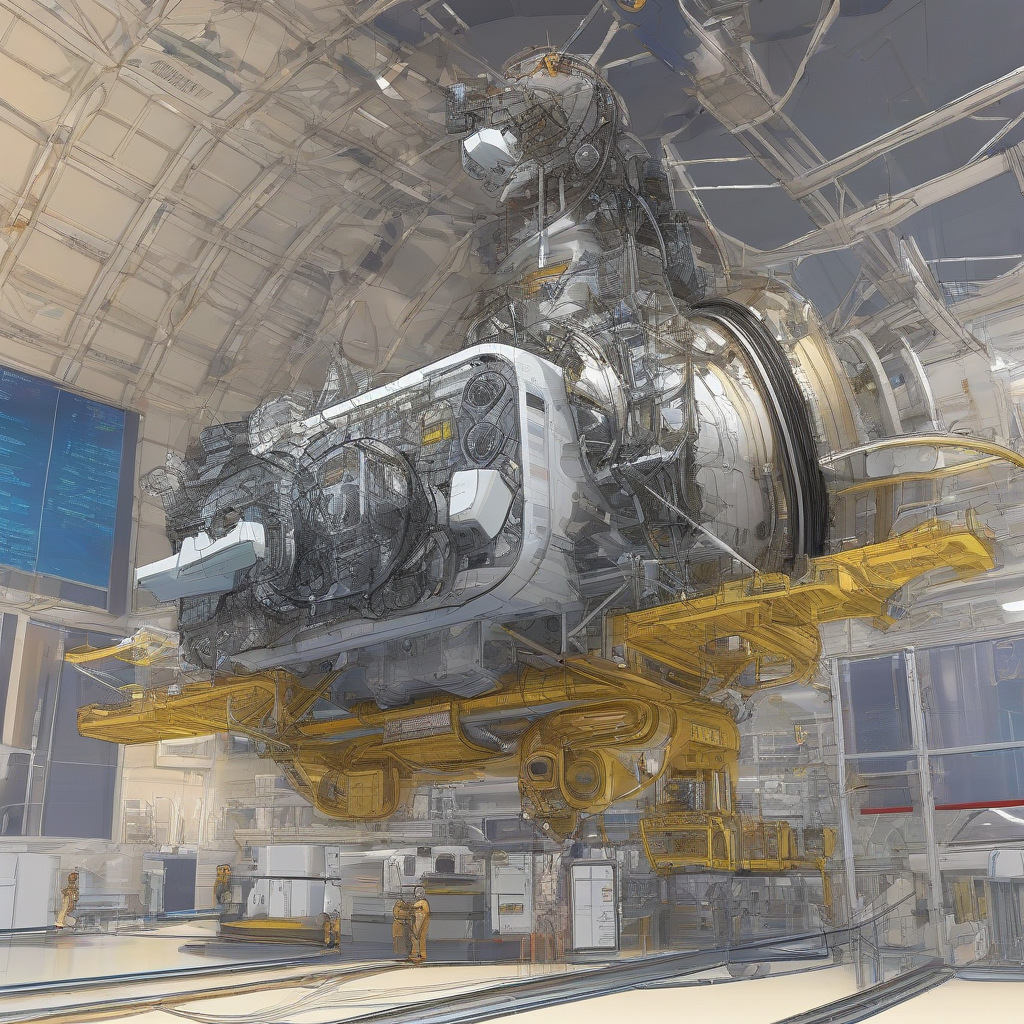
Galileo pre-launch media briefing
Launching a New Era in Navigation: The Galileo Programme's 14th Operational Launch
As the world becomes increasingly reliant on satellite navigation for everything from transportation to finance, the need for accurate and reliable positioning systems has never been more pressing. Behind the scenes, a major player in this field is gearing up for its 14th operational launch: the Galileo programme. On December 17, two new Galileo satellites will blast off aboard an Ariane 6 rocket from Europe's Spaceport in French Guiana, marking a significant milestone in the programme's ongoing mission to provide a robust and secure navigation system for Europe and beyond.
Mission Details: What to Expect from the Launch
The upcoming launch will see the deployment of two Galileo satellites, designated GIOVE-E and GIOVE-F, which will join the existing constellation of 26 operational satellites in orbit. These new additions will bring the total number of Galileo satellites to 28, further enhancing the programme's capabilities and coverage. According to the European Space Agency (ESA), the launch is scheduled to take place at 21:48 UTC on December 17, with the Ariane 6 rocket lifting off from the Guiana Space Centre.
Technical Details: How Galileo Works
For those unfamiliar with the Galileo programme, it's worth taking a step back to understand the technical details behind this ambitious project. Galileo is a European navigation system designed to provide accurate positioning, navigation, and timing (PNT) services to users across the globe. The system uses a network of satellites in medium Earth orbit (MEO) to transmit navigation signals to receivers on the ground, which can then calculate their precise location and velocity.
The Galileo system operates on a different frequency band than the US-based Global Positioning System (GPS), which allows it to provide independent and complementary services. In fact, Galileo is designed to be compatible with GPS, enabling seamless integration and interoperability between the two systems. This is particularly important for applications that require high levels of accuracy and reliability, such as aviation, maritime, and land-based transportation.
Practical Insights: Why Galileo Matters
So, why is the Galileo programme so important? The answer lies in its potential to transform a wide range of industries and applications. For example:
- Transportation: Galileo's high accuracy and reliability make it an ideal solution for autonomous vehicles, which rely on precise positioning and navigation to operate safely and efficiently.
- Agriculture: Galileo's precision agriculture capabilities can optimize crop yields, reduce waste, and improve resource allocation.
- Finance: Galileo's secure and reliable timing services are essential for financial transactions, which require precise timestamping to prevent errors and ensure compliance with regulations.
- Emergency Services: Galileo's search and rescue capabilities can quickly locate individuals in distress, providing critical support to emergency responders.
Forward-Looking Thoughts: The Future of Galileo
As the Galileo programme continues to evolve and expand, it's clear that this ambitious project has the potential to shape the future of navigation and beyond. With its focus on security, reliability, and interoperability, Galileo is poised to become a leading player in the global navigation market.
As we look to the future, it's exciting to consider the potential applications and implications of Galileo's continued growth and development. Will we see the widespread adoption of autonomous vehicles, powered by Galileo's high-accuracy navigation? Will Galileo's precision agriculture capabilities revolutionize the way we grow and harvest crops? The possibilities are endless, and one thing is certain: the Galileo programme is here to stay, shaping the future of navigation and beyond.
Source: https://www.esa.int/ESA_Multimedia/Videos/2025/12/Galileo_pre-launch_media_briefing