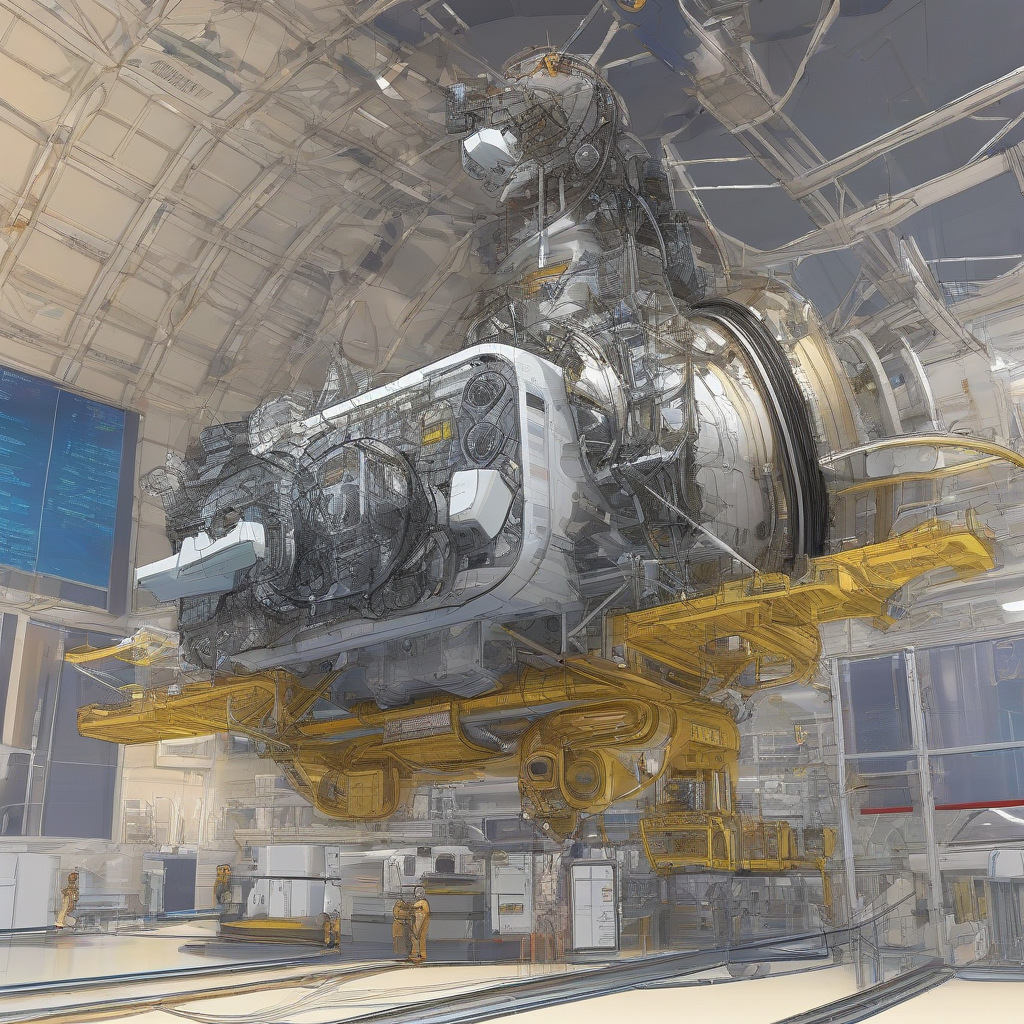
ESA’s Biomass goes live with data now open to all
The Game-Changing Biomass Satellite is Now Live
The European Space Agency's (ESA) innovative Biomass satellite has finally gone live, marking a significant milestone in the mission to revolutionize our understanding of forest dynamics and their role in regulating the global carbon cycle. Launched in April 2025, Biomass is the first satellite to carry a P-band synthetic aperture radar, capable of penetrating dense forest canopies to measure woody biomass, including trunks and large branches, where the majority of forest carbon is held.
A Robust Proxy for Carbon Storage
The measurements provided by Biomass will serve as a robust proxy for carbon storage, which lies at the heart of the mission's objectives. By accurately estimating the amount of carbon stored in forests, scientists and policymakers can better understand the impact of climate change on these ecosystems and develop more effective strategies for forest management and conservation.
A Step Change in Understanding Forest Dynamics
The Biomass satellite is set to deliver unprecedented insight into how the world's forests are changing and how much carbon they store. With its advanced radar technology, the satellite will be able to penetrate dense forest canopies and measure the biomass of individual trees, providing a level of detail that has never been possible before.
A Collaborative Effort
The success of the Biomass mission is a testament to the power of collaboration and international cooperation. The mission has involved teams from across the ESA, industry, and the science community, working together to ensure that the satellite is performing exactly as intended.
Handover from Commissioning to Scientific Operations
After months of meticulous calibration and fine-tuning, the Biomass team has finally completed the commissioning phase and handed over the satellite to scientific operations. This marks a major milestone for the mission, as the satellite is now ready to begin delivering high-quality data to scientists and researchers around the world.
Initial Results are Highly Encouraging
The initial results from the Biomass mission are highly encouraging, with the satellite's radar technology providing detailed images of forest biomass and carbon storage. These images have the potential to revolutionize our understanding of forest dynamics and their role in regulating the global carbon cycle.
A New Era in Forest Monitoring
The Biomass mission marks a new era in forest monitoring, with the satellite's advanced radar technology providing a level of detail and accuracy that has never been possible before. This will enable scientists and policymakers to better understand the impact of climate change on forests and develop more effective strategies for forest management and conservation.
The Potential of Biomass
The full potential of the Biomass mission has yet to be realized, but the initial results are highly encouraging. The satellite's radar technology has the potential to revolutionize our understanding of forest dynamics and their role in regulating the global carbon cycle.
A Global Perspective
The Biomass mission provides a global perspective on forest dynamics, with the satellite's radar technology able to penetrate dense forest canopies and measure the biomass of individual trees. This will enable scientists and policymakers to better understand the impact of climate change on forests and develop more effective strategies for forest management and conservation.
A New Tool for Forest Management
The Biomass mission provides a new tool for forest management, with the satellite's radar technology able to provide detailed images of forest biomass and carbon storage. This will enable scientists and policymakers to better understand the impact of climate change on forests and develop more effective strategies for forest management and conservation.
The Future of Forest Monitoring
The Biomass mission marks a new era in forest monitoring, with the satellite's advanced radar technology providing a level of detail and accuracy that has never been possible before. This will enable scientists and policymakers to better understand the impact of climate change on forests and develop more effective strategies for forest management and conservation.
Conclusion
The Biomass mission is a game-changer for forest monitoring, with the satellite's advanced radar technology providing a level of detail and accuracy that has never been possible before. This will enable scientists and policymakers to better understand the impact of climate change on forests and develop more effective strategies for forest management and conservation. The full potential of the Biomass mission has yet to be realized, but the initial results are highly encouraging, and the satellite's radar technology has the potential to revolutionize our understanding of forest dynamics and their role in regulating the global carbon cycle.