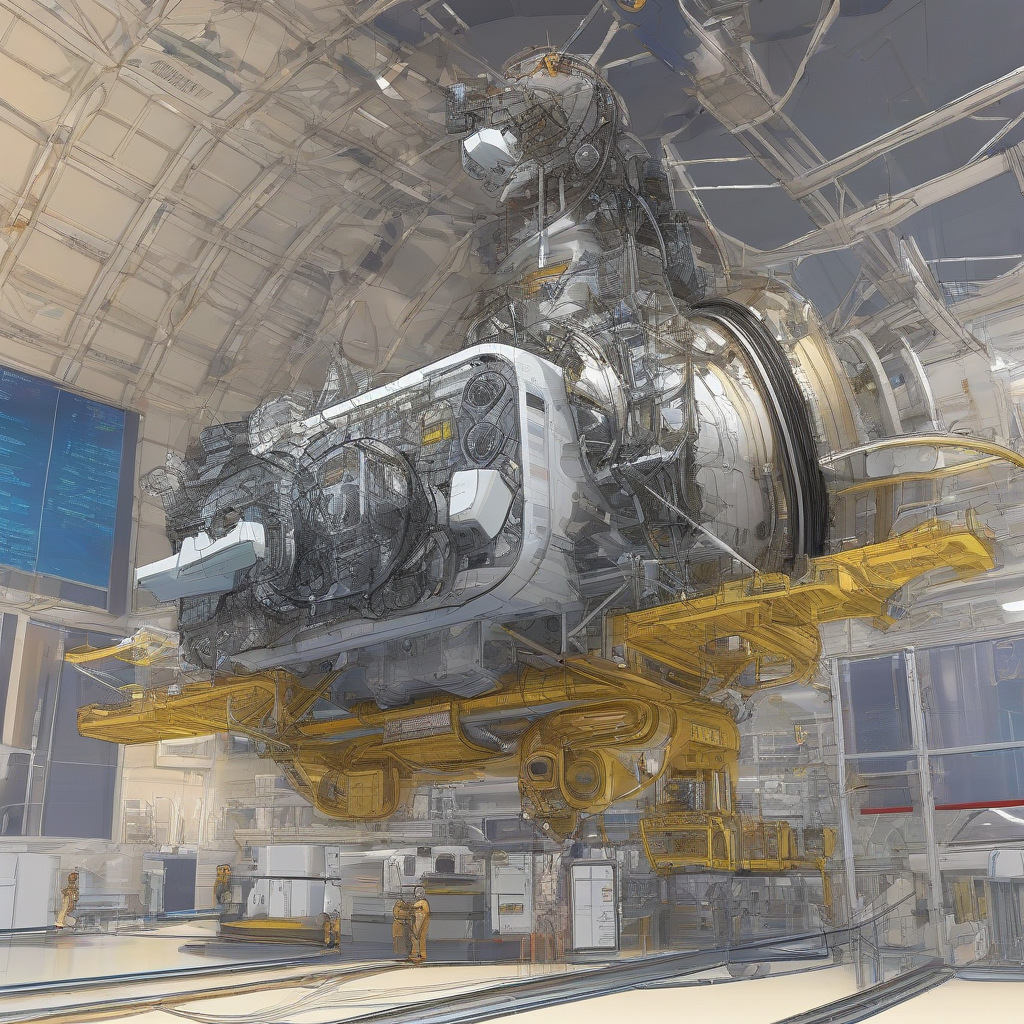
ESA preview 2026
A New Era for Space Exploration: ESA Preview 2026
As the world rings in a new year, the European Space Agency (ESA) is gearing up for a series of groundbreaking missions that will push the boundaries of space exploration. From the depths of Earth's atmosphere to the farthest reaches of the Solar System, 2026 promises to be a year of firsts that will shape the future of space travel and discovery.
JUICE: Unveiling the Mysteries of Jupiter's Moons
One of the most anticipated missions of 2026 is the JUICE (JUpiter ICy moons Explorer) spacecraft, which will embark on a seven-year journey to explore Jupiter's icy moons, Ganymede, Europa, and Callisto. This mission will provide unprecedented insights into the formation and evolution of our Solar System, as well as the potential for life beyond Earth.
JUICE will be equipped with a suite of advanced instruments, including a radar system to map the subsurface of these moons, a magnetometer to study their magnetic fields, and a camera to capture stunning images of the Jupiter system. The mission will also investigate the possibility of subsurface oceans on these moons, which could potentially harbor life.
BepiColombo: Unraveling the Secrets of Mercury
Another notable mission in 2026 is the BepiColombo spacecraft, which will arrive at Mercury after a seven-year journey. This mission will provide the first comprehensive study of the innermost planet in our Solar System, including its magnetic field, geology, and composition.
BepiColombo will be equipped with a suite of instruments, including a magnetometer to study Mercury's magnetic field, a spectrometer to analyze the planet's composition, and a camera to capture images of the surface. The mission will also investigate the planet's internal structure and the source of its magnetic field.
ESA's Contribution to the Artemis Program
In addition to its own missions, the ESA is also playing a key role in the Artemis program, a NASA-led initiative to return humans to the Moon by 2025. The ESA is providing critical support for the program, including the development of the European Service Module, which will provide power, propulsion, and life support systems for the lunar spacecraft.
The ESA is also contributing to the development of the lunar Gateway, a space station that will serve as a base for future lunar missions. The Gateway will provide a platform for scientific research, exploration, and development of the Moon's resources.
Implications and Practical Applications
The missions and initiatives outlined above have significant implications for our understanding of the universe and the potential for life beyond Earth. The discoveries made by these missions will also have practical applications in fields such as:
- Space Exploration: The technology developed for these missions will pave the way for future human missions to the Moon, Mars, and beyond.
- Earth Observation: The instruments and techniques developed for these missions will also be used for Earth observation, providing critical data for climate change research, natural disaster monitoring, and resource management.
- Space Technology: The innovations developed for these missions will also have spin-off applications in fields such as telecommunications, navigation, and materials science.
Forward-Looking Thoughts
As we look to the future, it is clear that the ESA's missions and initiatives will continue to shape the course of space exploration and discovery. The agency's commitment to pushing the boundaries of what is possible will inspire new generations of scientists, engineers, and explorers.
As we embark on this new era of space exploration, we must also consider the challenges and opportunities that lie ahead. The ESA's vision for a sustainable and secure space program will require continued investment, innovation, and collaboration with international partners.
In conclusion, the ESA's preview for 2026 is a testament to the agency's commitment to advancing our understanding of the universe and pushing the boundaries of space exploration. As we look to the future, we can be confident that the ESA will continue to play a leading role in shaping the course of space travel and discovery.
Source: https://www.esa.int/ESA_Multimedia/Videos/2026/01/ESA_preview_2026